A Little Magic

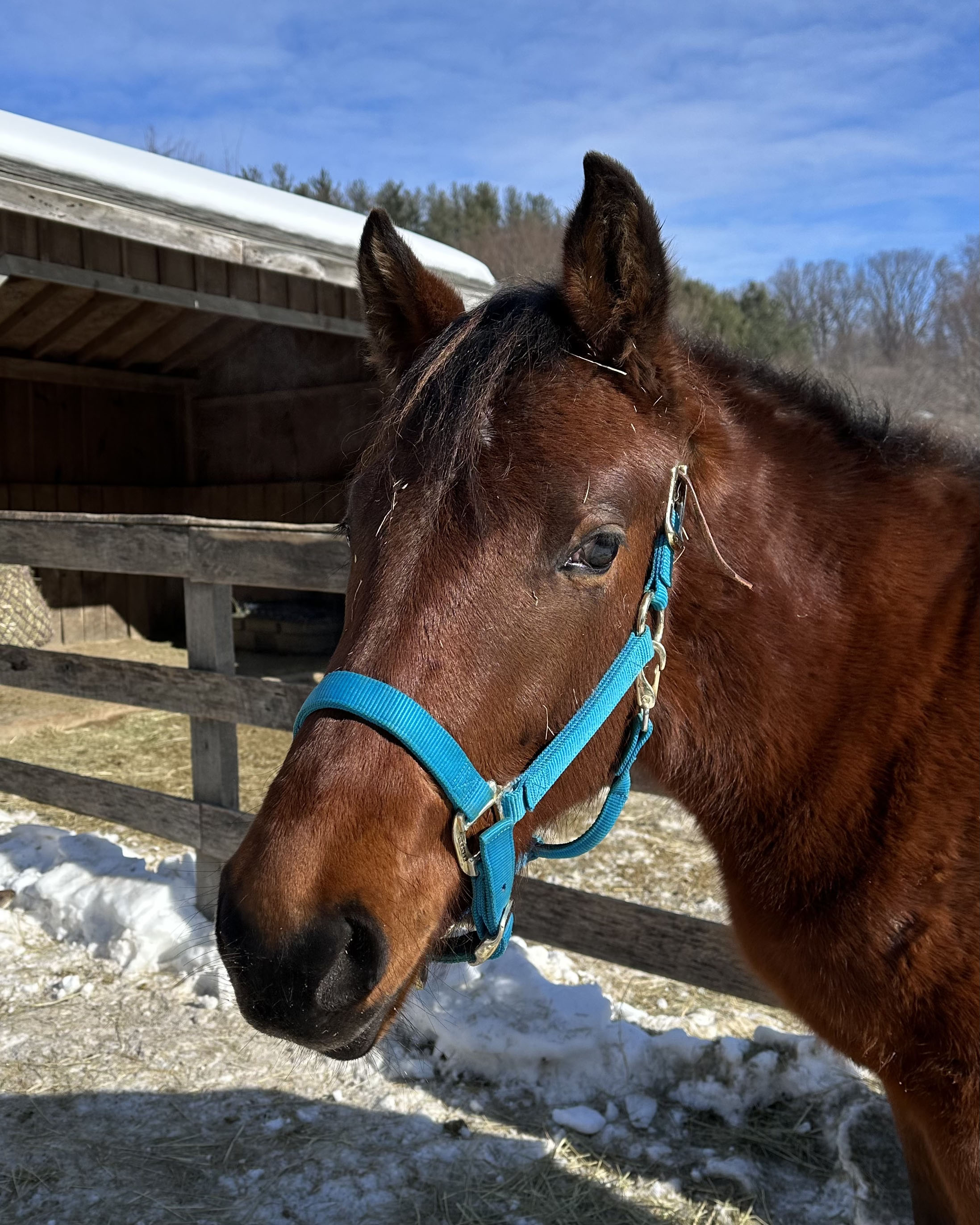
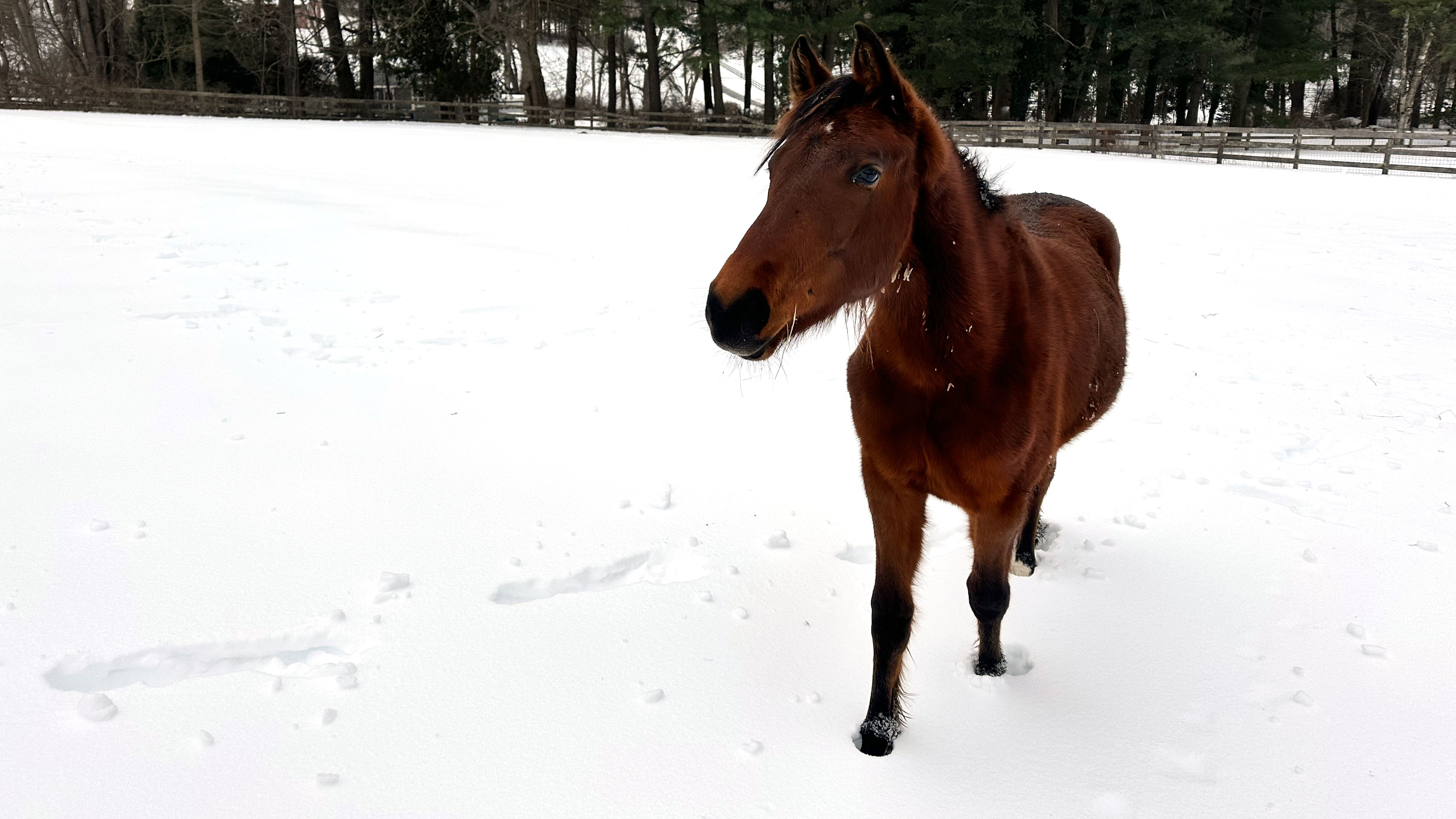
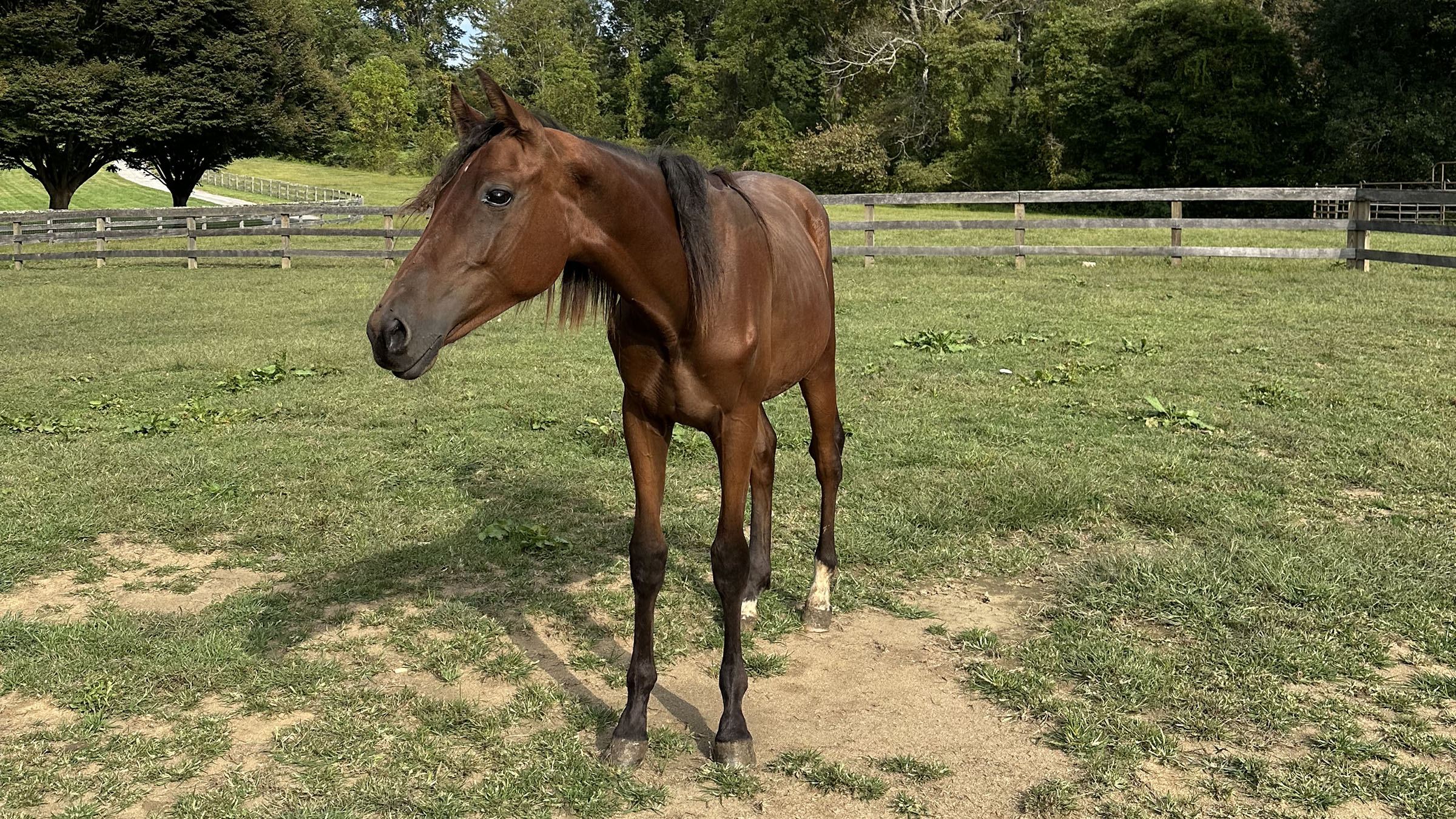
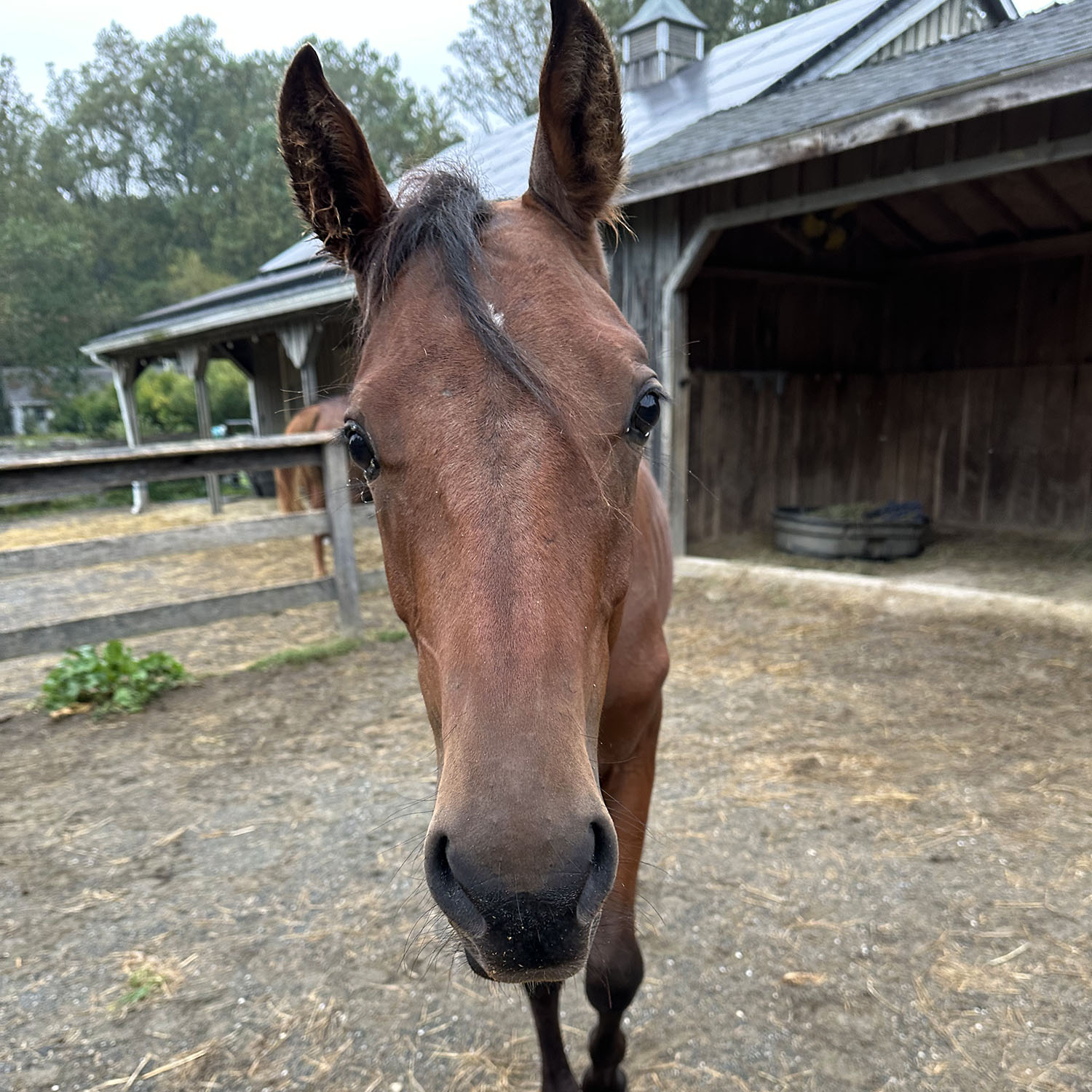
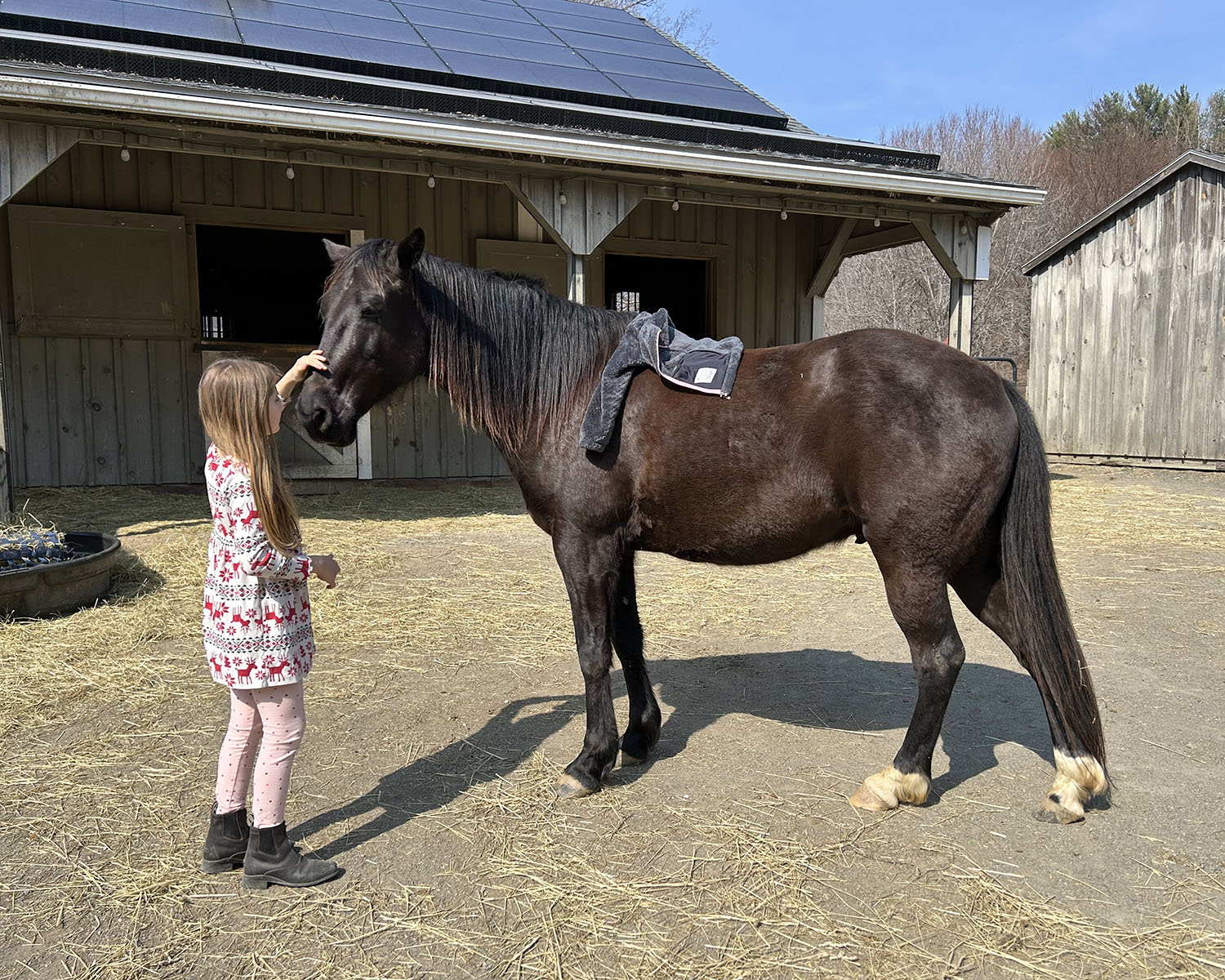
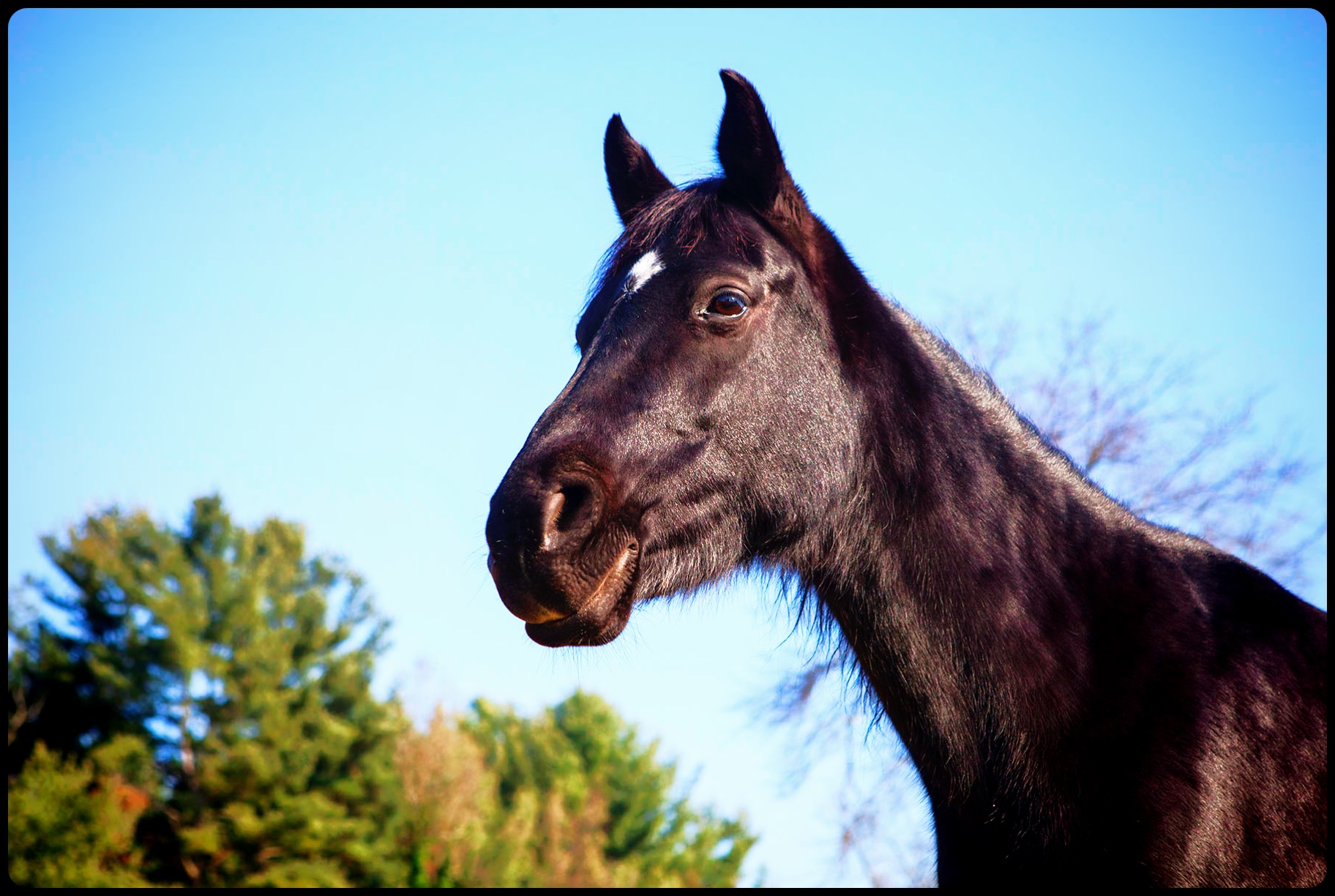
He stepped off the trailer after much encouragement and some grain in a bucket to lead the way. His eyes were wide, his head tipped to one side, his long legs trying to find a rhythm beneath him. One front hoof was a club foot – it looked like he was standing on a block instead of a hoof. The yearling was hesitant, awkward in his movements and trying hard to comprehend how his entire world and everything he had ever known had just shifted so radically. But even in the face of such dramatic change – leaving behind everything familiar and safe to him, riding in a trailer for the first time, landing somewhere foreign with horses he’d never seen before – this little horse was open, curious and steady in his thoughts.

The only familiar hands and faces and voices were those of the two women who brought him here – two women who had visited him periodically over the past several months whose hands and faces and voices had been things that made him feel better, not worse. 

This Morgan colt had been born to be a working horse. Maybe pulling a cart, maybe a working ridden horse, but his breeding was intentional and he came from good, well-chosen stock. At four months of age, when it was time to give him his first deworming paste, he got scared. He panicked suddenly. And in an instant, the course of his life was altered. He flipped over and his head crashed into a barn aisle post, twisting and fracturing his first vertebra in multiple places.

It was a miracle he survived, much less survived without permanent neurological damage, given the extent of the injury. The farmer who owned him called vets, had multiple radiographs taken, held out hope that he might make a full recovery somehow – perhaps the amazing healing would continue and his head and neck would heal straight enough to allow him to become the promising work horse he was bred to be. The two women were able to help with some realignment; his jaw was adjusted so that he could chew properly, and he started to walk in more of a straight line instead of the bent-sideways position he had been stuck in. 

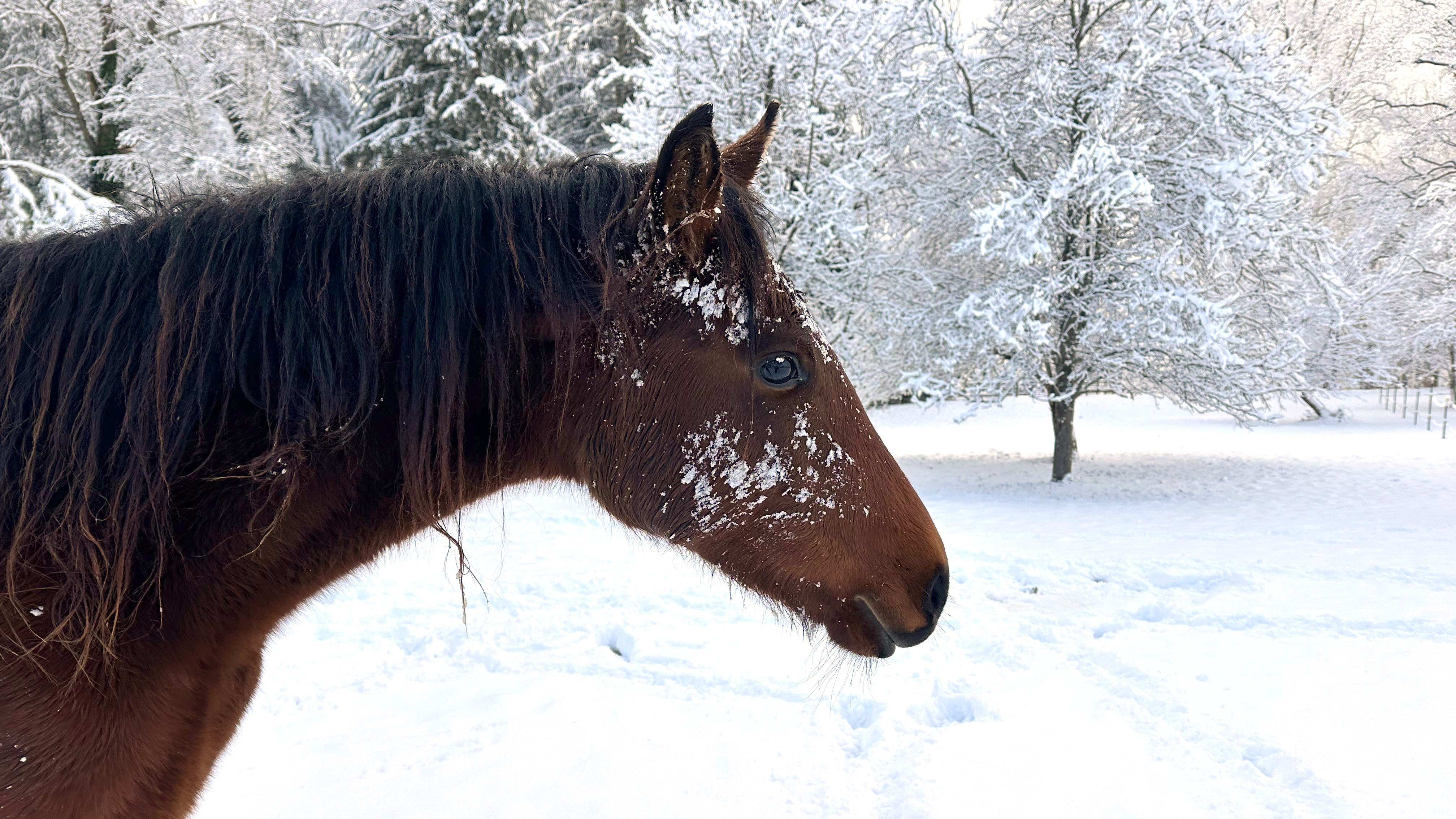
But his head remained crooked on his neck, one eye slightly larger than the other, ears tipped off to the right, and unable to pivot his head at that first vertebra joint, the atlas. No one would purchase a colt in that condition, and no one would risk training him in tack since pulling back or sideways against pressure around his head might cause more damage. The farmer had done all he could do, winter was coming, options were few. 

The women had introduced me to the youngster back in the spring, and I saw firsthand how an almost unhandled baby, with no halter or rope of any kind, allowed them to examine him and do bodywork adjustments. They were right when they described him as an “old soul” and wise beyond his years… or in this case, months. So, when he had nowhere to go, even though I technically did not have room for one more, he came to live with me and my existing herd of four. He would not need any tack to participate in equine guided coaching work, and I’d been studying Freedom Based Training with Elsa Sinclair, so I knew it was possible to train a horse without any equipment, even to ride.

He stepped off the trailer after I had agonized over all the reasons why I should say “no,” and there I was, pouring grain in a bucket to help lead the way. 

That first day, he allowed me to touch him but he was not truly comfortable with it. Because the club foot was physically challenging, the farrier had to come right away to begin to reshape it. Likely the most difficult part of his transition, the yearling was fearful and resistant of his first farrier experience, but trusted one of the women who transported him enough to support him while he stood with the foot held up long enough for the trimming. Afterwards, she and a friend and I sat in chairs in the paddock, just being there with him until the sun went down, so he could be as close as he wanted, when he wanted. By the time the sun came up the next day, he seemed to know exactly who I was and that I was a friend. 

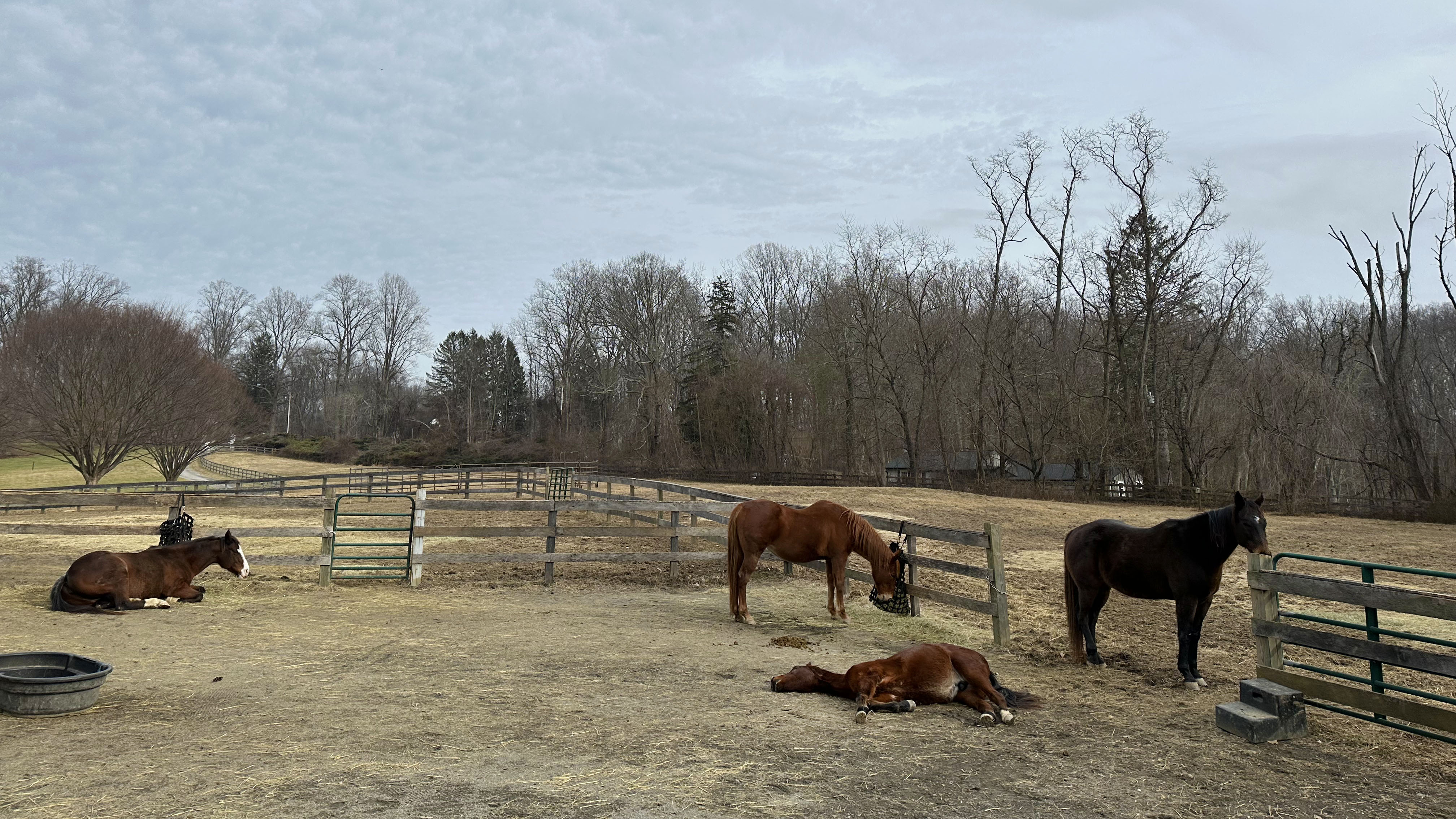
The other four horses were, from the start, intensely curious about him. Always curious and wary of newcomers, the horses noticed right away that he was different, and they wanted to understand what that difference meant. In the wild, a horse who is sick or injured is likely a threat to the safety of the herd, so the yearling would need to prove that he could take care of himself and contribute value to the herd. 

After several days on his own in the paddock next to the other horses, I began making one-on-one introductions. The horse who was always everyone’s friend, the one I expected to take him under her wing, wanted nothing to do with him… Daisy. Daisy has been with me since I started this work on my own; back in 2011 we began working with people together and developing Horses for the Soul. She has met so many different people and horses along the way, and is usually the first friend any newcomer has, but not this time. Bobbi, the matriarch of the herd, the only experienced mother among them, was nonplussed and uninterested in pursuing a further bond. Juno, the newest addition before the youngster, here for only 9 months upon his arrival, lunged at him fairly viciously, chasing him and testing his strength, speed and resilience. Chip, the youngest of the old group at ten years old, also tested him, often chasing him in what looked like an imitation of Juno, since Juno tended to chase him and lunge at him relentlessly as well. Concern for the little one welled up in me; what if he never passed their tests? What if he couldn’t integrate? 

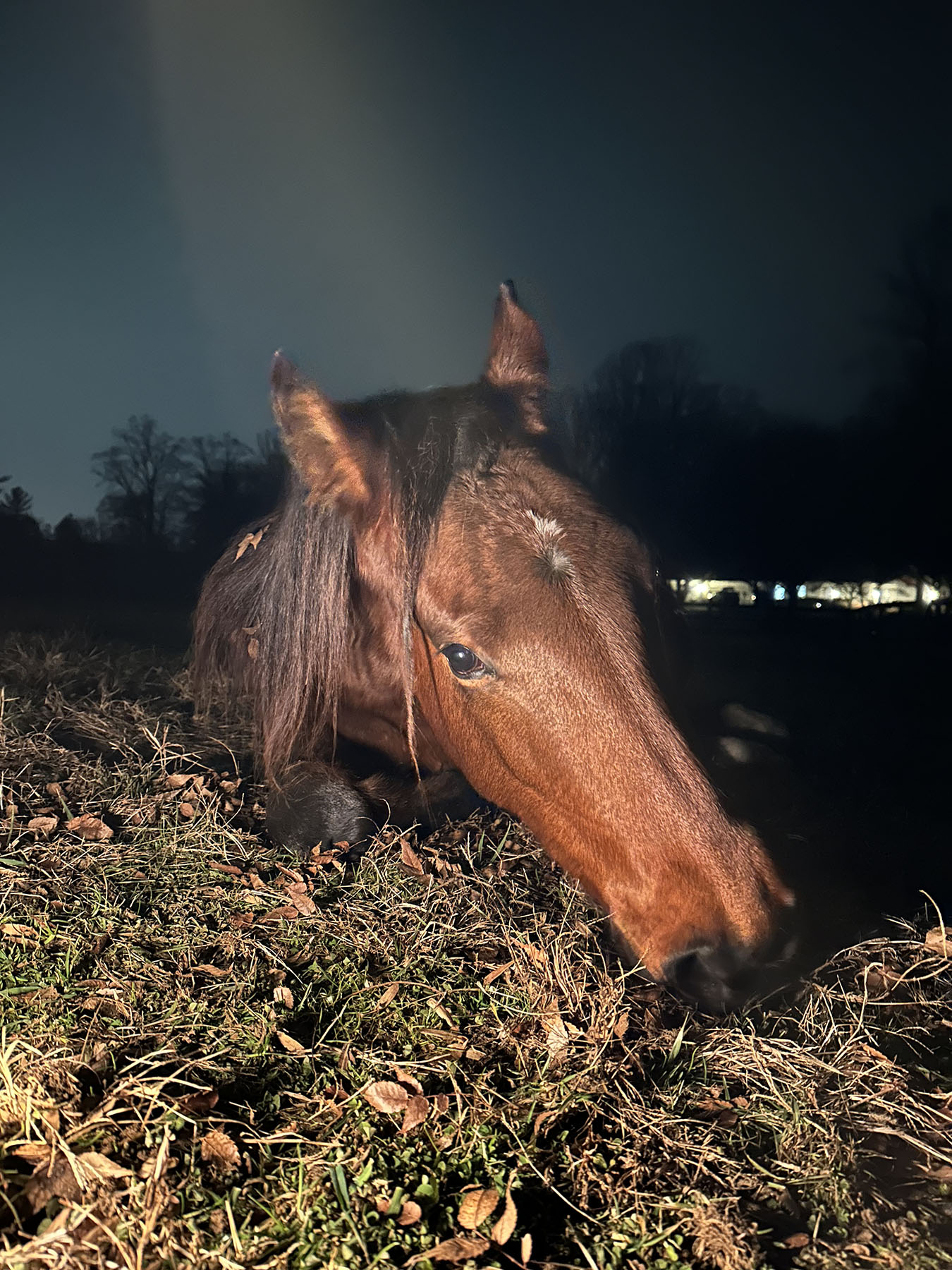
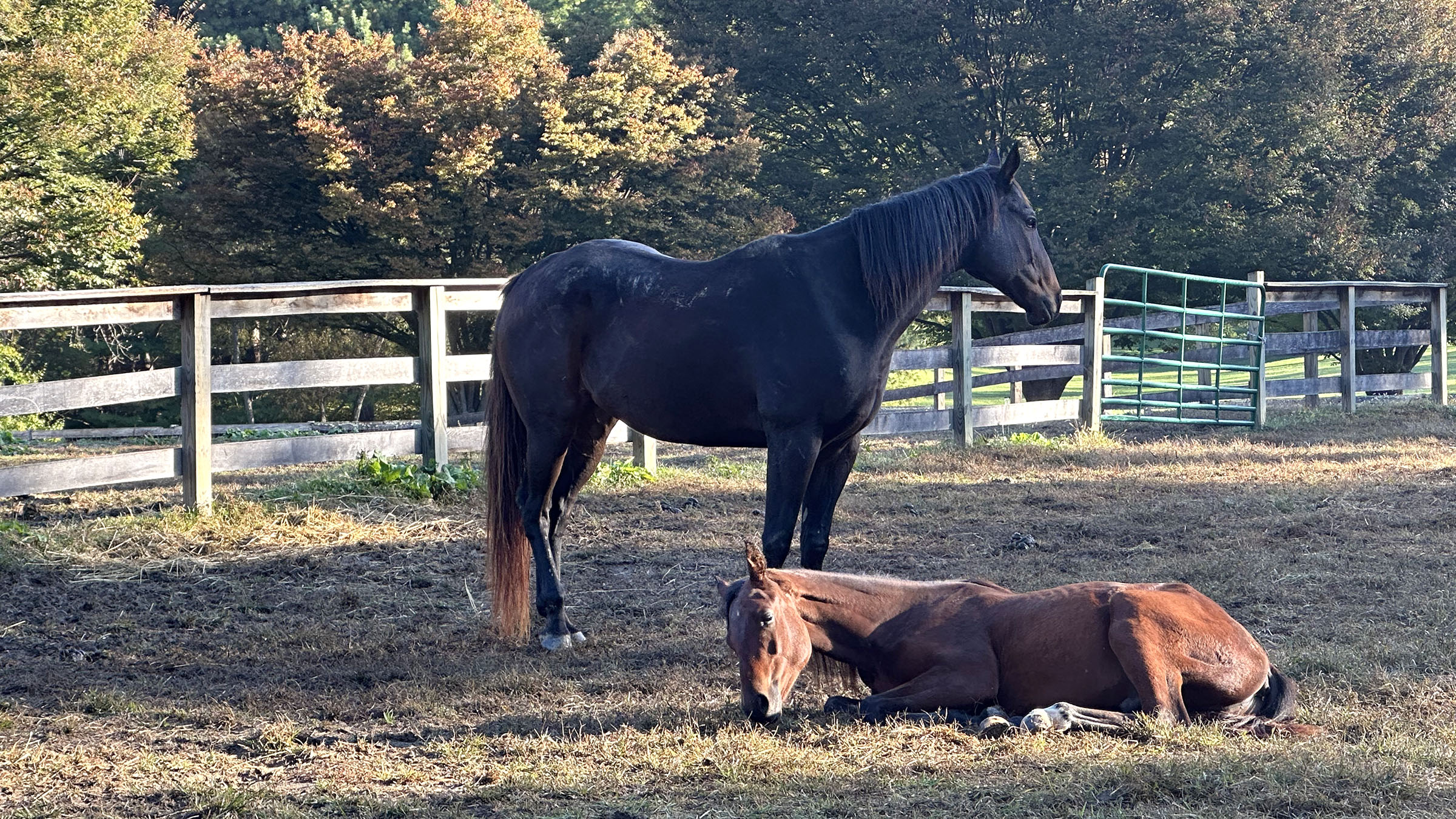
Then came the night when I went out to check on the youngster after dark. He was lying down in his paddock, about 5 yards from the fence. Chip was standing watch, right up against the fence, the moonlight shimmering along his back. Something in that moment showed me that Chip had found a sense of purpose. 

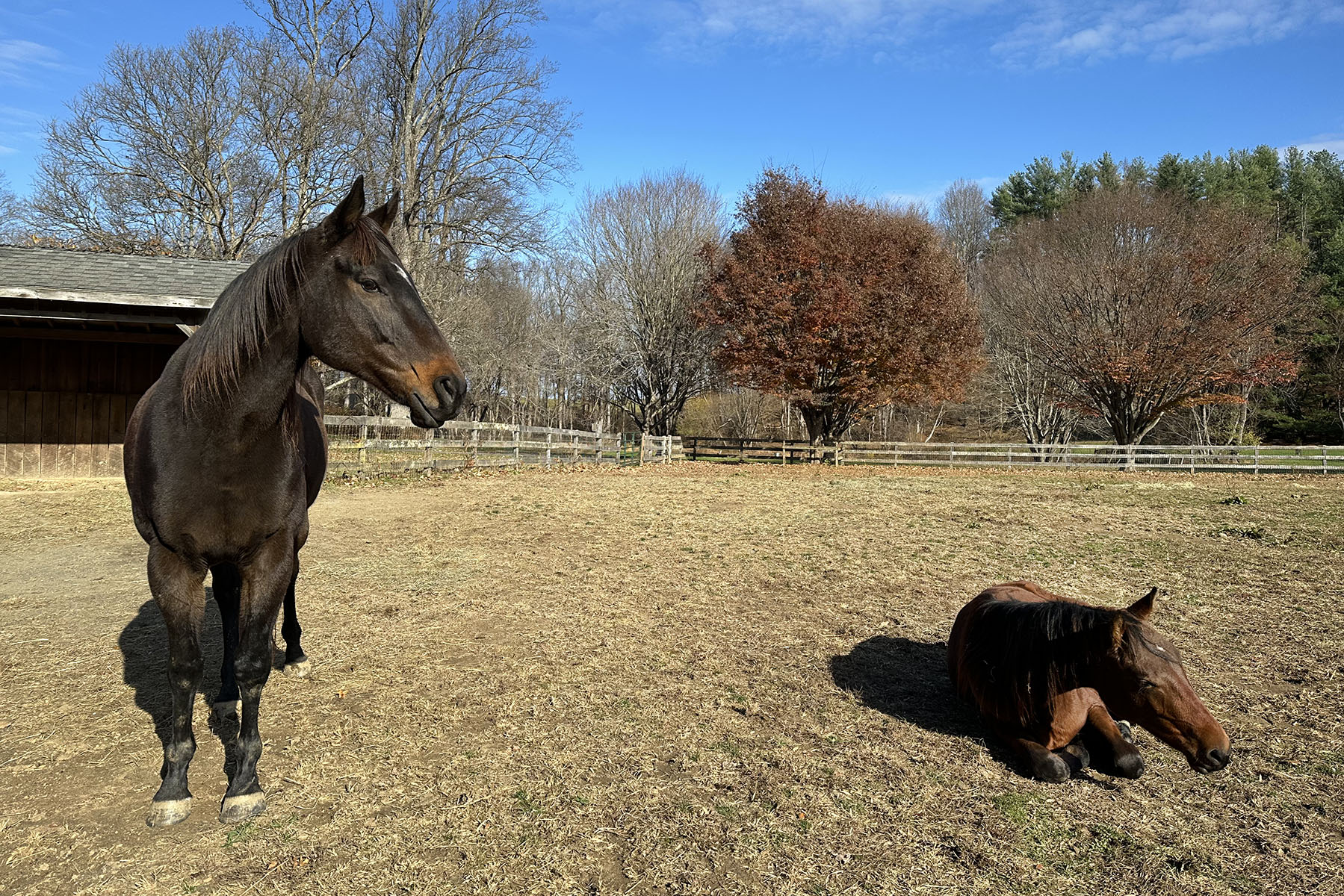
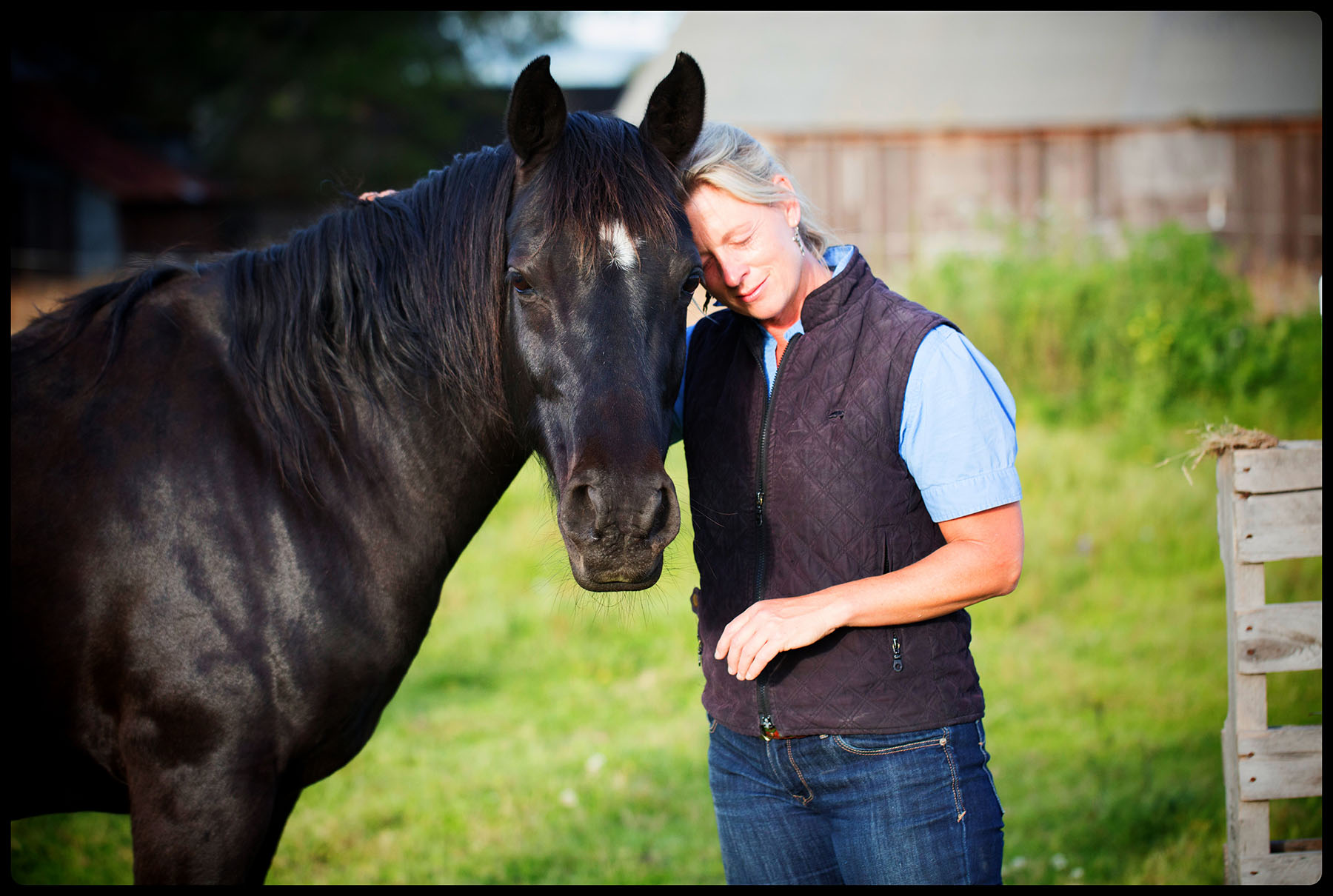
Every time since then, when the little guy is lying down, Chip stands watch over him. He has become like a big brother – still testing him, and pushing on him at times, but sharing hay, sharing space, watching over him when he’s resting. And the yearling runs after him, follows his lead, and finds security being near him. It is a symbiotic relationship, nourishing both of them.
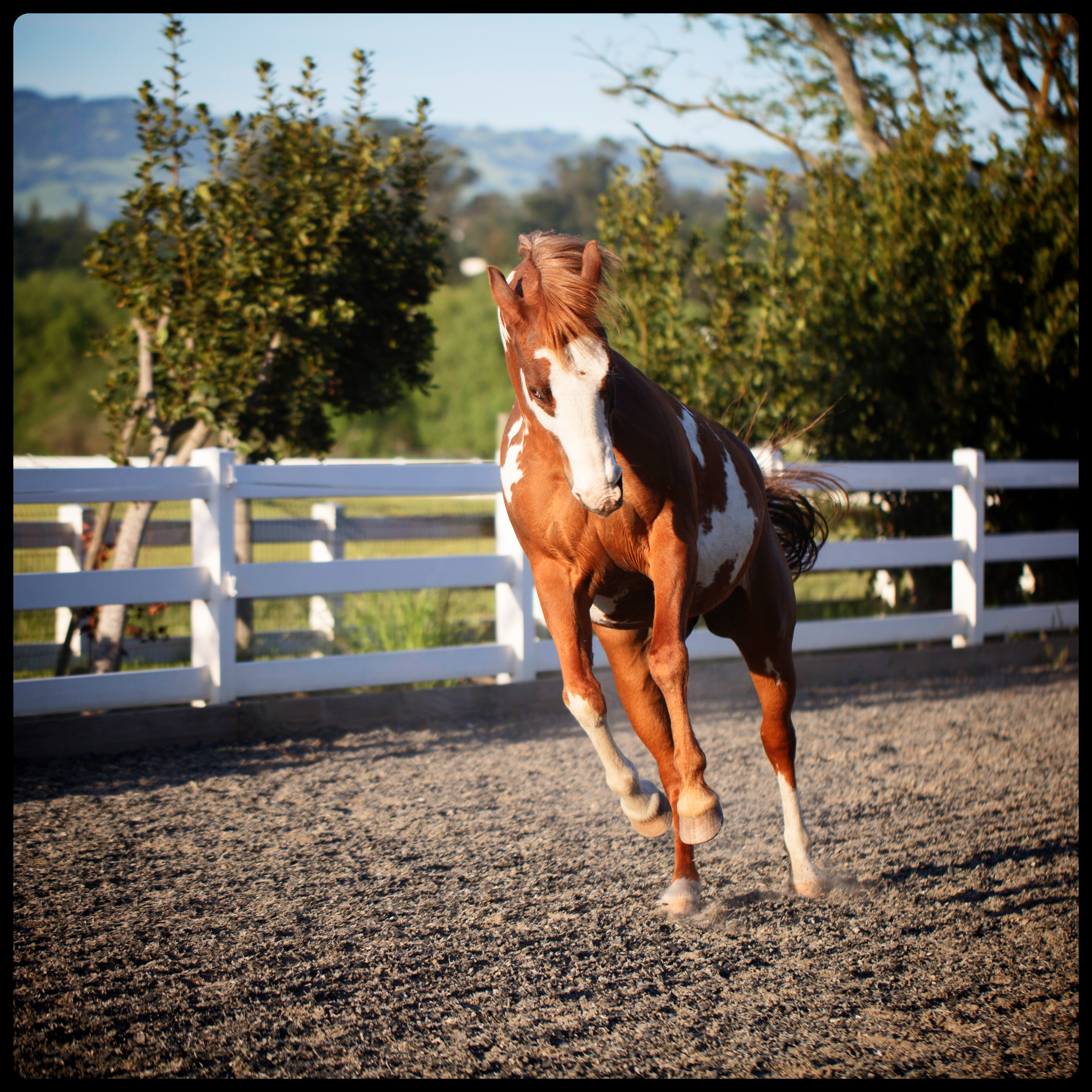
By this time, everyone was asking, “What is his name?” and he didn’t have one. Believing that names help shape a being’s future, I wanted to find the right name for him. I’d been calling him Little Man, since he seemed to have a man’s wisdom in a boy’s form, but that didn’t feel quite right. There was something mystical about him, and unexplained about his survival of a severe traumatic injury, so I wondered if he needed the name of a mythical creature or a wizard.

Meanwhile, he was growing stronger every day. He began to run faster, and carry himself straighter all the time. We began working on basic tasks together, and in no time he loved being groomed, and could stand for all four hooves to be picked out. I remember reading somewhere that one should never try doing something with a horse tied that the horse can’t do untied, and have lived by that principle, often to the confusion and amazement of horses coming into my care. In this case, it was simply a natural progression for him of things we learned to do together in the paddock.

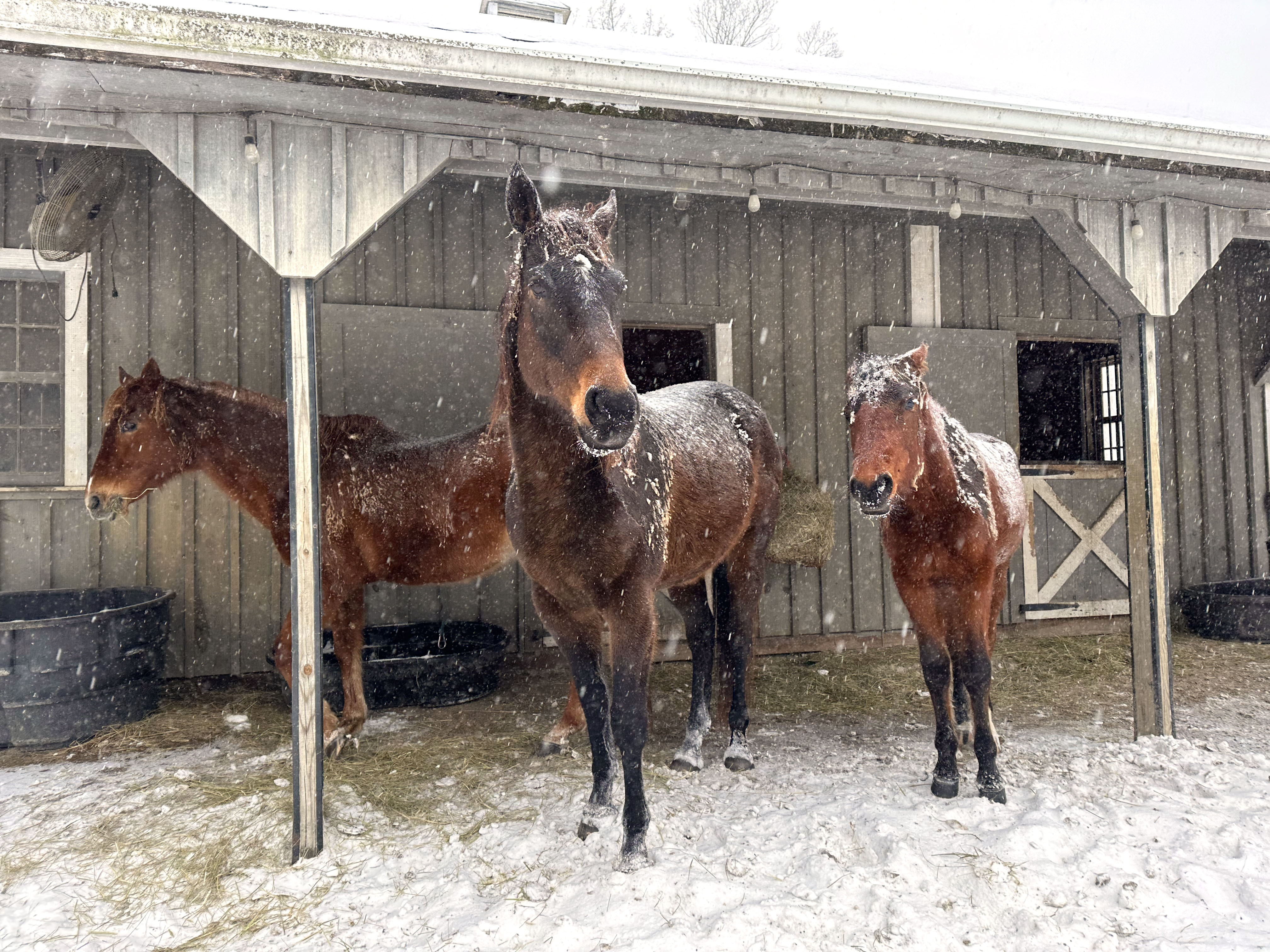
My fears about him not being able to join the herd began to fall away, as did my fears about having one too many horses. He was giving Chip confidence, and he was not so afraid of Juno that he wouldn’t keep coming back when chased away. Juno appreciated this fact; he wanted more of a sparring partner than a horse who stayed out of his way. The mares began to accept him more as well, and they seemed to relax into their elevated status of trusted royal sages.

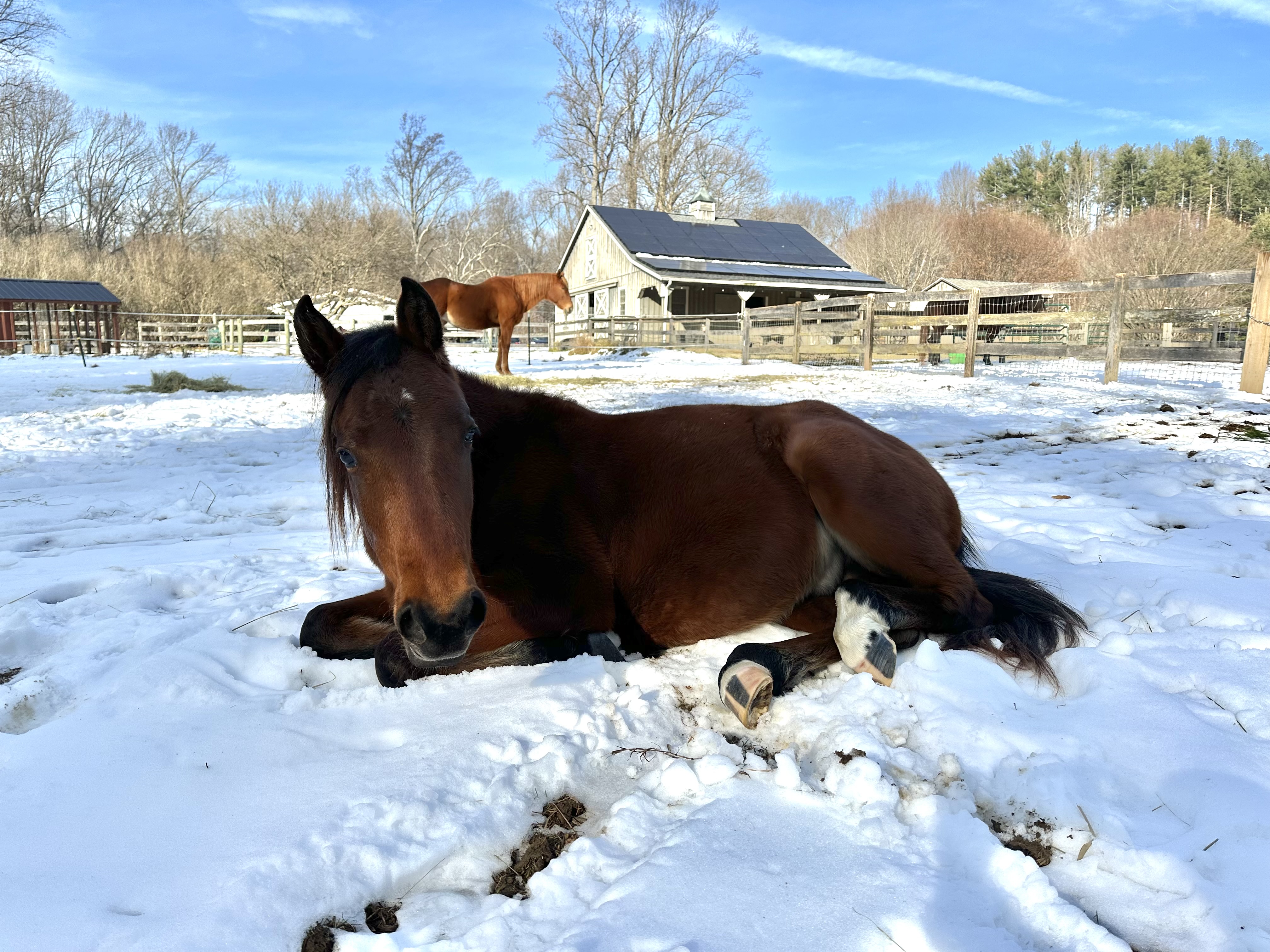
A friend helped remind me that the thing horses make me feel when I close my eyes and conjure up their presence is… magic. There is something unexplained and precious about them and what they offer us, no matter how much science and study is able to illuminate. This little horse, defying odds and my best efforts to say no, is offering something unexplained and precious. No longer “Little Man,” he is named Little Magic, as it has taken a little magic to get this far, and each day a little magic happens.

Being a Friend First

When it’s cold and the sky is spitting a nasty blend of rain and snow down on you, and you are excited to come out and see a horse anyway… that is where the magic starts.

Juno came to the farm in mid-December, when his recently acquired safe home fell through and the person who wanted the best for him trusted me to offer him a good life. Being plucked from all that is familiar and taken away from the friends and family you know isn’t easy on anyone, and Juno was no exception – but he was impressively open to trusting new people from the start. It has been imperative for us not to break that trust – to be slow and patient, to begin every new relationship and activity with sacred introduction, and no matter what he may have been like or done in the past, we have made choices based on how he feels and responds each moment, as opposed to acting on assumptions or expectations.

Equine Guided Education and Coaching is a way of working with horses to teach and coach people… and the same way that every session helps me learn and grow as a person while I facilitate, it can also benefit the horses and enrich their lives. Beyond giving them the opportunity to express their opinions, and giving them a job that is not competitive or physically demanding, this work can be done in a way that helps horses heal from past trauma or anxiety much the same way it can help people.

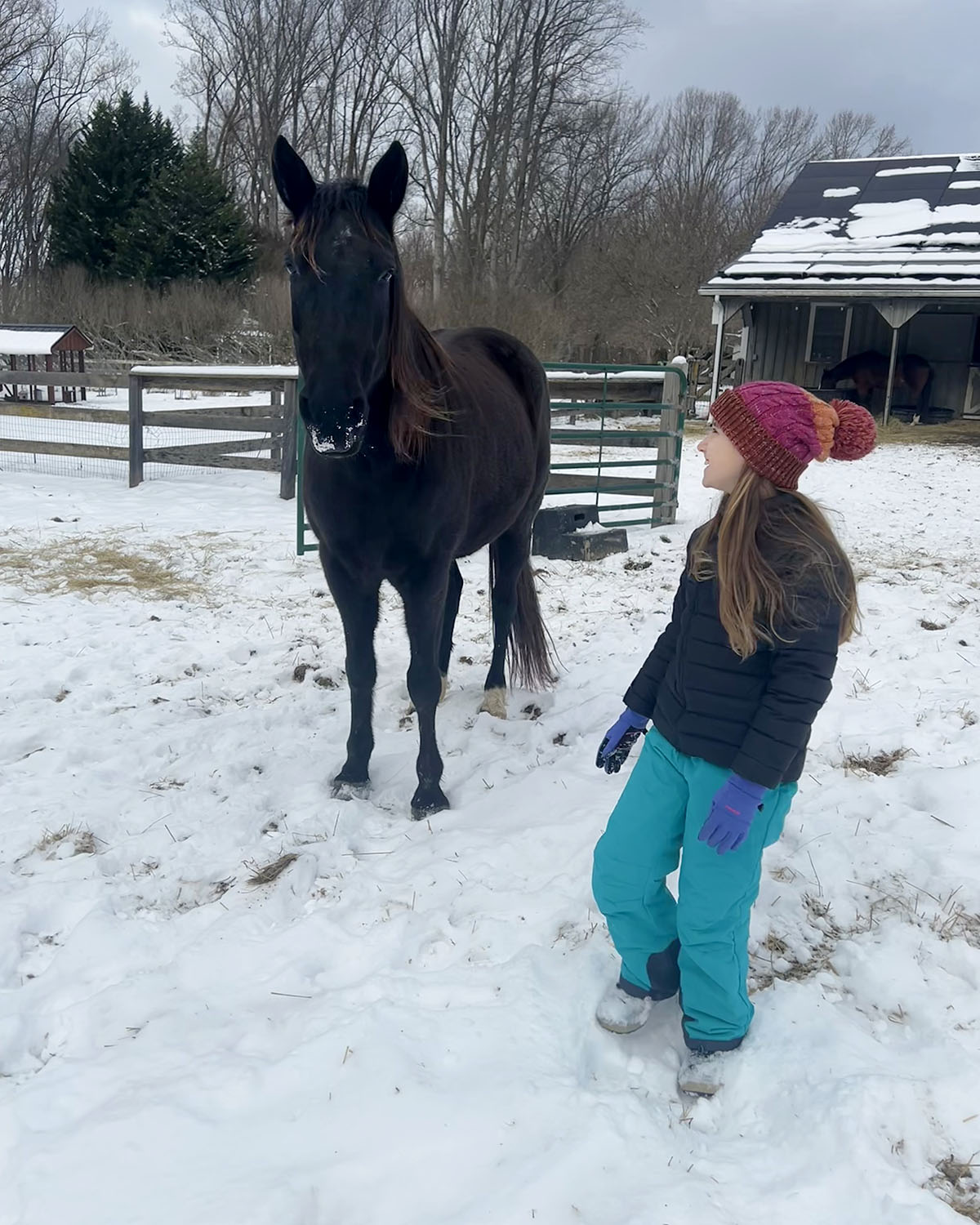
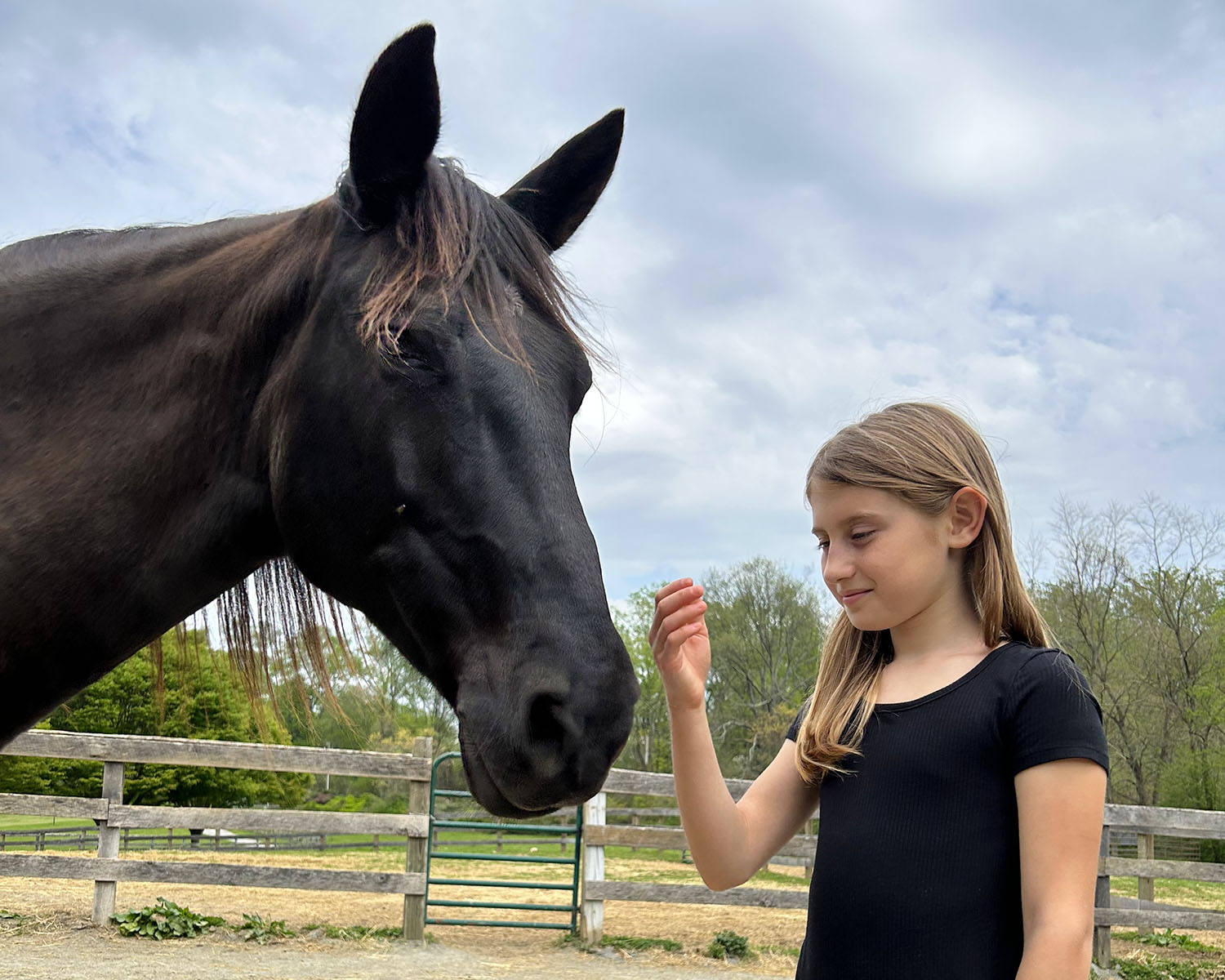
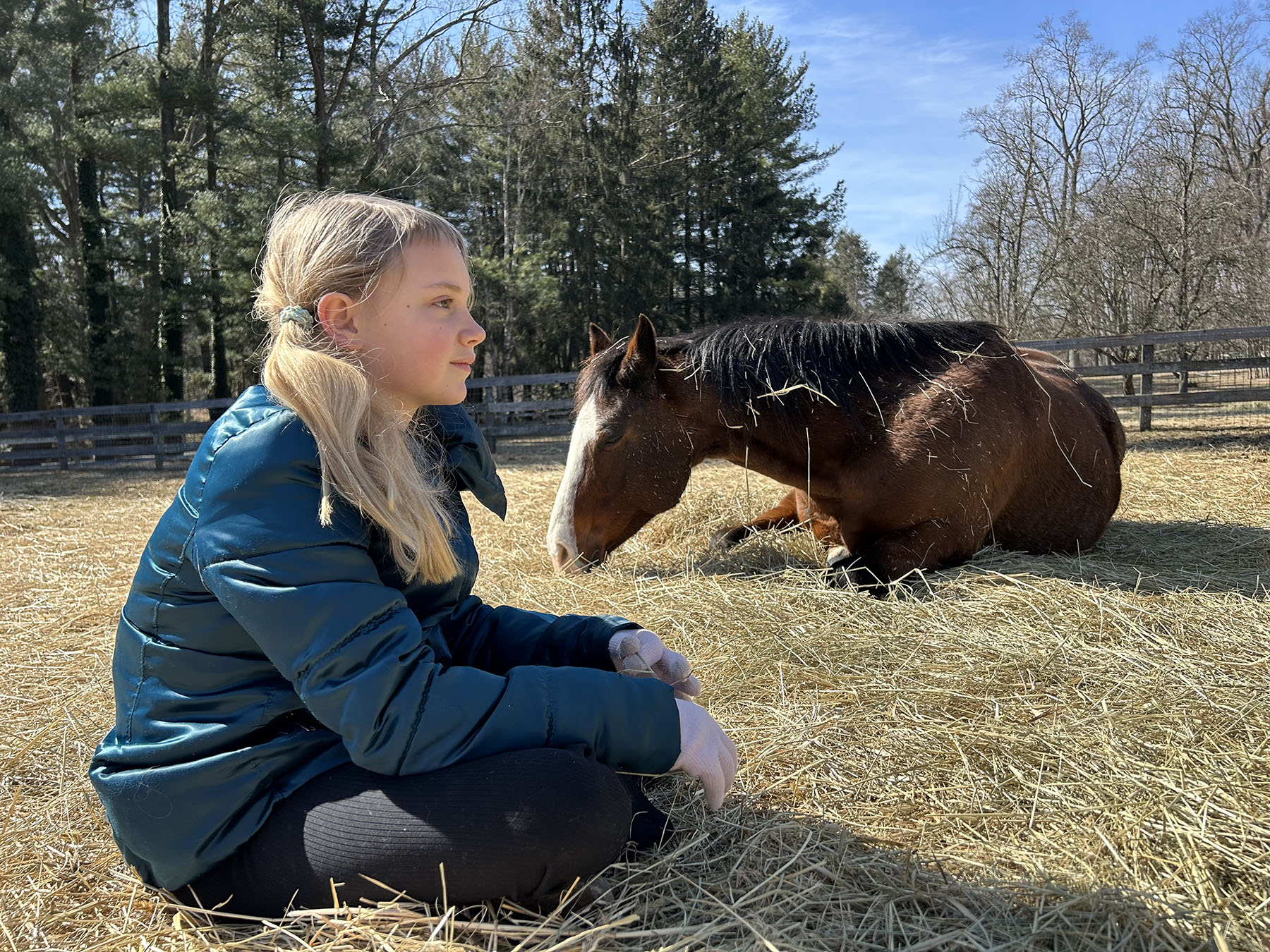
Fortunately for me, and for Juno, we have amazing people who come to us, like this girl we’ll call Kate. From her first time meeting Juno, she has been open-hearted, present and thoughtful. Our goal in working together has been to give Kate a safe place to open up about anything she’s challenged by in her life, to help understand and regulate emotion as it inevitably flows into what we are doing with a horse as well as life elsewhere, and to build her confidence and presence through learning to care for, communicate with, and do basic activities with horses.

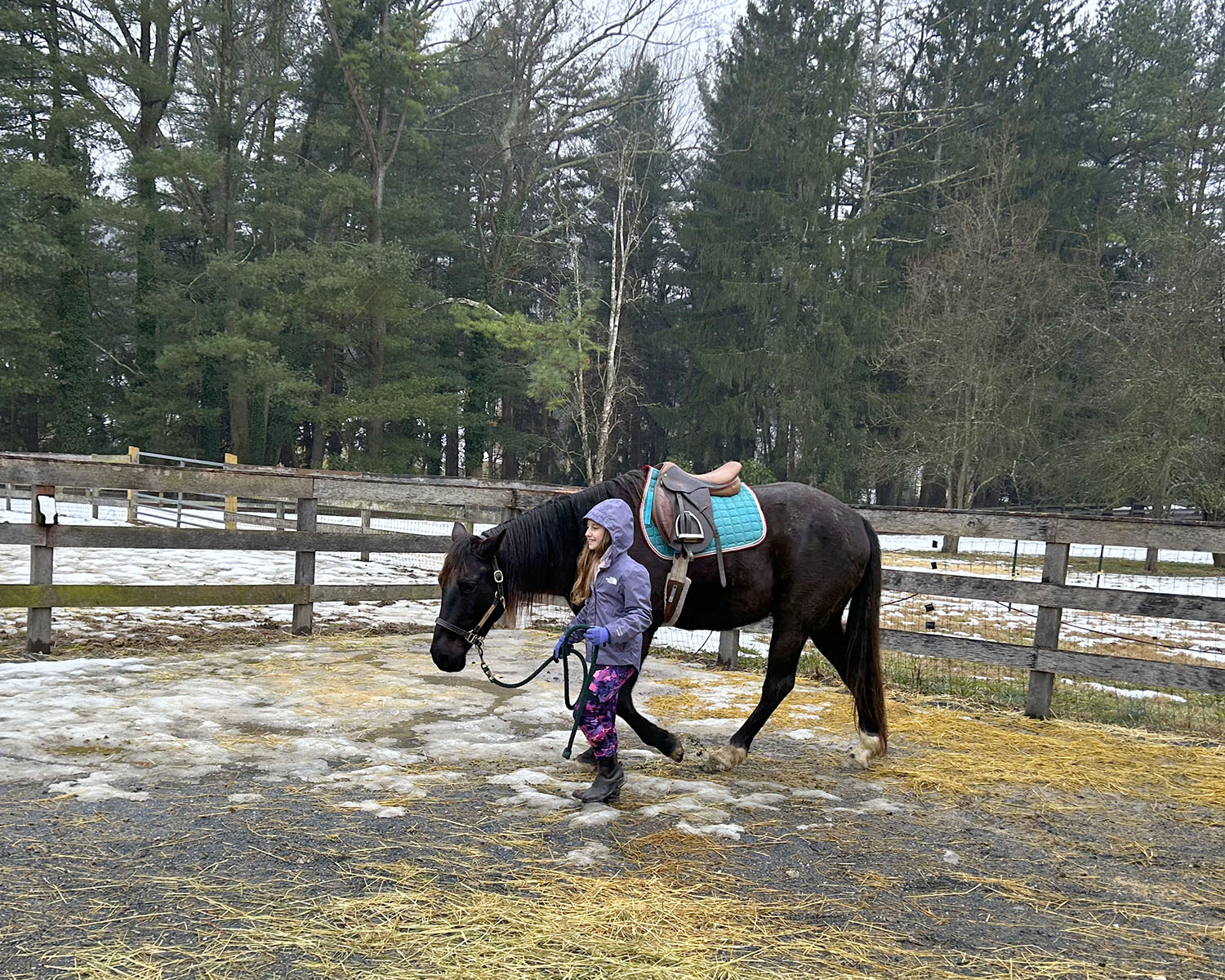
Everything starts at liberty – just being free around each other, and focusing on building a relationship. There is play, there is sharing of thoughts and feelings, and there is curiosity and there is mystery. Learning how to just be around each other comfortably is a benefit for the nervous systems of both horse and human. Social animals feel good about making friends. The first time Kate invited Juno to follow her on a walk around the paddock, the weather was miserable, but the feelings were of pure comfort and joy in connection, as he eagerly walked alongside her and she beamed with excitement.

Sometimes we have fun with inventing new activities or games… like asking the horse to carry her jacket around the paddock. Every step of the way, Kate is attentive to how Juno is feeling about what is being asked of him. She never rushes him for the sake of accomplishing a task, and has been learning to recognize when and how impatience and frustration can sneak up on us and get in our way.

When the goal is for the horse to be comfortable and happy, every small step can be a resounding victory. At first, when Kate introduced the halter and lead rope into our activities together, Juno was inclined to shake his head a lot and walk too quickly for her to stay next to him, especially when something was introduced for him to carry on his back. We explored what being asked for too much too quickly feels like for us as people, too. We came up with options, like taking a break and doing something fun or easy together for a while and then trying the more challenging thing again in a different way.

When Kate walked Juno around the paddock with his saddle on and he was finally relaxed and enjoying the walk as much as the ones they had done together at liberty, it was the look on Kate’s face that said it all: she was happy, comfortable and proud of herself and the horse.

The day that Kate’s mother told me that she was having a hard time when other girls her age taking riding lessons were asking her questions like, “Can you canter?” and “Have you jumped yet?” filled me with sadness. What this girl is learning with a horse is genuine relationship, sensitivity to his feelings and her own, and a solid foundation for anything she may want to do in the future, with or without horses. It’s hard to quantify depth as opposed to scope of accomplishments. I hope she can respond with, “Do you take walks with your horse with an invisible lead rope?” and “Have you helped a worried horse feel safe in a new home yet?”

When Kate does get on the horse, she spends time with Juno on the ground first, making sure they are both comfortable. She talks to him – about how she is feeling and how she hopes he will feel if she rides him. If he tosses his head or pulls away, she knows how to listen, to care, to patiently try a different approach. She knows how to check in with her own feelings and determine whether she is ready or if she needs to take a break and reset.

The kindness and the trust these two are sharing is beautiful. He sees her arrive and hangs his head over the gate in anticipation of a friend. She is always happy to see him, and it is in the being together, not the doing together, that she is finding joy.

Beyond Words

My first vinyl collection was a beloved assortment of stories, handed down from older cousins, uncles and maybe even my mother. The records were well-loved with a few skips and scratches by the time they came to me. Among the favorites were Dr. Dolittle, The Jungle Book, and Ferdinand the Bull. It’s no wonder that I grew up understanding that animals were friends and allies, with hearts and minds and voices of their own. I had conversations with dogs and chickens and horses on the regular, as they were all very good listeners, and quite capable of making me feel better on a bad day and not-so-alone any time.

Somewhere along the line of growing up, I lost faith that I could really understand them. I wasn’t entirely sure they could understand me any more either; maybe they could pick up some basic or obvious sentiments, but I began to doubt the level of communication I had once believed in devoutly. The record collection shifted… folk and rock music began shaping the way I related to being human, focusing on lyrics and words and how they resonate with people.

It has taken one very persistent horse to reconnect me with believing in different ways of communicating again. Daisy joined me fourteen years ago, as I set out to learn and practice and explore the field of Equine Guided Education and Coaching. She and I have always made valiant efforts to speak to each other – sometimes her frustration at my lack of understanding resulting in her boycotting everything I ask of her until I finally “get it.”

In general, we have a decent level of understanding one another, which I would expect from being together through three states, nine different farms of residence, five different equine family members, and hundreds of people of all ages coming to sessions. What I did not expect was the way she is able to clearly communicate with people she has just met.

The first time I remember Daisy taking the lead in a client session was about seven years ago. She was often overshadowed by my elder mare, Taj, who held a commanding presence and was rarely subtle, so it was easy to follow her lead. I, myself, thought of Daisy as the young, friendly ambassador who was able to disarm people who had resistance and tended to make everyone feel welcome. It was in the round pen with an independent-minded woman with whom my co-facilitator and I were working hard to find a way to connect that Daisy took over. Ignoring the ample green grass, the mare stood stock still next to her, appearing to go inward in a reflective, self-focused, resting stance. Neither of them moved, the woman assuming a similar pose, and to any onlooker, it might have appeared that nothing was happening.

As the minutes ticked by, it was at first a challenge to be patient and allow the ongoing silence and stillness. After a while, it became easier to stand and observe, and clearer that something was, indeed, happening between the woman and the horse. After what must have been at least twenty minutes, Daisy finally began moving her lips, licking and chewing and shifting her weight, eventually moving from that spot towards us onlookers on the outside of the pen. The woman thanked her and came over to explain her experience; Daisy had taken her through a range of thoughts and emotions, had helped her cut through to the core of her angst and indecision, and to recognize the next steps she wanted to take in her life.

For some time, I attributed the experience to the woman finding a way to quiet her mind enough to process her own issues and recognize her intuitive guidance. Fundamentally, I was trained to ground my reflections, insights and thoughts in observations of the horse’s and the person’s behavior and body language, and most sessions were heavily focused on movement, interpretation and helping people uncover their own relevance to what transpired. So what kind of grounding was there in someone reporting that one of the horses just told them some things they needed to hear?

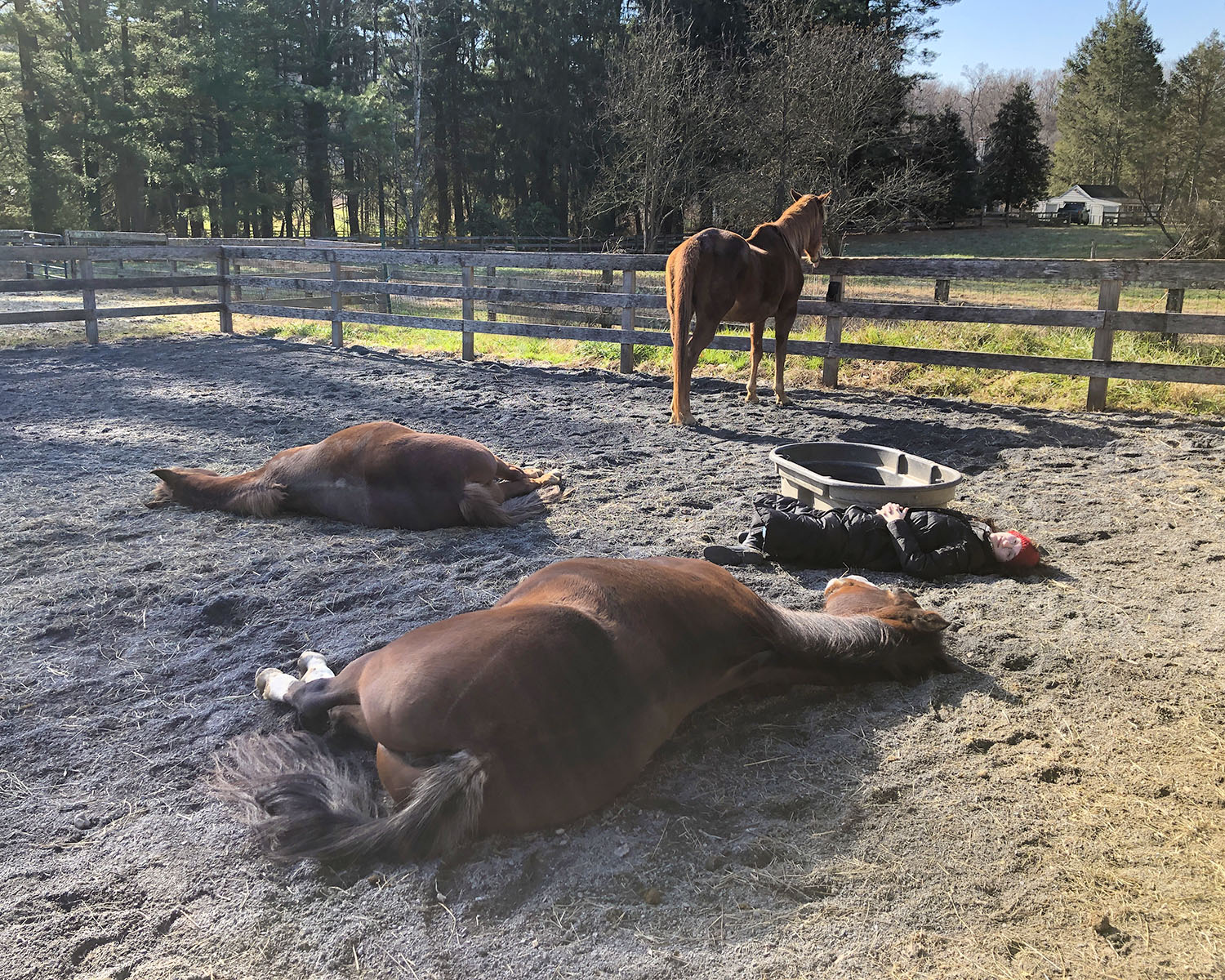
Through the years, I noticed that Daisy would often volunteer more interaction with people than just welcoming them upon arrival. She would find ways to get their attention and work to help them stay present. One method she finds particularly successful is to lie down next to them. Sometimes she will roll, rise up and shake off, sometimes she will relax into a sleep state, and sometimes she will stretch flat out into REM sleep and dreaming. Daisy’s act of communicating through lying down has been contagious. Not only have many people been moved to be on the ground with her, but the other horses have begun to do the same thing with more precise timing.

People have reported feeling strong waves of emotion, immense gratitude, specific visual images, and sometimes entire messages that felt like direct conversation from them. The horses do not have to be lying down for this to happen, but sometimes it seems to be how they find “a way in” with people. Let me be very transparent here… I am extremely skeptical of most people with the title “Animal Communicator.” I have had some unfortunate experiences involving self-professed animal communicators with the horses. What I am witnessing here feels like a different way of sharing feelings and insight. Perhaps it is simply that the horses are creating time and space for people to relax enough to feel their own inner knowing with more clarity. Perhaps it is a non-verbal way to communicate that is beyond body language. Perhaps it is a combination of both.

What I can ground in observation is that more relaxation and more sleep results in healthier horses and healthier people. In addition, the profound experience of a horse choosing to stand with, or lie down with a person creates a remarkable space of openness to trust and connection to the thoughts and feelings that arise. There is something fertile in the space of allowing thoughts and feelings to arise without striving for the “right words” right away. If and when we need the words, they will come.

Speaking Horse

There has been a lack of words, a lack of writing in my life these last couple of years. I am starting to find words again, as the horses seem to be speaking up – in their own, nonverbal way. Is it just me? Have I rounded some corner in my relationship with them? Or is the way they are speaking up with everyone who comes to work with them shifting? Perhaps, a little of each. Perhaps, I have learned how to listen better, and perhaps they have learned to trust more that we humans are listening.

***

The morning sun was finally out in full force. Chickens were busy bustling around the paddock, looking for goodies in fresh manure. The sounds of Saturday echoed around us through the trees, with a tractor humming and clanking, a chainsaw in the distance, people making the most of weekend work outside in the country. 

Here in the paddock with the horses, nine-year-old Elizabeth was learning how to talk to horses. She was focused on her effort to befriend Daisy, a quarter horse mare who happens to be the most seasoned equine guided coaching horse in the group. Daisy seemed very content to stand quietly alone in the field, unfazed by the surrounding noise and activity. Elizabeth, in turn, was unfazed by the din, and was exploring how to silently speak to the horse with her movements, and let her know she wanted to spend time together. How close could she could walk toward Daisy before Daisy turned even an ear towards her, acknowledging her approach? Several yards away, Daisy swung her whole head towards the girl, who immediately stopped in her tracks in order to show the horse clearly she was paying attention. 

Elizabeth continued, very focused, very patiently… when Daisy looked forward again, she would walk carefully toward her, until she swung her head around again, as if to ask, “what do you want?” On the third approach, Elizabeth was no more than 2 or 3 feet from the mare, and she diligently stopped when Daisy turned toward her again. She stood still, waiting for the horse to look forward again. 

Instead of looking forward, refocusing on the environment in the distance, Daisy sighed and lowered her head. Then she picked up one hind foot after the other, folded herself in on her front knees, and dropped to the ground at Elizabeth’s feet. The girl was stunned and thrilled all at once. I asked what she felt in her body that she wanted to do, and she said, “I want to get down on the ground with her.”

A girl who about twenty minutes prior had said she had trouble standing still was now sitting on the ground with Daisy, quietly and easily tuning in to this moment they were sharing. Her attention focused on feeling the sense of togetherness with a horse, she was fully present, open to the entirety of the experience, and connected to herself and this horse in a new way.

Meditation, mindfulness, present moment awareness… these practices can take a lot of effort, trying and trying again, to even feel slightly successful. Yet a horse can help someone take leaps and bounds in, literally, one sitting.

I used to think that I had to make children’s sessions different from adults because they tend to have much shorter attention spans and I thought they might get bored easily.  Here was Daisy, proving me wrong. I’ve since begun treating youth equine guided sessions very much the same as sessions for adults. The horses will meet them where they are, and find ways to help them learn whatever seems to need to be addressed in the moment. 

I used to think that Daisy was tired of children, because after years of being the star children’s horse in sessions, she started to head for the far end of the field when she saw a child approaching. Now I realize, she was tired of not being able to do the work she knows how to do with them, as I was teaching primarily fundamentals of care and groundwork and very basic riding. Guess who was getting bored easily.

Follow the Horses

There I was in a hotel bar in Texas, at a table full of rock stars. Seriously, rock stars. If I was a folk-rock singer, the career I secretly wished I could have had since college, it would be something like hanging out with Joni Mitchell, Sheryl Crow, Bonnie Raitt, Stevie Nicks, Bob Dylan and Eric Clapton. I still have my guitar in the basement somewhere, but I chose the other sure-to-get-rich-and famous career path: working with horses.

I was at the 2023 Journey On Podcast Summit, hosted by Warwick and Robyn Schiller, and that particular evening, I was listening to exciting thoughts and ideas bounce around and across the table with my colleagues, Hallie Bigliardi and Amanda Kent, our teacher and founder of Equine Guided Education, Ariana Strozzi Mazzucchi, EGE colleague, mentor, and extraordinary trick rider and trainer, Kansas Carradine, legendary horseman and author, Felipe Leite, and the host and paradigm-shifter of horse training, Warwick Schiller. 

Maybe it was the recent Covid years of being in small groups only, maybe it was too strong of a gin and tonic, or maybe I was simply unprepared for the sheer intensity of the energy present at this gathering of some two hundred fifty passionate, dedicated people coming together to share and learn the ways in which we can make this world a better place for people and horses… but whatever it was, I was suddenly overwhelmed and in need of air and space. 

Excusing myself to step outside as gracefully as one can from the middle spot on a crowded bench seat, two or three different people asked if I was okay and if I wanted someone to come with me. “Oh, no, thank you,” I reiterated, “I just need some air and will be right back.”

And with that, I strode out the nearest door into the festive night on the downtown San Antonio street, so bright and loud with merry-makers that I did not hear the alarm I had set off using the emergency exit. 

I had not seen a horse since I had arrived in Texas two days prior, so it felt oddly surprising to walk right into an intersection with a horse and carriage at the front of all four converging lanes of traffic. These carriages were aglow with colorful lights, the horses’ manes and tails beautifully brushed and braided, and one horse even had hooves painted a deep pink with glittering sparkles. The four-year-old me would have thought she had walked straight into heaven.

The present day me walked straight through the intersection and turned to walk in step with the first horse to start moving forward as the light changed. What an opportune way to take a walk and take in the night air – with a horse. It did not even cross my mind that the carriage driver or his passengers might find it somewhat bizarre that a strange woman was walking along with them on their evening ride. I was focused entirely on my breath, my steps and the horse. 

The horse was walking methodically, not particularly fast nor slow. He kept an ear on me, and when we stopped, he would turn his head toward me, and I would nod back. When we turned left, I would be in the middle of the street. I suppose walking alongside a horse is an excellent form of protection from both cars and questions. Not a soul spoke to me, honked at me, or even seemed to see me at all. 

At some point, I began to sort of come back to earth, and thought I ought to get back to the hotel. “Always thank your horse,” was the main thing I remembered from my first riding lessons, given to me by my cousin, Mary when I was five and she was fifteen. So, I silently thanked him, gave him a bow in appreciation, and heard him sigh loudly, so I hopped from the street to the sidewalk and reached for my phone to check the GPS for how to get back. 

Only, there was no phone in my pocket. I had left with nothing, no money, no ID either. One of the life skills I do not possess is having a sense of direction, so I almost laughed out loud at my situation. I felt oddly free. Perhaps more free than I had in a long time. I opted to take the stairs down to the Riverwalk, to see if I might recognize some restaurant or landmark down there that would help me find the hotel. 

The very first, and only, person to speak to me on my journey outside was a woman with long dark hair who looked at me quizzically and asked, “are you okay?” I replied that I was, indeed, okay, but I was lost. She said she was a psychic and she could see I was undergoing some shifting in my life, and asked if I wanted a reading. “I meant, I am physically lost – I don’t know how to get to my hotel.”

She kindly pointed the way – not with her psychic abilities, but with the GPS on her boyfriend’s phone. I was a bit curious about what the reading would be like, but growing need to use the bathroom at this point took priority, so I opted to go directly to the hotel.

As I rounded the last corner onto St. Mary’s Street, who should be headed directly towards me on the street, but the very same carriage horse I’d walked beside. If I had stayed with the horse, I would have ended up right where I wanted to be. 

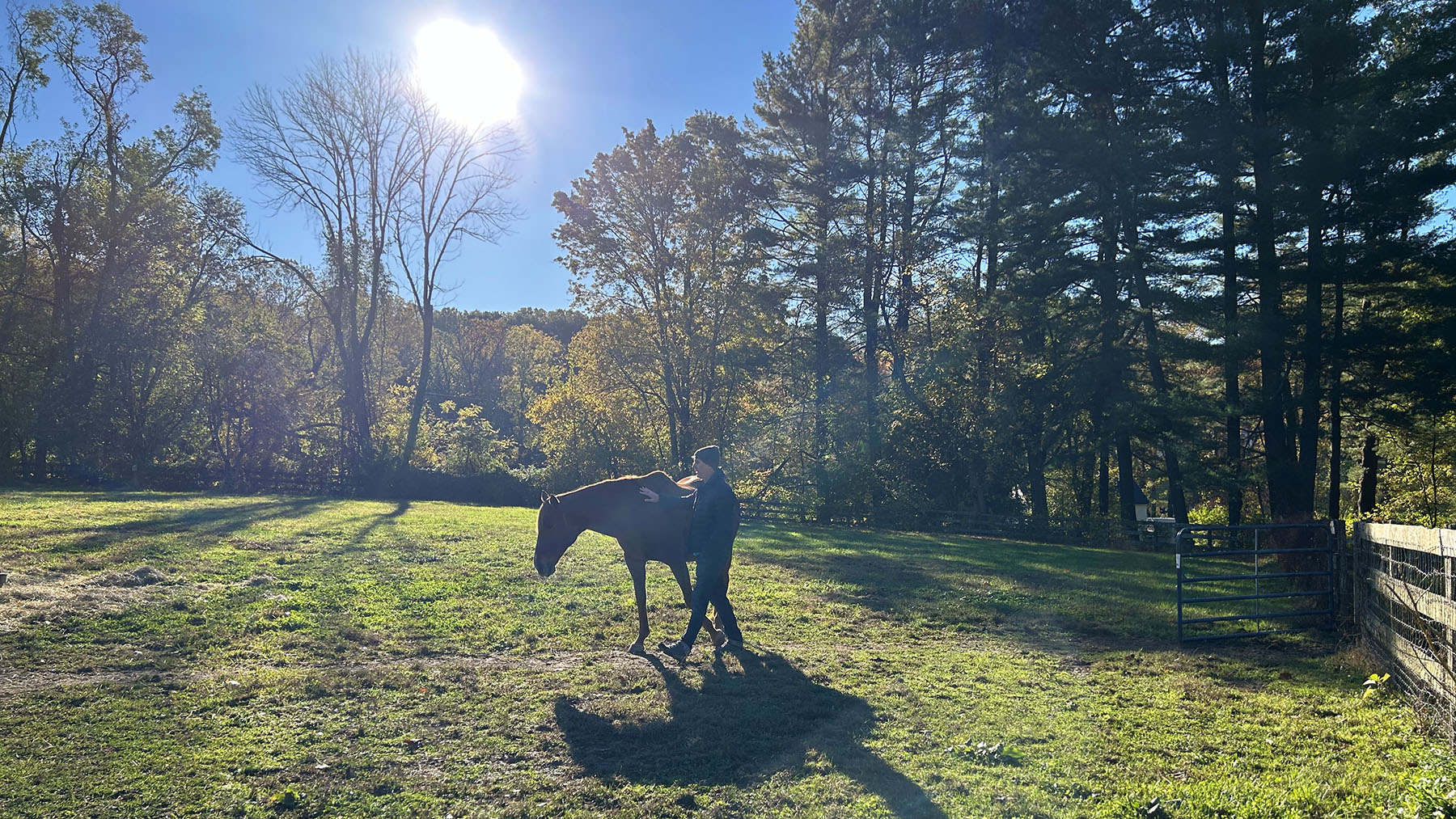
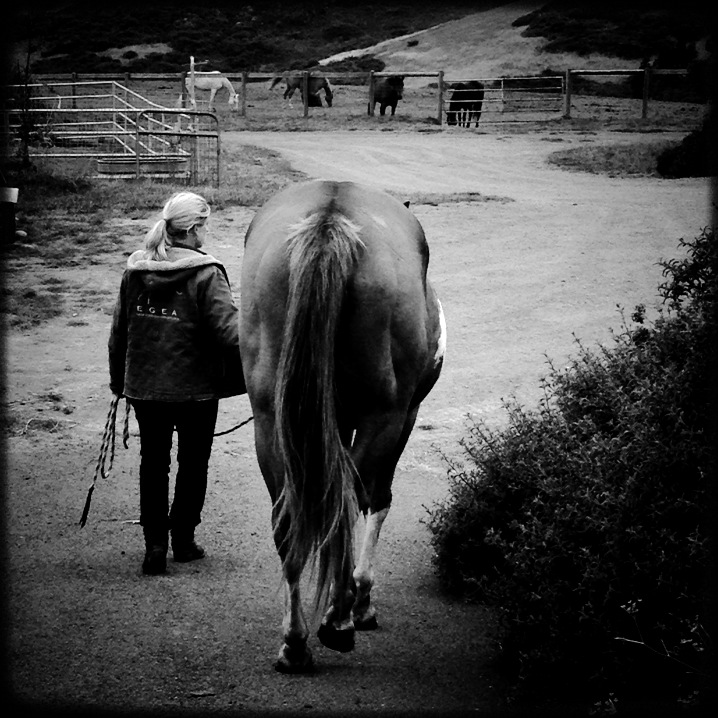
Photo of my brother, walking with my elder mare at home in Maryland.

The Energy of Empathy

The small but sturdy paint mare stood stock still in the cross ties. Her breathing was somewhat shallow, her eyes and ears wary. The girl was brushing her. The brush swept across her flank in a manner that felt methodical and distant. Every day, girls of various ages would halter her, walk her into the cross ties, groom her and tack her up for their riding lessons. Sometimes the girls were happily chatting to her, their words lighthearted and friendly. Sometimes the girls whispered their sadness to her, trusting her with their most sacred feelings. Sometimes, like today, the girls were silent, tense, biting their lips as they powered through the mechanics of what they were there to do.

It was these times that worried the mare. She was an experienced lesson horse, and she knew that when the girls were quiet and tense, there was little chance that they were thinking about what they were doing, or truly considering her or themselves at all. It usually meant that the riding lesson would be a struggle. The mare tried hard to understand what they were asking her to do, and she knew they were trying to understand what the instructor was asking them to do, but it was very often forty-five minutes of feeling their frustration increase, their hands jerk the reins harder on the bit in her mouth, and their kicks to her sides become increasingly more desperate and painful.

She was bracing herself as the girl hoisted the saddle up onto her back. Her nine-year-old fingers were fumbling to get the billets into the buckles to secure the girth when the instructor’s voice boomed through the barn, “You are late and this is no time to dawdle! Get that tack on and get out here now!”

The mare could feel the girl holding her breath, using all her might to tighten the girth. By now the mare had begun to pin her ears, trying to show the girl she was worried and did not feel safe. She began to side-step with her hind feet in some attempt to move away from the girl who felt like she might explode. “Don’t let that mare walk all over you,” the instructor sounded angry now, “Tighten that girth and get to the bridle!”

All the girl’s desperation and anxiety came through in one swing. The riding crop landed with a resounding smack on her hindquarters, and in less than a fraction of a second, the horse defended herself. In an immediate reaction to the perceived attack, she kicked out at the girl, landing a hoof squarely on her thigh and sending her reeling against the barn wall.

Healing happens when we experience somatic empathy. When another person – or another being – is fully present to us and how we are feeling, we experience something more than just being understood on a cognitive level. We experience a resonance and a relief that is beyond words, beyond thinking, and that is truly curative.

Horses live every moment being fully present. When we are interacting with them, or even just near them, they are taking in our somatic cues and the energy of our true feelings. We can opt to try to power through, to force our agenda, to ignore both what they are feeling and what we are feeling. Or, we can take every opportunity with a horse to learn more and more self-awareness, to become adaptable and resilient, and to heal the parts of ourselves that have not been acknowledged, soothed or allowed to release the past tension, grief, anger, fear or frustration they are still holding onto.

The girl is now an adult, returning to horses for a new experience; for healing and for changing old patterns in her life. One day, as she was beginning to brush a horse in the field, she felt something constrict in her chest and her solar plexus, at the same moment the horse pinned his ears and side-stepped away from her.

A memory was welling up in her body. Often we block some or all of the cognitive portion of a traumatic memory; rather than feel the pain of it, it seems easier to try to suppress it, or to make it go away. But the body remembers, and all it takes is a situation that reminds the body just enough of that past experience to bring it back.

With the horses, an opening is created for somatic empathy. Instead of powering through and continuing to try to make the horse accept the brushing, she stood next to him, breathing deeply and regularly, and talked to him about the memory that was emerging.

Her mother had been running late that day, as usual. She snapped at Angie to move faster, to get her riding gear and get into the car. Angie could feel the tension in her mother as she turned the key in the ignition and unclenched her teeth just long enough to take a drag of her cigarette. “Goddam it!” her mother swore as a warning light flickered on in the dashboard. “We’re going to have to stop for gas.” Angie shrank deep into the back seat, hoping that it wasn’t somehow her fault that there wasn’t enough gas in the car.

She was pretty sure it was her fault that her parents yelled at each other all the time. And she knew that she had to try harder not to talk too much around her father. She loved his attention when she started a story and it seemed like he wanted to hear it. But she would always take too long, and he would cut her off and be done with her, sending her to her room.

When she got to the barn, the other girls in her lesson class were already taking their horses and ponies to the mounting block to get on. She held her breath, waiting for her instructor’s angry words, admonishing her for taking too long. Angie loved this horse. She loved all the horses. She wished she could stand and pet them and talk to them and love them for the whole lesson. But she had to learn how to be stronger, be a better boss. “Horses need to know who’s boss,” the instructor would say.

Angie didn’t feel like a boss. She felt like a nervous little girl who was trying hard all the time not to make anyone angrier or more upset than they already were. She was worrying about not being a good boss when she was hurrying to brush the mare. And she was worrying that she wasn’t strong enough to get the girth tight enough… not just because the leather would slip through her small fingers when she tried to pull on it, but because she didn’t want to hurt the horse. It seemed cruel the way she saw the instructor pound her knee into her belly and yank the girth to make it so tight so quickly.

When the yelling started, she felt hot tears behind her eyes. She was trying so hard to be good, to be on time, but she was way behind and now the horse was stepping away from her, making the job of tacking up even harder. She knew she had to show her she was the boss. She bit her lip even harder and tried to emulate the instructor… or maybe what her father would do, be tough… and she picked up the riding crop and whacked the horse with it to make her behave.

The hot tears that she held back over forty years ago came back. They leaked out of her eyes on behalf of her love for that mare, her shame over hitting her. And for her fear of disappointing her parents and her instructors, but not knowing how to be true to herself back then, how to love herself the way she loved others. My gelding sighed deeply, yawned, and cocked one of his hind feet – settling in to relax next to Angie for as long as she needed him.

Somatic empathy happens without physical contact. It is simply one body feeling something that another body is experiencing. A person may want physical contact, and the horse may accept that, but touching is not necessary for the horse and the human to be connected in somatic experience. In this time of limited physical contact, of social distancing and self-isolation, I find it intriguing and helpful to explore the way in which matter and energy are interchangeable. How far apart can two bodies be and still experience what is happening in the other? If horses are any indicator, it’s a lot farther than six feet.

Training & Trusting


He almost always whinnies as soon as he sees me come into view. Sometimes it is an acknowledgement, a greeting. Sometimes an expectant call for attention or food. The fact is, Zorro is very externally focused and keenly observant. He wants to know everything that is going on around him and he wants to control how it affects him as much as possible. It’s familiar to me, this desire to control the impact things might have on me. Perhaps it’s one reason I relate to this quirky yet fiercely committed little horse.

Zorro_0698_6x4_F


Seven years ago in November, I decided to foster a horse for a rescue in the Bay Area of California. I had recently moved to a ranch in a small town outside of Petaluma, where I was working and continuing my education in Equine Guided Coaching. The rescue had run out of room for the horses they were being called to help, and this particular horse had been picked up by animal control because he had been left living tied to a tree.


The horse was small, fine boned gelding, all black with an almost moon-shaped star on his forehead and one short, white sock. Several people had come to try him out with interest to adopt, as he was good looking and curious. But although he was easy to tack up, he was difficult to ride. He would freeze suddenly, spook easily and chomped terribly at the bit.


They estimated that he was about ten years old, but his personality was much more like a two-year-old. He was easy to engage and interested in everyone. He was playful and social with the other horses in the field, and was often the self-designated look-out, standing watch over other horses while they slept. He had a kind eye and I could not resist volunteering to care for him and work on his riding to help make him more adoptable. And so it was that I became the foster human for Zorro.


It was no surprise that Zorro became anxious when left standing, tied to a post. I spent a lot of time just loving on him while he stood tied, and gradually walking away for longer distances and longer lengths of time. He seemed to enjoy it when I spoke aloud to him, especially when praising him for all of his strength and courage… a tactic I used frequently when riding as well. This horse wanted so much to understand what was being asked of him, and he thrived on praise. The problem was, he often did not understand. He would very easily get confused and overwhelmed, and when he did, he was reactive.


There were times when I’d ask him to trot and if my balance was the slightest bit off, he would suddenly plant all four feet in a jarring halt. Sometimes I didn’t know what it was that was disconcerting for him, only that he was suddenly uncomfortable with a request to continue, and he would reach around and bite at my foot. What did not work at all was for me to become impatient, or to ask over again in the same way. It became a mission of mine to understand Zorro’s point of view; to spend more time observing and information-gathering than on trying to “do” more.


I did not, and do not consider myself a horse trainer, but I do know that horses are being trained every day by whatever it is we do consistently around them. We train the people around us as well… often not realizing how we’ve been teaching people to respond to us until it’s too late and suddenly we are wondering why our friends and family assume we will do all the planning and care-taking and we don’t need any help!


With as much time as possible visiting him in the field, hanging out and watching, we started to know each other as friendly cohabitants of this ranch. With a soft rubber bit, and the softest possible hands on the reins, his bit-chomping dissipated. With patient practice of the simplest tasks, and copious praise for even the smallest of successes together, he began to relax more under saddle, which also greatly diminished his tendency to spook and lurch and gallop off in any direction. Just as much as I was working on his riding, I was working on my own. Zorro’s high sensitivity levels meant that I needed to be aware of any tension in my own body, and know how to release it. I needed to slow down and re-master the basics with more balance and flow than I’d ever had. Perhaps most importantly, I needed to trust in myself and my ability to figure out the best way forward for the sake of the horse. Zorro was not going to trust me nor any request I made of him if I did not have complete trust and confidence in myself.


When prospective adopters began calling about Zorro after he’d made progress, it seemed no one was a good enough fit. I found something “wrong” with all of them. I couldn’t let this horse go off to just any home, after all. A few different friends had to help me accept the truth: I had fallen for this horse and he had fallen for me. On Valentine’s Day of 2014, I officially adopted my third horse.

Zorro+Ash7032


As the weather gets colder, and the grass gets sparser, Zorro knows that when I come out of the house, it often means I will bring hay out to the pasture. He waits by the fence and whinnies in anticipation as soon as he sees me emerge from the door. There are flood lights on outside the house during the night. Even if the sun is up in the morning by the time I am ready to go out, he is watching those lights. Just before I step out the door, I switch off the lights. Zorro’s welcome whinny now comes as soon as I switch off the lights, and before I step out the door.


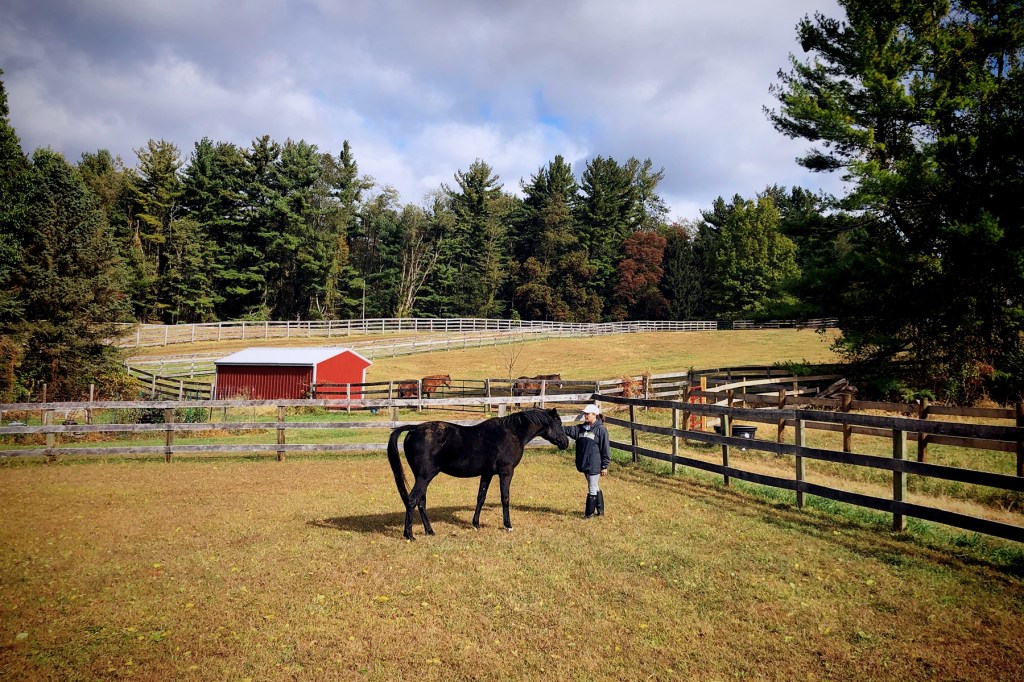
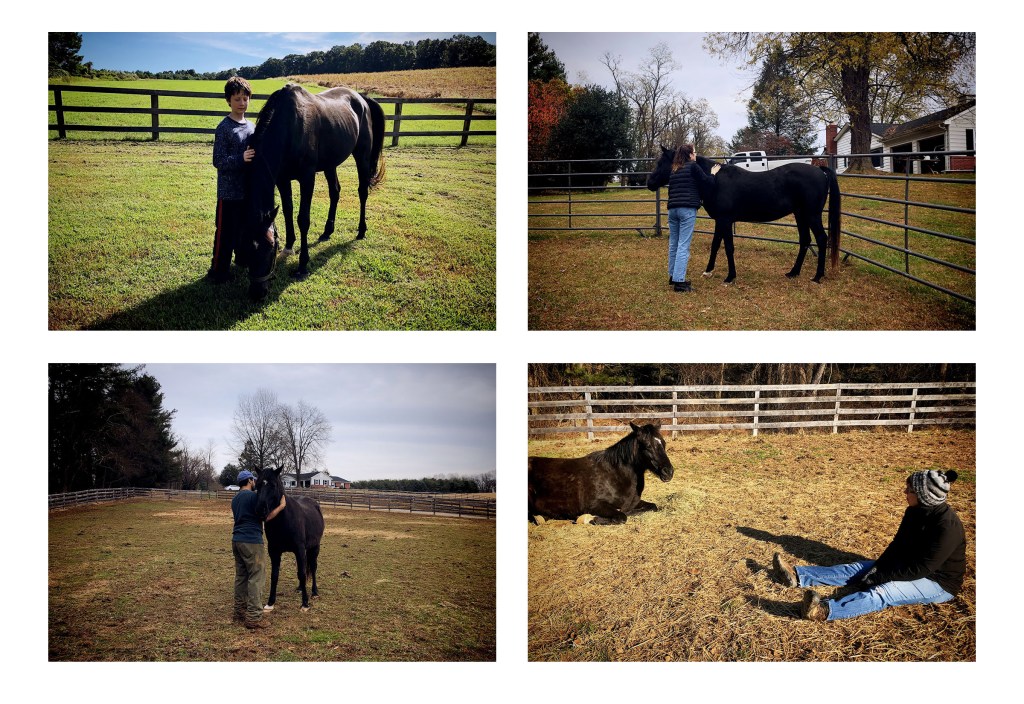
Images of present-day Zorro at work in Equine Guided Coaching. He helps others foster the confidence and trust he helped me train in myself.


Magic and Horses

The things that I remember the most clearly about my childhood are my relationship with animals and my relationship with magic. We had no neighbors close by, so I spent a lot of time playing by myself. I played with the horses in the field, I drank from the stream and licked the salt blocks with them. I tried to eat grass but found only green clover to be palatable. When I wasn’t playing horse, I was playing duck or dog or deer. I was enamored with all the wildlife that was ever-present on a farm. If I had to be indoors, I was up in my room holding seances and practicing the ESP and clairvoyance skills I wanted so badly to have. If I couldn’t be a horse, I thought maybe I could be a good witch.

My favorite book was called No Such Thing as a Witch, by Ruth Chew. Two children lived next door to an eccentric lady whose house was filled with all kinds of animals. She would bake magic fudge… one piece made you love animals, two pieces made you able to talk to animals, three pieces made you start acting like an animal, and four pieces made you turn into an animal altogether! I spent years sampling every piece of fudge I could get my hands on, always hoping it would be magic.


It wasn’t until many years later that I recognized the connection between horses and magic. In 2010, during my Equine Guided Education certification class, I was in the round pen in “inquiry” with a horse – this is an exercise in equine guided work where a person has an opportunity to explore a question or an unresolved feeling or issue in their life. When a person begins to talk about something and feel into it on a deeper level, the energy of the related emotion will arise and the horse picks up on that energy and responds to the emotions. It is in these responses that we are able to gain feedback that can help us gain clarity, as well as make choices and changes to move through the issue or question.

It already seems like magic, right? You don’t even need to eat magic fudge, and somehow, there you are, talking to a horse about your problems and the horse is answering you.

TajListeningToQuestion_F


On this particular occasion, the horse inside the round pen was calmly and consistently listening and slowly inching around the space, moving to the next best bite of short, nubby grass. I was talking about my fear of leaving my husband… I was so afraid that he would not be okay without me. Our marriage had not been working for several  years; I wanted to move to California and he did not, I wanted an almost entirely different life and he did not, yet I was still putting his happiness and well-being in front of my own at every turn and I couldn’t see how I could change that pattern. I didn’t want to hurt him. I was crying, feeling the pain of being stuck.

The horse began to reach her muzzle underneath the fence panels, eating the sparse grass outside of the pen. The facilitator, Ariana Strozzi, asked me what I thought the horse was trying to tell me. “Look outside. Stretch outside of my current thinking…” is what came to me. Then she directed me to look around. There was a small, mostly white, paint mare standing stock still about twenty yards outside of the round pen. “She’s been there the whole time,” Ariana noted. She went on to explain that horses sense shifts in energy up to miles away, and that the distance was nothing to that horse… she could easily be picking up on something and working to help me find resolution and balance.

I started to focus on this little mare named Lottie. Even though I was in a round pen in front of some fifteen people watching, I forgot about everyone else and found myself listening to Lottie. I could hear my mother’s voice. She said, “Ashley, I am here for you. I will always be here for you. And you’ve got to take care of yourself. Even if you can’t believe it right now, he will be fine. You can do this. You are stronger than you think.”

Lottie_6675_6x4

My mother had died in 1998. I had only felt her presence briefly twice, soon after her death, and seen her a few times in dreams. But I heard her voice. Now, whether this horse actually channeled my mother or not is unimportant. What was important was the strength it gave me to move forward and start to see new possibilities about my situation. For the first time, I could see how I was assuming that he was not capable of moving on, being safe and secure, finding happiness without me. Not only was I holding myself back from what I really wanted and cared about, I was holding him back as well.


Merriam-Webster defines magic as: an extraordinary power or influence seemingly from a supernatural source. Everything outside of that which seems logical, reasonable or provable by science could then be magic… and if the world is full of magic, then I wanted to experience more.

Not only did I get divorced, move to California and remain good friends with my ex-husband, but he soon after found lasting love with a new partner and is very much fine without me. And I chose to dedicate my life to bringing more magic to people through horses.

LottieLooks Back_8802_6x4

3Horses_Backlit_9303

The next opportunities to join in the magic of equine guided work are:

September 14th in Woodside, CA

October 5th in Sparks, MD

Details and Registration: SUSTAIN THE CHANGE 1-DAY PROGRAM


To Love a Horse

Like any other day, I opened my eyes and re-oriented myself to the world around me. I felt my breath come and go in regular intervals, and my body was still heavy with sleep. My brain quickly processed the tiny room, the duffle bag of clothes, and the anticipatory twinge in my gut, and I realized that I was in a cabin in Valley Ford, California, ready for the first day of my advanced Equine Guided Education training… and to meet the horse I had been asked to assess for a new equine guided program in Washington state, where I lived.

I had seen the horse from a distance four months prior, on my last trip down to the ranch to film a few days of the July equine guided training course. I remembered being curious about her, but feeling like she was off-limits somehow, as she wasn’t a part of the training. She had kept to herself, mostly, at the outskirts of the herd. No one had said much about her, just that she had been dropped off at the ranch by a family member. That happened sometimes, as I understood it, that friends or family who couldn’t or didn’t want to keep a horse any longer would bring the animal to these 200 acres of rolling pastureland and assume one more horse wouldn’t matter much to the owner, and that the horse would have a happy life roaming about with a herd and no pressure to perform in any way for people. But this horse was not taking to this sort of life. She had been dropping weight and cribbing more. She was not bonding with any of the other horses, and the ranch owner had no extra time to spend with her. It had become clear that the horse needed a new home, and an interested party had asked me to take a look at her while I was there training.

I was told that she would be in a stall so that she could have extra hay and alfalfa to try to put some weight on her. I took a deep breath, trying to draw in courage and wisdom, as this was the first time I’d done any horse assessing and, honestly, I had some performance anxiety. She was standing in the corner of the stall, her chestnut-and-white painted head held low. As I approached, I saw her ears twitch backward. I paused, wondering if the timing was wrong; perhaps she wanted to be left alone to sleep. As I stood there, waiting for a sign, she raised her head up and her ears twitched forward. As I slowly slid the stall door open, her ears laid backward again, and I could see the wariness in her eye. I paused in the stall doorway. As I stood there, I began to wonder about who she was. I wanted to know her story, and what was underneath her mix of uneasiness and curiosity. In the next moment, she took a step in my direction. Something shifted in her eye and she extended her nose towards me and the door. She was asking me to take her out.

Taj_Nov2011_Profile_6x4_F

Despite my warning that this horse needed a lot of work and care to be ready for a program of any kind, the program director had her shipped to Washington based on my feeling that she had potential. Three days after the horse arrived, despite my life being in the midst of change and upheaval, I adopted her when the director was injured in an accident and could not move forward with her program.

What followed was a love story that spanned eight years, a life together on both coasts, and a transformation for both of us that led to a deeper understanding of connection, trust, and the underestimated value of forgiveness and trying again. As I came to understand Taj’s story of love and loss, of habits and defenses built up over time to protect herself from further pain of being misunderstood or abandoned, I began to understand my own story better. I was leaving my marriage, my job, my home and starting my life over again in every way. I recognized that I was keeping people, particularly men, at a safe distance with my own version of ear pinning and threats of kicking them because I didn’t know how to trust.

I set about learning to open up, to listen better, to be patient, to keep trying. When Taj finally welcomed me into her stall without even a hint of an ear pin, I celebrated the breakthrough in our relationship like we had just won a trophy in a world class competition. Breakthroughs didn’t come without setbacks; she put me through the wringer as I tried to understand and get closer to her, biting me and kicking me when I was too focused on myself to be listening to her needs or concerns. I’m sure people wondered why I would want to keep a horse who crushed one of my fingers with her teeth, cribbed with a vengeance and went sour at the sight of a saddle. Where Taj excelled was in showing up for people when they needed it most, myself included.

Ash+Taj_WalkBack_BW

When she began working in Equine Guided Coaching, her demeanor really shifted. Realizing that people were seeking out her opinions and her help, she wanted to open up, engage and shine. Taj had uncanny timing with her interventions, sometimes lying down at a person’s feet when they were struggling to get in touch with a deep feeling or sense of clarity. She would put on her scariest mean face at false pretense and walk away from meaningless chatter. Life truly is too short for anything less than authenticity, accepting others for who they are, and acting with purpose. Once I really embraced that, she became a partner like no other, often wrapping her head around me, over my shoulder in the most loving of embraces.

She shed her tendency to lash out after that first year together, and never injured anyone else. I trusted her to let me know early on when a person was becoming too overwhelming or unsettling for her, and she trusted me to move them out of her space and help them find a different approach or way of being around her. Both horses and humans place tremendous value on finding someone who is never going to stop trying, never going to give up on them.

Ashley+Taj_Sunset_6x4


Like any other day, I opened my eyes and re-oriented myself to the world around me. My body was still heavy with sleep as I felt my breath draw in and catch in my chest. There was a piercing twinge in my gut as I realized I was waking up to a world without Taj in it.

The evening prior, I had come home to turn my horses out when the sun had begun to soften its fiery glare and the biting bugs and flies had begun to dissipate. I was speaking aloud to all the horses, asking how their day had been, when I opened the door to Taj’s stall and stopped in my tracks. She was covered in her bedding, the dry shavings sticking to her sweaty body like sprinkles on a doughnut. The stall looked like a tornado had touched down in it. What had happened? She had been her healthy, hungry self when I had brought her in around 11:00am that morning.

I hosed her off with cool water and grabbed the halter for her friend, Bobbi, to turn them out together in the small paddock so I could monitor her behavior. But on the way to the paddock, Taj dropped to the ground at the end of the lead line, struggling to roll off the pain she was feeling. My mind began racing and my body went into autopilot mode in order to turn the other horses out with Bobbi, keep Taj in the barnyard, give her banamine for the pain, and call the vet who, to our good fortune, lived only two miles away and answered his phone.

No matter what I did to keep Taj moving or get her comfortable, she kept dropping to the ground. She even landed herself on the pavement of the driveway, scraping her face and forelegs into a bloody mess. Dr. Harrison administered more pain and muscle relaxant medication upon his arrival. He tried to do a rectal exam, but her system was so tightly clamped down that he could not feel very far inside. He recommended I take her to New Bolton large animal hospital for surgery, as the most likely scenario was that she had twisted part of her intestine and that would be her best fighting chance.

To put a twenty-five-year-old horse through an hour and a half trailer ride to a strange place and then through a difficult surgery that might have had a fifty percent chance of saving her seemed cruel. Instead, he left me with an extra muscle relaxant injection and told me to call him in a couple of hours. There was a small chance that if the medications could ease her pain and relax her body, she could roll herself in a way that would reposition the intestine back to where it should be.

All I could do was wait and be with her through the struggle. I rubbed the base of her ears, which can sometimes help relax a horse with gut pain. I slathered lavender and peppermint oils on her belly and her coronet bands, and held the bottles near her nose so she could breathe in the healing scents she had always enjoyed. There were minutes here and there while she rested on the ground, and I could hug her and she would look at me with gratitude in her eye, as if to say, “thank you for being here. Thank you for loving me.”

After a couple of hours with no significant change in her level of discomfort, I could not bear to see her writhing around on the ground any longer. I knew the next call I was making to Dr. Harrison meant I was ending her life. But she made one of the most difficult decisions relatively easy for me. If there is one thing we can definitively offer our animals, it is the relief from suffering a slow and painful death.

I held her head steady and kissed her between the eyes as the barbituates flooded her body. Her knees buckled and she went down quickly and easily, and with the second injection of euthasol, she was gone in moments.

TajAction6390


I still find myself scanning the field for her, waiting for her low, throaty nicker to greet me as I approach. When I pause, I can still see her and hear her, and feel the intensity of her embrace. With her presence in my body’s memory, I step forward into the day, renewing my commitment to purpose, to love, to never give up.


Taj+Ash_1444_F

Recipes for Living: Accepting Discomfort

It’s early morning and the horses are huddled together in the corner of their field. The sky suddenly releases a downpour of late spring rain, yet they stay still, their stoic bodies pelted by the watery onslaught, but they are comforted in their closeness.

There is a shelter at the other end of the field, but they are electing to stand in the torrent of rain. A few minutes pass and the steady pouring lightens up to more of a drizzle. The horses begin to move slightly; one scratching her side with her teeth, one foraging in the sparse grass in front of the gate, one rolling his head at the end of his outstretched neck, one licking her lips and tasting the fresh drops.

By the time the sun begins to pierce the thick cloud cover, and the rain stops entirely, they have ambled down the hill and gathered in the shade of the shelter.

DaisyRaindropCatch_F


I ask myself, what do I perceive as too uncomfortable to stand in? What fear of discomfort has me running for shelter instead of tasting the essence of something new? And I challenge myself to remember this morning as I brave being uncomfortable with newfound curiosity.


Recipe for Accepting Discomfort

  1. Can I learn from this feeling? What is it revealing to me? Is there a way to be inspired from this experience?
  2. Stand in the discomfort. Feel it. Notice whether it is more or less miserable than I anticipated. Surrender to this part of my experience as a living being.
  3. Notice what changes in how I feel in mind, body and soul.