Beyond Words

My first vinyl collection was a beloved assortment of stories, handed down from older cousins, uncles and maybe even my mother. The records were well-loved with a few skips and scratches by the time they came to me. Among the favorites were Dr. Dolittle, The Jungle Book, and Ferdinand the Bull. It’s no wonder that I grew up understanding that animals were friends and allies, with hearts and minds and voices of their own. I had conversations with dogs and chickens and horses on the regular, as they were all very good listeners, and quite capable of making me feel better on a bad day and not-so-alone any time.

Somewhere along the line of growing up, I lost faith that I could really understand them. I wasn’t entirely sure they could understand me any more either; maybe they could pick up some basic or obvious sentiments, but I began to doubt the level of communication I had once believed in devoutly. The record collection shifted… folk and rock music began shaping the way I related to being human, focusing on lyrics and words and how they resonate with people.

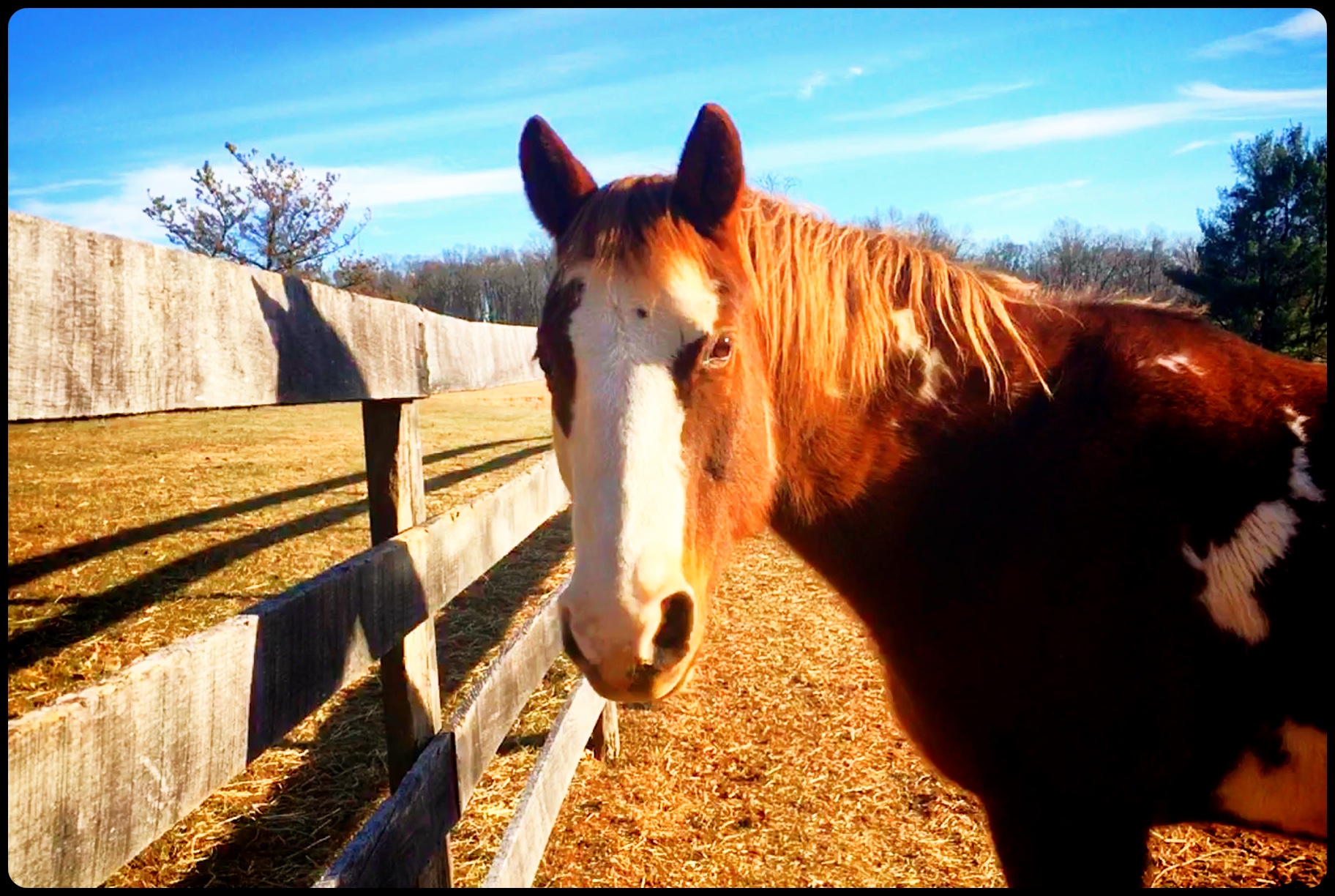
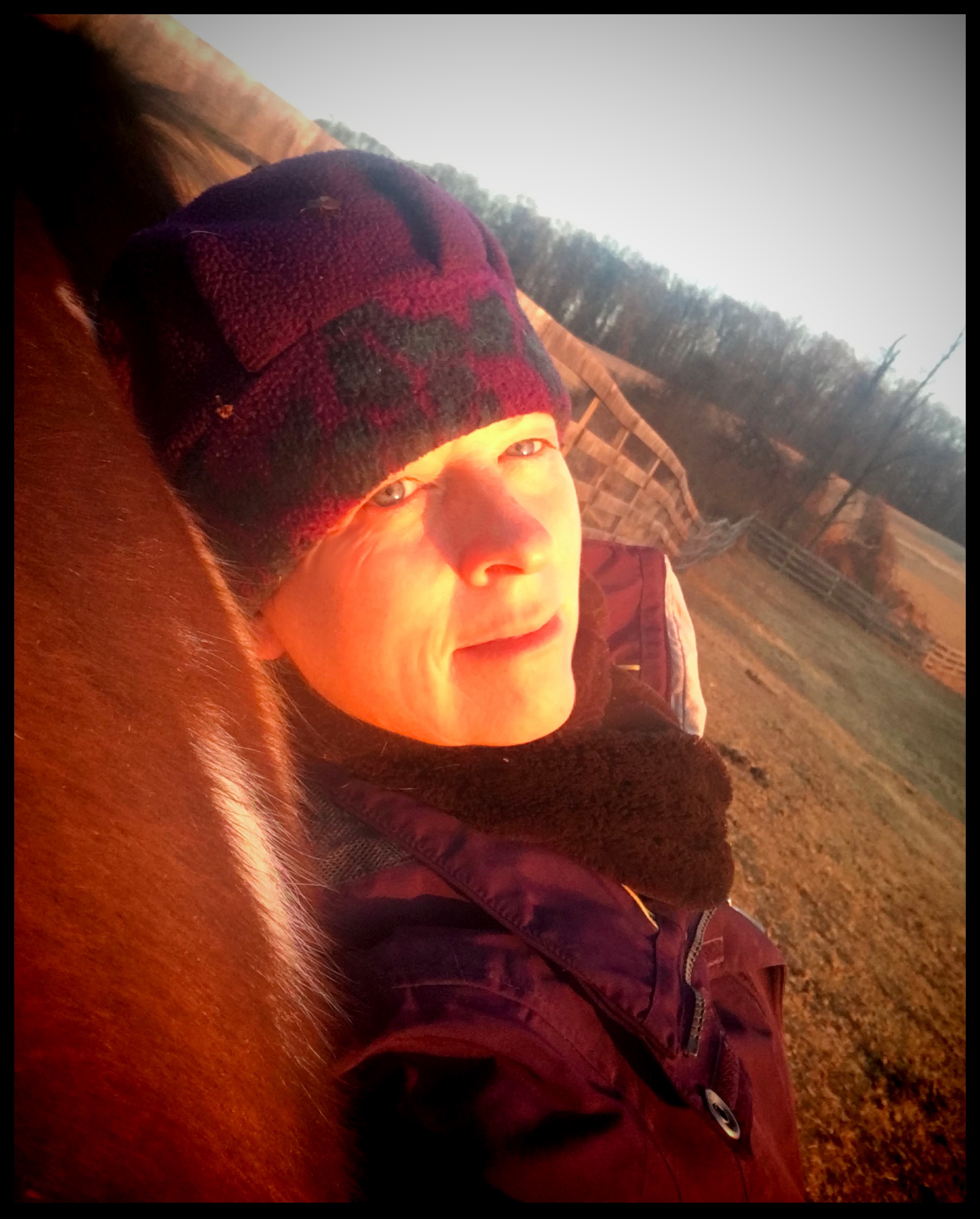
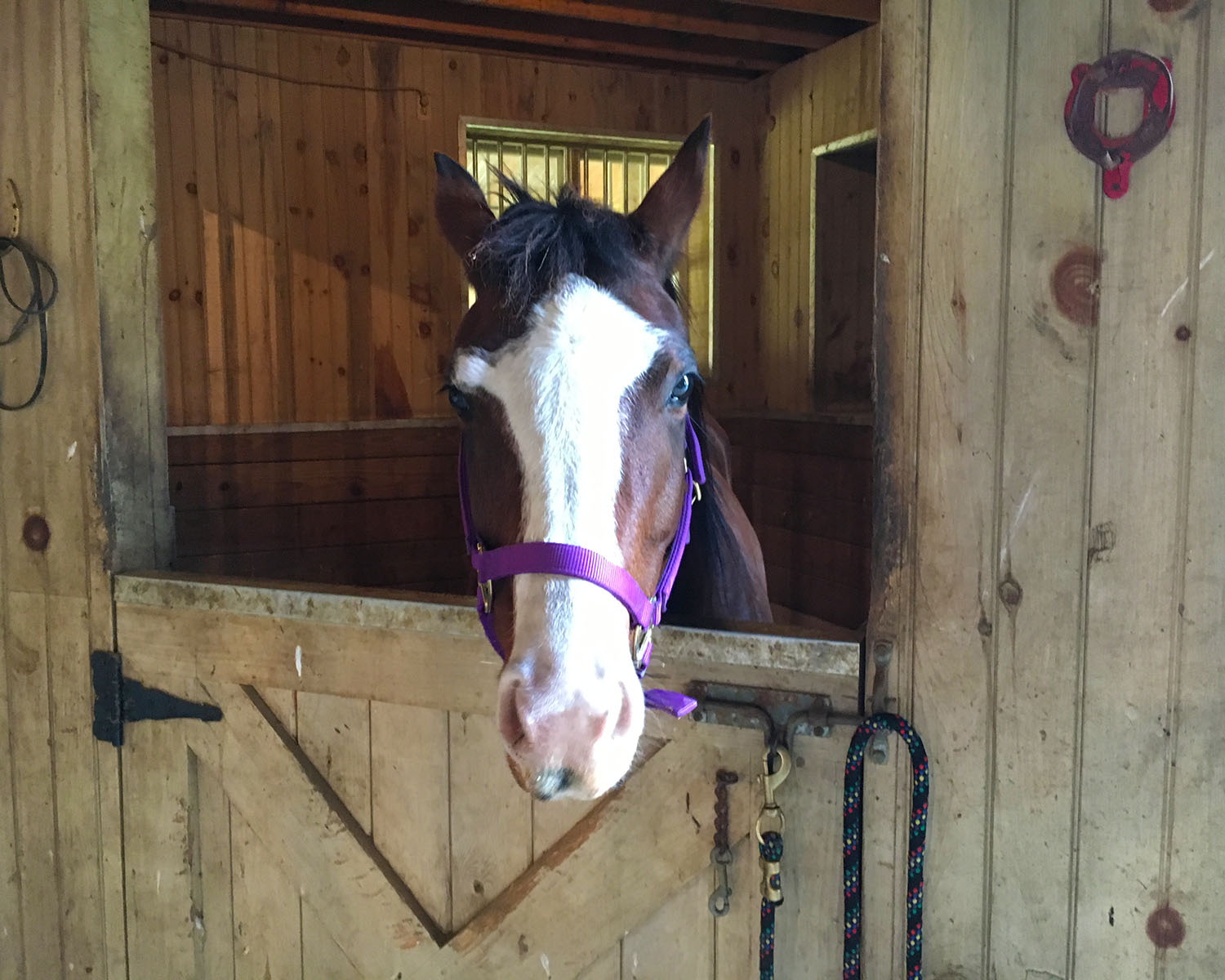
It has taken one very persistent horse to reconnect me with believing in different ways of communicating again. Daisy joined me fourteen years ago, as I set out to learn and practice and explore the field of Equine Guided Education and Coaching. She and I have always made valiant efforts to speak to each other – sometimes her frustration at my lack of understanding resulting in her boycotting everything I ask of her until I finally “get it.”
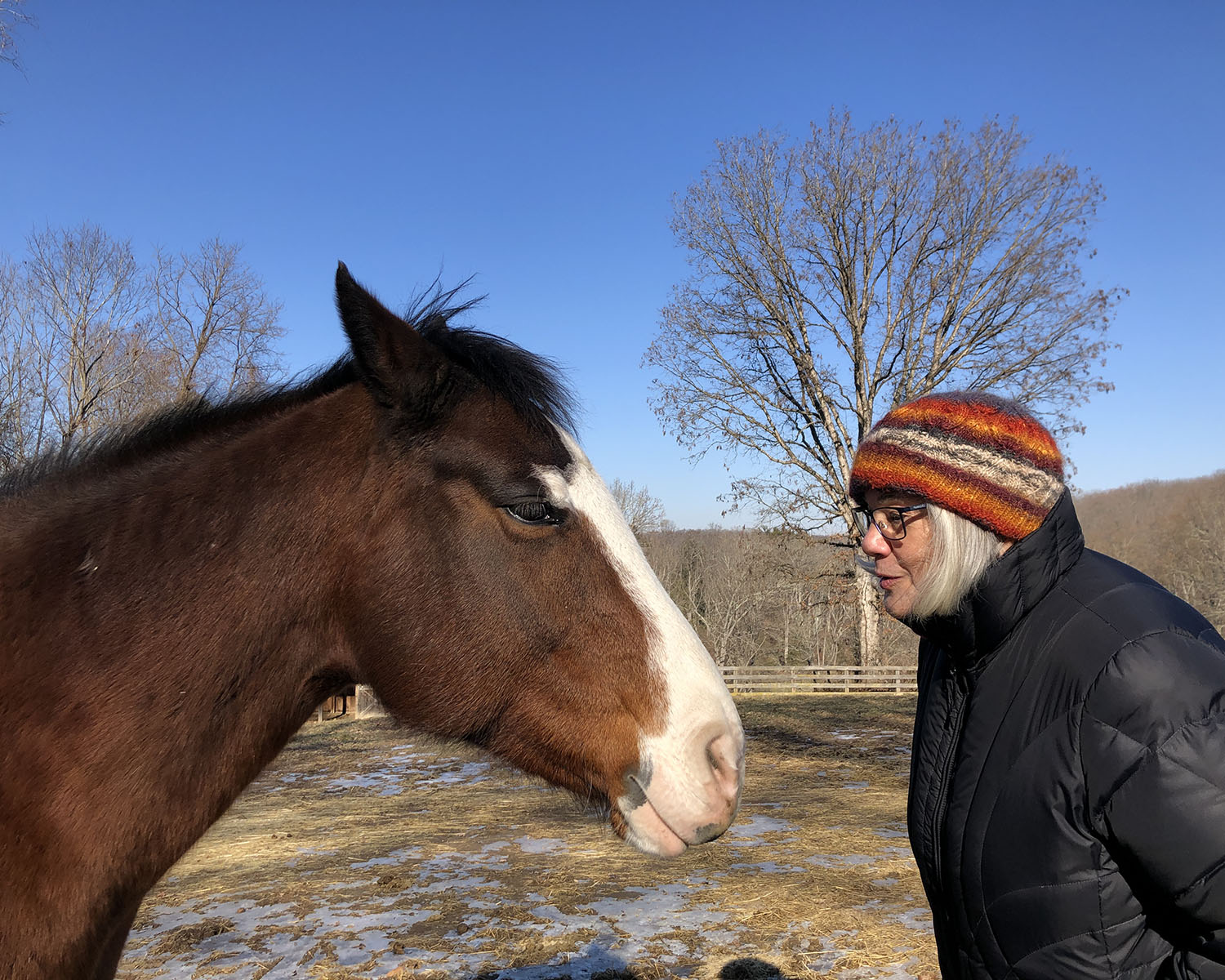
In general, we have a decent level of understanding one another, which I would expect from being together through three states, nine different farms of residence, five different equine family members, and hundreds of people of all ages coming to sessions. What I did not expect was the way she is able to clearly communicate with people she has just met.

The first time I remember Daisy taking the lead in a client session was about seven years ago. She was often overshadowed by my elder mare, Taj, who held a commanding presence and was rarely subtle, so it was easy to follow her lead. I, myself, thought of Daisy as the young, friendly ambassador who was able to disarm people who had resistance and tended to make everyone feel welcome. It was in the round pen with an independent-minded woman with whom my co-facilitator and I were working hard to find a way to connect that Daisy took over. Ignoring the ample green grass, the mare stood stock still next to her, appearing to go inward in a reflective, self-focused, resting stance. Neither of them moved, the woman assuming a similar pose, and to any onlooker, it might have appeared that nothing was happening.

As the minutes ticked by, it was at first a challenge to be patient and allow the ongoing silence and stillness. After a while, it became easier to stand and observe, and clearer that something was, indeed, happening between the woman and the horse. After what must have been at least twenty minutes, Daisy finally began moving her lips, licking and chewing and shifting her weight, eventually moving from that spot towards us onlookers on the outside of the pen. The woman thanked her and came over to explain her experience; Daisy had taken her through a range of thoughts and emotions, had helped her cut through to the core of her angst and indecision, and to recognize the next steps she wanted to take in her life.

For some time, I attributed the experience to the woman finding a way to quiet her mind enough to process her own issues and recognize her intuitive guidance. Fundamentally, I was trained to ground my reflections, insights and thoughts in observations of the horse’s and the person’s behavior and body language, and most sessions were heavily focused on movement, interpretation and helping people uncover their own relevance to what transpired. So what kind of grounding was there in someone reporting that one of the horses just told them some things they needed to hear?

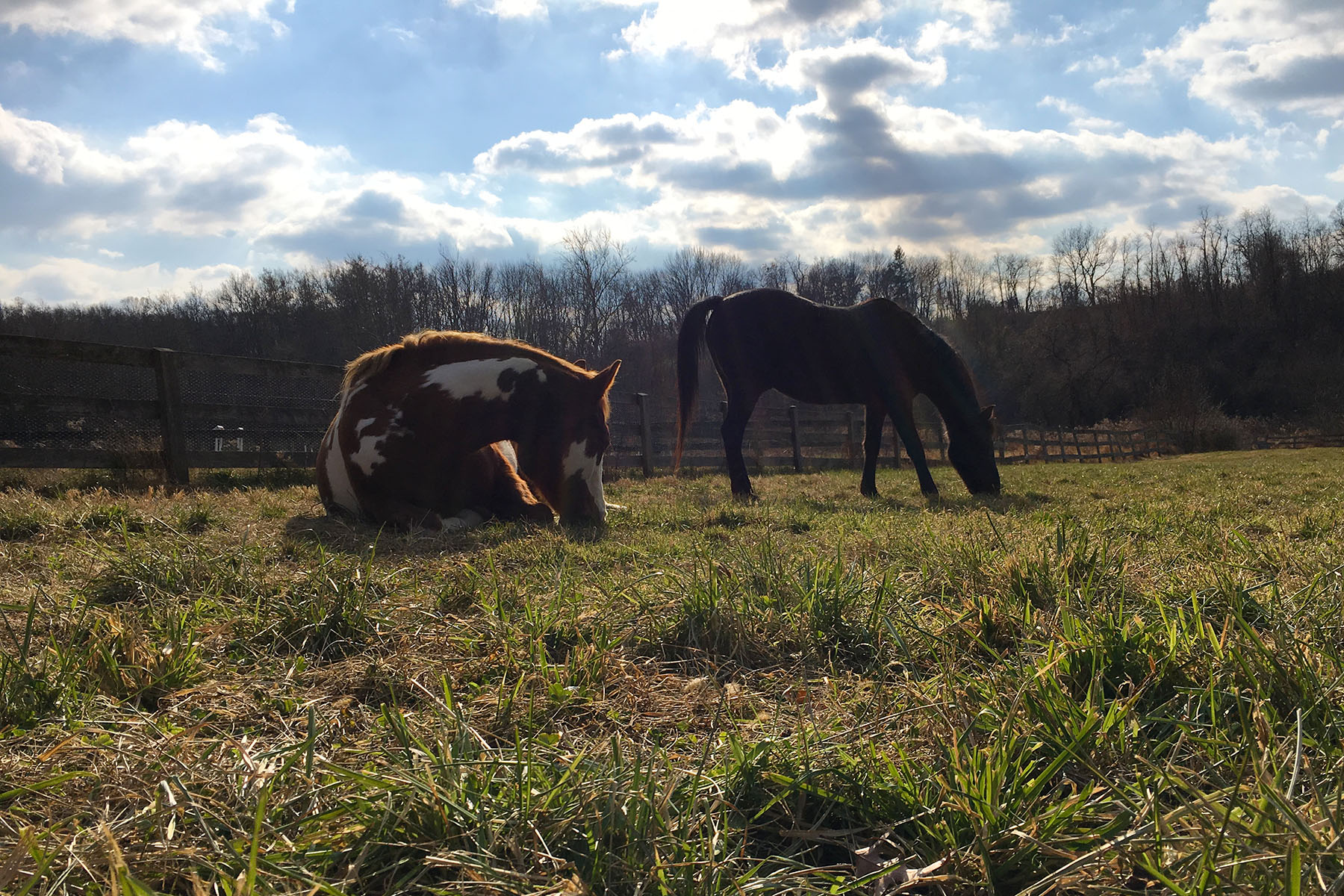
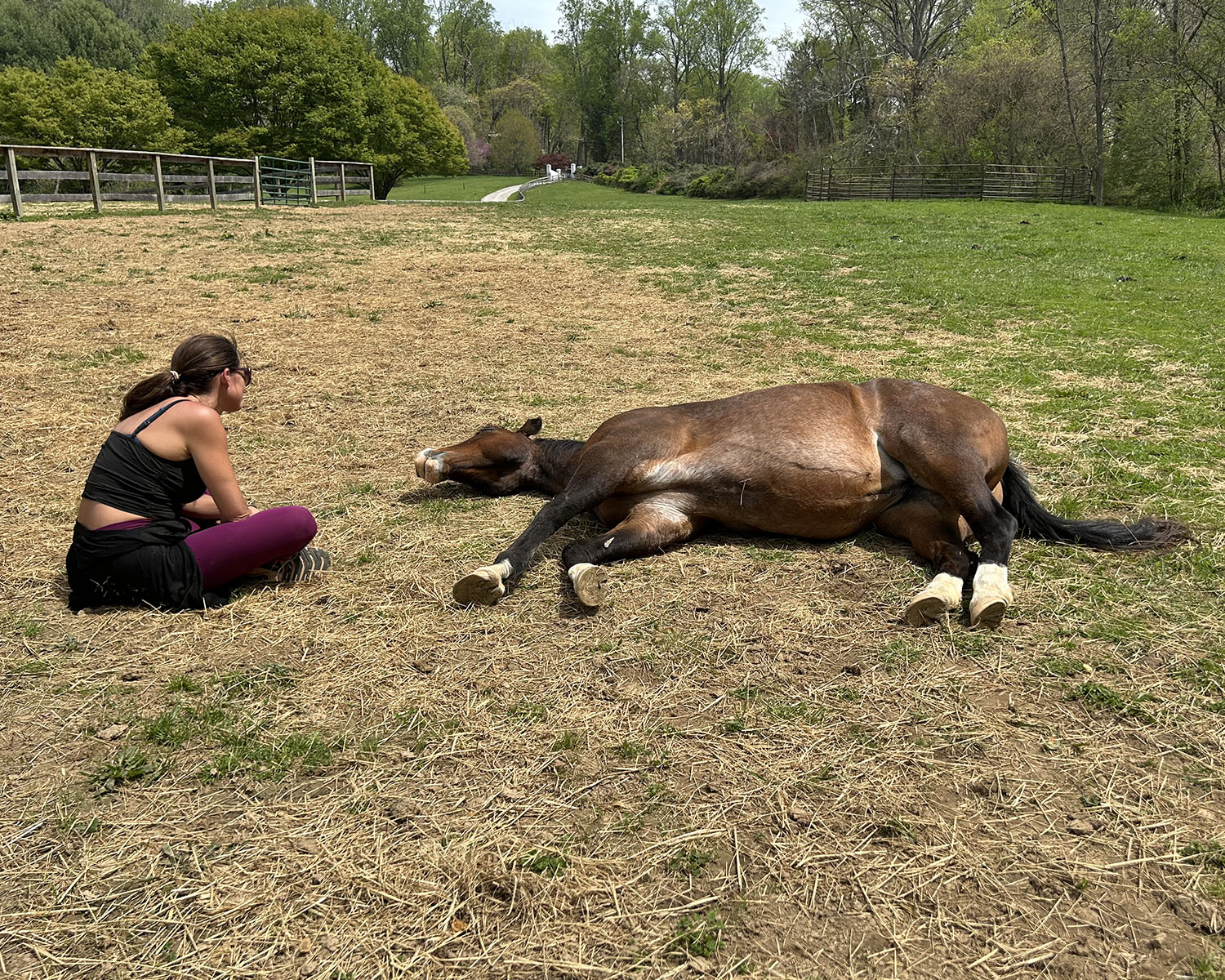
Through the years, I noticed that Daisy would often volunteer more interaction with people than just welcoming them upon arrival. She would find ways to get their attention and work to help them stay present. One method she finds particularly successful is to lie down next to them. Sometimes she will roll, rise up and shake off, sometimes she will relax into a sleep state, and sometimes she will stretch flat out into REM sleep and dreaming. Daisy’s act of communicating through lying down has been contagious. Not only have many people been moved to be on the ground with her, but the other horses have begun to do the same thing with more precise timing.
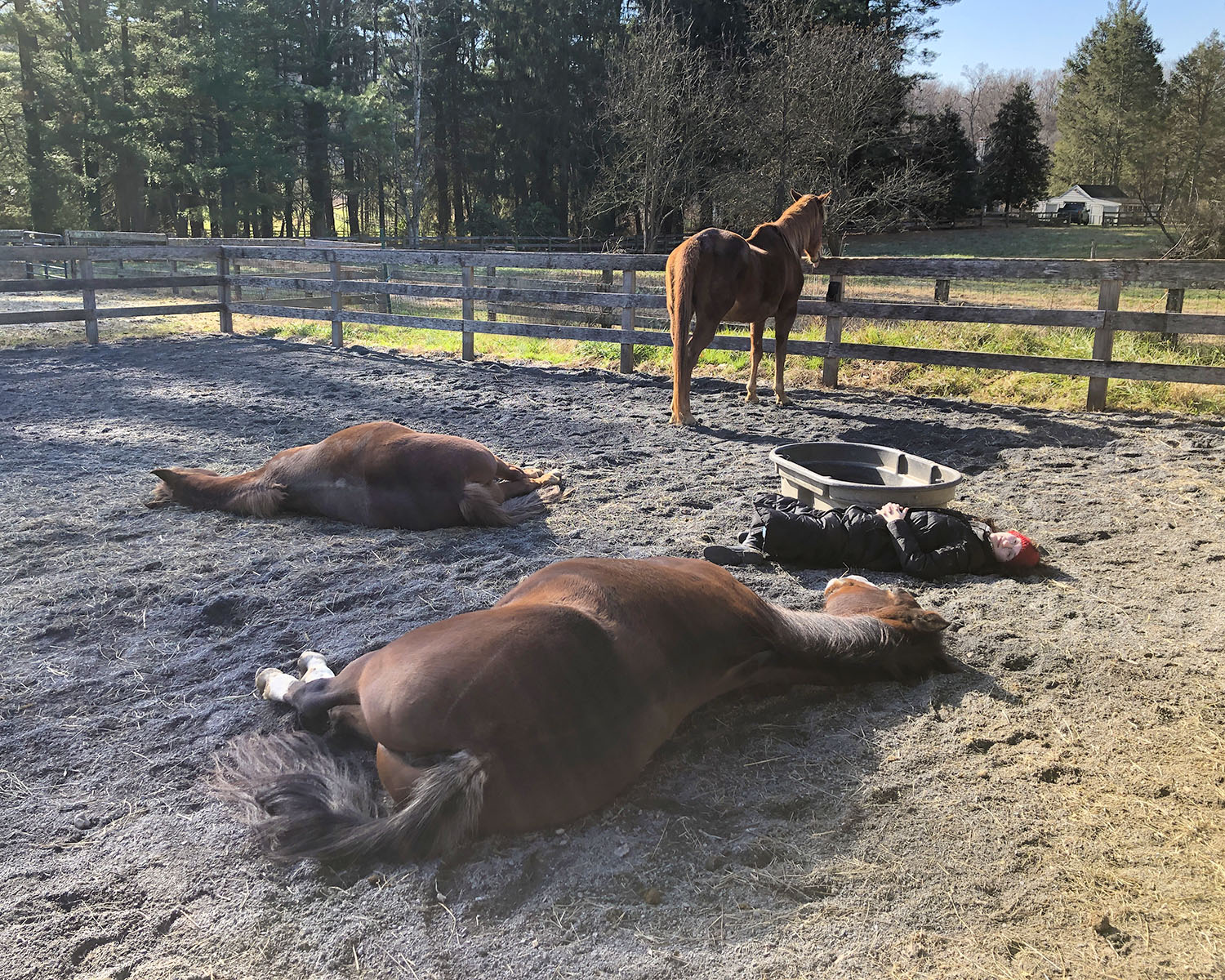
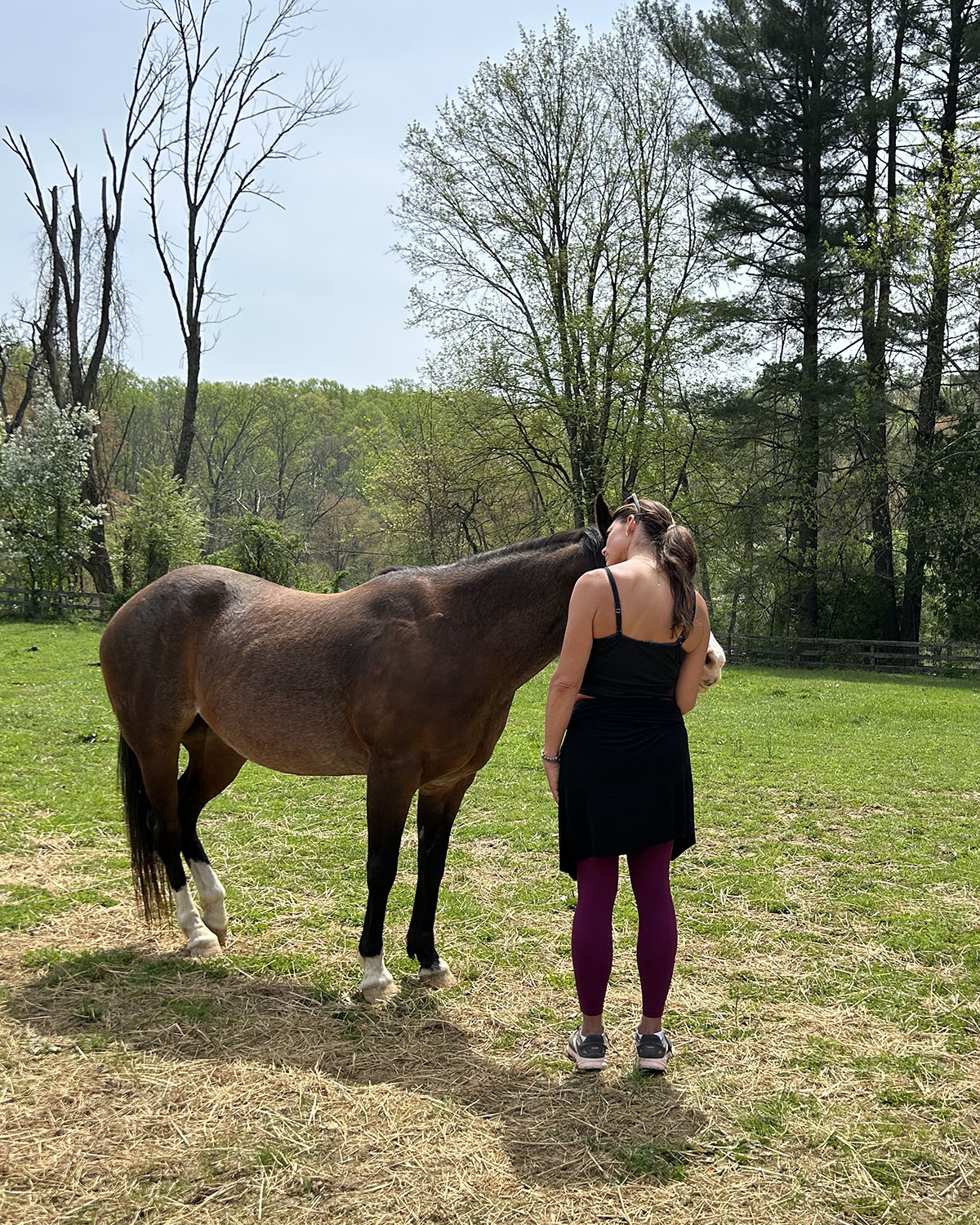
People have reported feeling strong waves of emotion, immense gratitude, specific visual images, and sometimes entire messages that felt like direct conversation from them. The horses do not have to be lying down for this to happen, but sometimes it seems to be how they find “a way in” with people. Let me be very transparent here… I am extremely skeptical of most people with the title “Animal Communicator.” I have had some unfortunate experiences involving self-professed animal communicators with the horses. What I am witnessing here feels like a different way of sharing feelings and insight. Perhaps it is simply that the horses are creating time and space for people to relax enough to feel their own inner knowing with more clarity. Perhaps it is a non-verbal way to communicate that is beyond body language. Perhaps it is a combination of both.

What I can ground in observation is that more relaxation and more sleep results in healthier horses and healthier people. In addition, the profound experience of a horse choosing to stand with, or lie down with a person creates a remarkable space of openness to trust and connection to the thoughts and feelings that arise. There is something fertile in the space of allowing thoughts and feelings to arise without striving for the “right words” right away. If and when we need the words, they will come.
Speaking Horse

There has been a lack of words, a lack of writing in my life these last couple of years. I am starting to find words again, as the horses seem to be speaking up – in their own, nonverbal way. Is it just me? Have I rounded some corner in my relationship with them? Or is the way they are speaking up with everyone who comes to work with them shifting? Perhaps, a little of each. Perhaps, I have learned how to listen better, and perhaps they have learned to trust more that we humans are listening.

***

The morning sun was finally out in full force. Chickens were busy bustling around the paddock, looking for goodies in fresh manure. The sounds of Saturday echoed around us through the trees, with a tractor humming and clanking, a chainsaw in the distance, people making the most of weekend work outside in the country. 

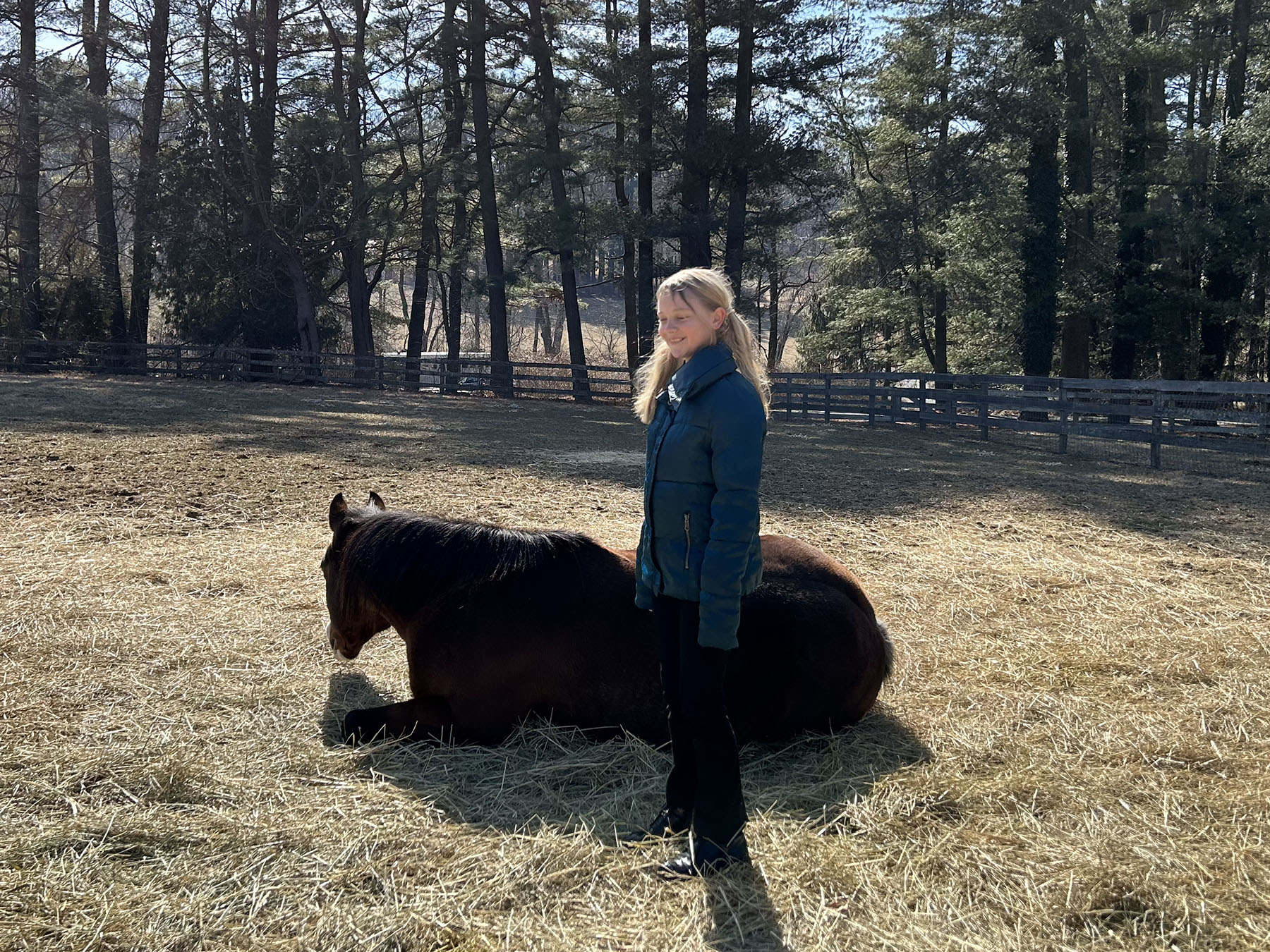
Here in the paddock with the horses, nine-year-old Elizabeth was learning how to talk to horses. She was focused on her effort to befriend Daisy, a quarter horse mare who happens to be the most seasoned equine guided coaching horse in the group. Daisy seemed very content to stand quietly alone in the field, unfazed by the surrounding noise and activity. Elizabeth, in turn, was unfazed by the din, and was exploring how to silently speak to the horse with her movements, and let her know she wanted to spend time together. How close could she could walk toward Daisy before Daisy turned even an ear towards her, acknowledging her approach? Several yards away, Daisy swung her whole head towards the girl, who immediately stopped in her tracks in order to show the horse clearly she was paying attention. 

Elizabeth continued, very focused, very patiently… when Daisy looked forward again, she would walk carefully toward her, until she swung her head around again, as if to ask, “what do you want?” On the third approach, Elizabeth was no more than 2 or 3 feet from the mare, and she diligently stopped when Daisy turned toward her again. She stood still, waiting for the horse to look forward again. 

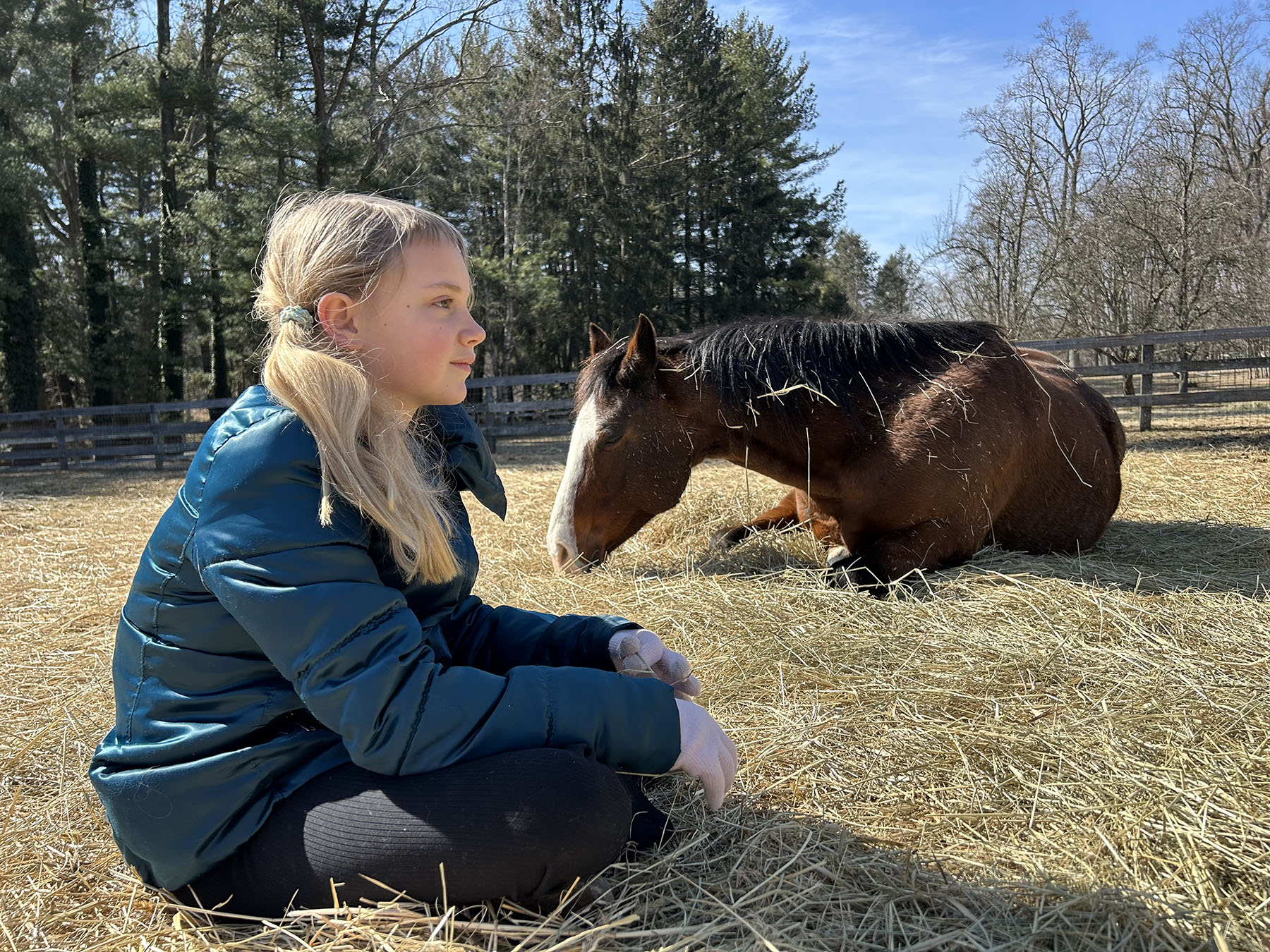
Instead of looking forward, refocusing on the environment in the distance, Daisy sighed and lowered her head. Then she picked up one hind foot after the other, folded herself in on her front knees, and dropped to the ground at Elizabeth’s feet. The girl was stunned and thrilled all at once. I asked what she felt in her body that she wanted to do, and she said, “I want to get down on the ground with her.”

A girl who about twenty minutes prior had said she had trouble standing still was now sitting on the ground with Daisy, quietly and easily tuning in to this moment they were sharing. Her attention focused on feeling the sense of togetherness with a horse, she was fully present, open to the entirety of the experience, and connected to herself and this horse in a new way.

Meditation, mindfulness, present moment awareness… these practices can take a lot of effort, trying and trying again, to even feel slightly successful. Yet a horse can help someone take leaps and bounds in, literally, one sitting.

I used to think that I had to make children’s sessions different from adults because they tend to have much shorter attention spans and I thought they might get bored easily.  Here was Daisy, proving me wrong. I’ve since begun treating youth equine guided sessions very much the same as sessions for adults. The horses will meet them where they are, and find ways to help them learn whatever seems to need to be addressed in the moment. 

I used to think that Daisy was tired of children, because after years of being the star children’s horse in sessions, she started to head for the far end of the field when she saw a child approaching. Now I realize, she was tired of not being able to do the work she knows how to do with them, as I was teaching primarily fundamentals of care and groundwork and very basic riding. Guess who was getting bored easily.

Conversations with Taj: Moods Swing

Listening to my horse these days frequently results in hearing, “I’m not in the mood.” Two of my three horses are actually quite consistent with their curious moods, and yet I find myself hell-bent on “figuring out” the one horse with the intense mood swings, much of the time swinging on the unhappy, shut down end of the spectrum. A sizable percentage of my closest relationships have been with people who are prone to mood swings. I have spent a significant portion of my life adapting to the predictably unpredictable moods that accompany addiction, borderline personality and bipolar disorder. So it was no enormous surprise when I found myself frustrated at the prospect of feeling beholden to the moods of a horse.

I went into this winter project with Taj a month ago, thinking that in two or three months, surely I would have some significant insights about what truly makes her happy and whether or not she could break free of her negative associations with saddling and mounting to actually enjoy riding. Even when I find some successes, some moments of enjoyment from Taj, there is no consistency, no telling whether she will dread something today that she seemed to enjoy yesterday. In the Freedom Based Training process, we must learn to work with the mood of the horse, whatever that may be, because learning and healing can’t happen when stress and tension are too high. Turns out that the first month was just enough time to show me that I needed to slow down, back up and rethink my process.

When I look out at this beautiful paint mare, still stunning in her older age at twenty-three, I see a proud and determined being. She is not one to hold back her feelings, and if someone doesn’t “hear” her first warning that she doesn’t like something, she will most definitely reiterate her feelings and opinions with a sense of urgency. On the one hand, she makes it easy to understand her signals. On the other hand, because she responds with disapproval and discomfort to so many things, she makes it hard to believe that she’s not over-reacting.

Is over-reacting a trait that even exists in the horse world? The “over” part of the equation seems to be in the eye of the human beholder. I have been accused of over-reacting in my life, and, I must admit, it makes me feel even more reactive. To be called a “Drama Queen” feels like one of the worst insults someone could hurl at me. Especially now, in my forties, after years of studying emotion, energy and reaction versus response… it feels like an undermining of all the “work on myself” I’ve done. I have a friend who tells me, when I get triggered by something, “You still have energy on it, Honey.” Even that throws me into a tailspin – I don’t want to have that energy or those feelings.

It does not work to simply reject feelings. Not one’s own nor anyone else’s.

One day this week, I found that Taj would not even let me stand on her left side. She was triggered by my approach on the left any time I moved forward of her hindquarters. She had been standing and cribbing on the water trough for most of the morning – a common occurrence now that the shreds of dead grass left in the pasture are frosted over for most hours of the day and night. If she can’t be eating, Taj is usually cribbing.

It rips at my heart the same way it did to see someone addicted to cocaine go back and get high and lose yet another job, or to see someone repeatedly drinking so much that he can no longer carry on a new or coherent conversation after 5:00pm. Cribbing is a somewhat elusive habit, in that humans can’t quite figure out if it is internal pain causing the activity, or if it is a “vice” the horse picked up in response to old stress and it now causes internal pain. A horse who cribs will place her front teeth over a hard surface, such as a fence board, stall door, or the edge of a water trough, and pull back, arching her neck and gulping air. Somewhere along the line, the horse figured out that in doing this, she releases a flood of endorphins which makes everything feel better for the moment. But then the horse wants to feel better every moment. In Taj’s case, she will now elect to crib almost any time she is not eating, sleeping or being engaged in an activity. I’ve seen her habit lessen when she is feeling good and when there is plentiful grazing available, but I have not seen it disappear completely.

The problem, other than the destruction of fence boards as well as the complete erosion of her front teeth, is that this gulping of air may be having an adverse effect on her gut. There is a higher incidence of colic and ulcers in horses who crib vs. those who don’t. Taj’s recent intestinal distress has made me wonder even more about how cribbing affects her gut. When I see Taj standing and cribbing while the other horses are snoozing, foraging or generally ambling about the pasture, I feel the pang of sorrow and longing that comes with seeing someone who appears to be stuck in a rut of her own pain. The next thing I feel is my habitual urge to want to make it better for her. Haven’t I learned this lesson enough times in my human relationships?

Any time I approach her while she’s cribbing, she will pin her ears and even throw a teeth gnash in my direction if she feels that I am going to try to make her stop. The effort I am making now is to let go of the emotional attachment I have to wishing she would stop, because I realized that underneath of it is a judgment. As surely as she can feel my hand on her chest, she can feel the energy of judgment, and she has a reaction to it. I might as well just be shouting, “You Drama Queen!” at her.

I’ve begun to actively meet her exactly where she is. If she’s cribbing on the water trough, I’ll pull on the side of the tub, trying to stretch my spine and create a sense of release or relief. I’ll reiterate my acceptance of her in that moment, regardless of her mood. And I’ll do away with the agenda I might have lurking in my mind; it may be an agenda with the best of intentions to make her feel better, but ultimately, she is not going to abandon her habits until she chooses from within for herself.

In this video clip, the powerful impact that intention plays in the gesture of an arm affirms for me that I need to hone my energetic clarity when asking her for anything. I want to better balance joining her in the things she chooses with asking her to join me in what I choose. And last but not least, here’s an opportunity for me to shift from a place of feeling beholden to her mood into a place of identifying with her mood until it shifts.

It might be a mistake to think that we are ever NOT beholden to the moods of others – unless we don’t mind bulldozing our way through conversations, invitations, negotiations and anything else involved in a relationship. When we choose how to interact with anyone at any time, we are also choosing whether to and how to account for the other’s mood or emotional state. If we can show others acceptance of whatever feelings are present for them, that is one step towards decreasing stress and tension, paving the way for a new possible mood to emerge.


Interested in reading more about Freedom Based Training and working with a horse’s moods? Elsa Sinclair discusses this topic in detail here: https://equineclarity.org/2017/12/26/surfing-the-emotional-waves/


Getting Productive With Horses

It’s a Sunday. It’s a Sunday after a long holiday weekend and I am predictably launching myself into a day of what is intended to be productive enough to atone for all that I did not accomplish over the course of the last three days. I’ve spent the early morning hours replying to Friday’s business emails, scrubbing the toilet, reorganizing a drawer, addressing invitations and ultimately growing older rapidly while on hold with an internet service company. Now it’s time to get productive with the horses.

daisyinstall_6331

After tidying the tack room, filling water buckets and feeding the barn cat, I bring the horses into the barn for their grain and supplements. They don’t seem particularly remarkable in mood, not straying from their typical behavior in any way. The two mares get a bit pushy on the way through the barn door and wind up changing the typical order of things, but then they all eat and drink merrily as usual. I set about grooming and practicing the fine art of tick removal, about which the horses are quite pleased, since that is accompanied by a thorough, customized neck scratching, unparalleled by anything they can find to rub up against in the barn or field.


Nearly methodically, I gather all three horses from their stalls and walk them around to the flat, sunny pasture behind the barn. I find myself forcing my mind to stay present with them, and not allow it to wander back to how frustrated I am with the internet service company who failed to send me a sim card last week, and who clearly has not hired enough customer service representatives to answer the phones.


The horses safely in the pasture, happily greeting the goats in the neighboring paddock, I pause only to warm my face in the sun while reviewing my mental checklist of chores. I glance at the time and it’s nearing 1:00 pm, but I imagine I can still make it to town to return an ill-fitting horse blanket and purchase a sorely-needed drill so I can check yet more tasks off of the list. First I grab the pitchfork and muck bucket to squeeze in a quick clean up in the area near the gate where manure accumulates with ever-amazing alacrity.


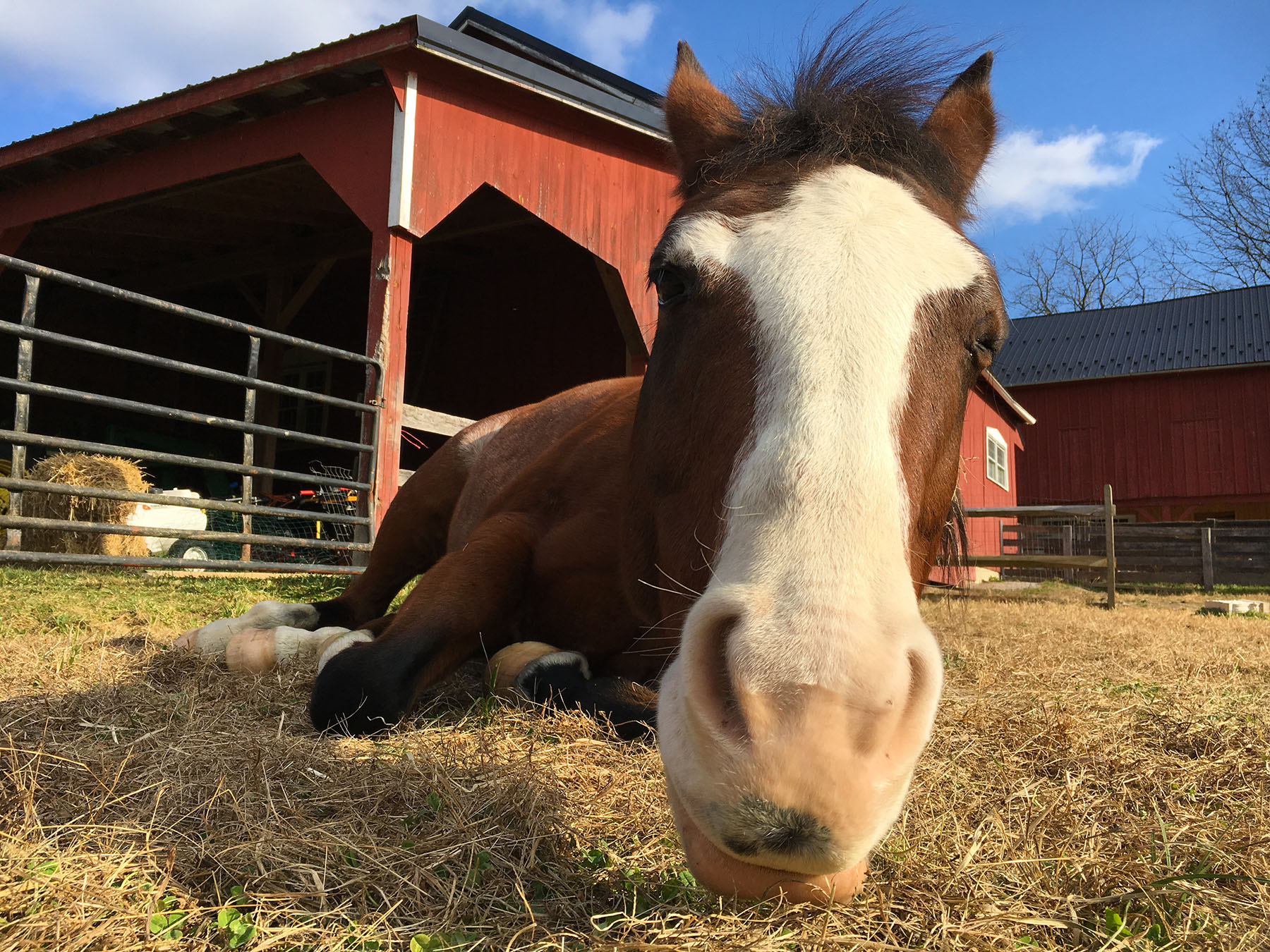
No sooner do I step inside the gate, mucking tools in hand, than my younger mare, Daisy, steps toward me and promptly lies down at my feet, literally blocking my way. It has been nearly twelve weeks since we left Petaluma, California and journeyed east together to make our home in Maryland. It was common practice for the horses and me to lie down together in our arena out west, but this was the first time I had the opportunity to lie down with a horse here.

daisynap_6459_6x4-5


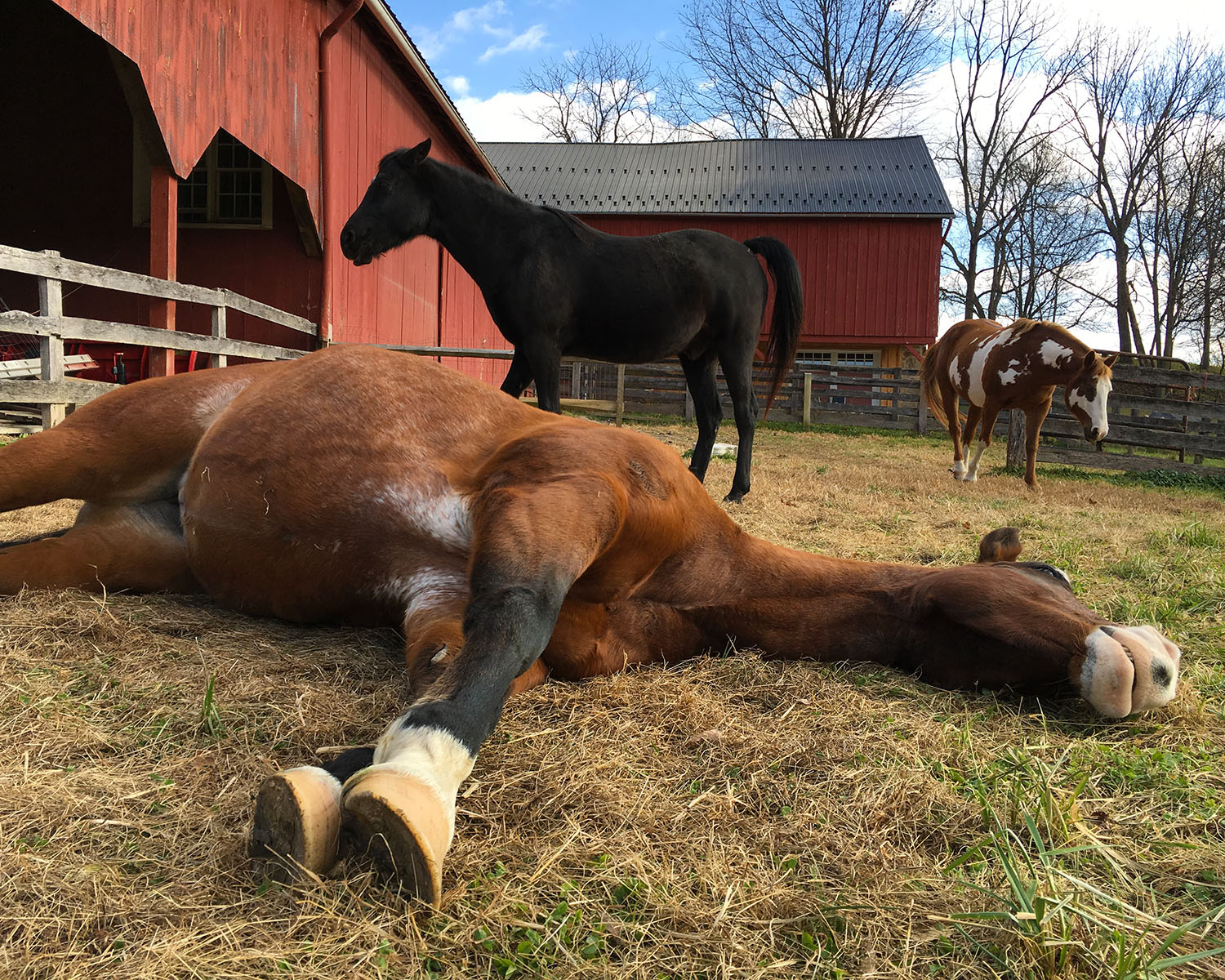
Or was it? What had I been overlooking? For Daisy to make such a definitive and emphatic invitation, I realized that perhaps she recognized the need for an intervention. The muck bucket and pitchfork are immediately cast aside and I get down and lay with her in the midday sun of late autumn. Zorro is standing watch over the two of us while Taj stands watch over the goats, one of whom is also lying down.


I let my breath begin to synchronize with Daisy’s. She is breathing heavily, deeply, slowly. I start to feel the earth and the tufts of soft, dying grass beneath me. A vulture floats by overhead, teetering ever so slightly side to side. What have I been overlooking? Exactly this opportunity.

daisynapscene_6438_5x4

With the transcontinental trip, the search for a home together, the adjustments we are all making to this climate and community, I had neglected my work and my practice with the horses as I fell into the rut of organizing my time by checklists, of working on my business through planning and restructuring, by prioritizing everything from light bulbs to life insurance in order to try to get settled. Here, now, is my smart and sensitive horse, reminding me of the fundamental premise in my own life’s work: to stay present to what is here, now, and find spirit and well-being in connection to it.


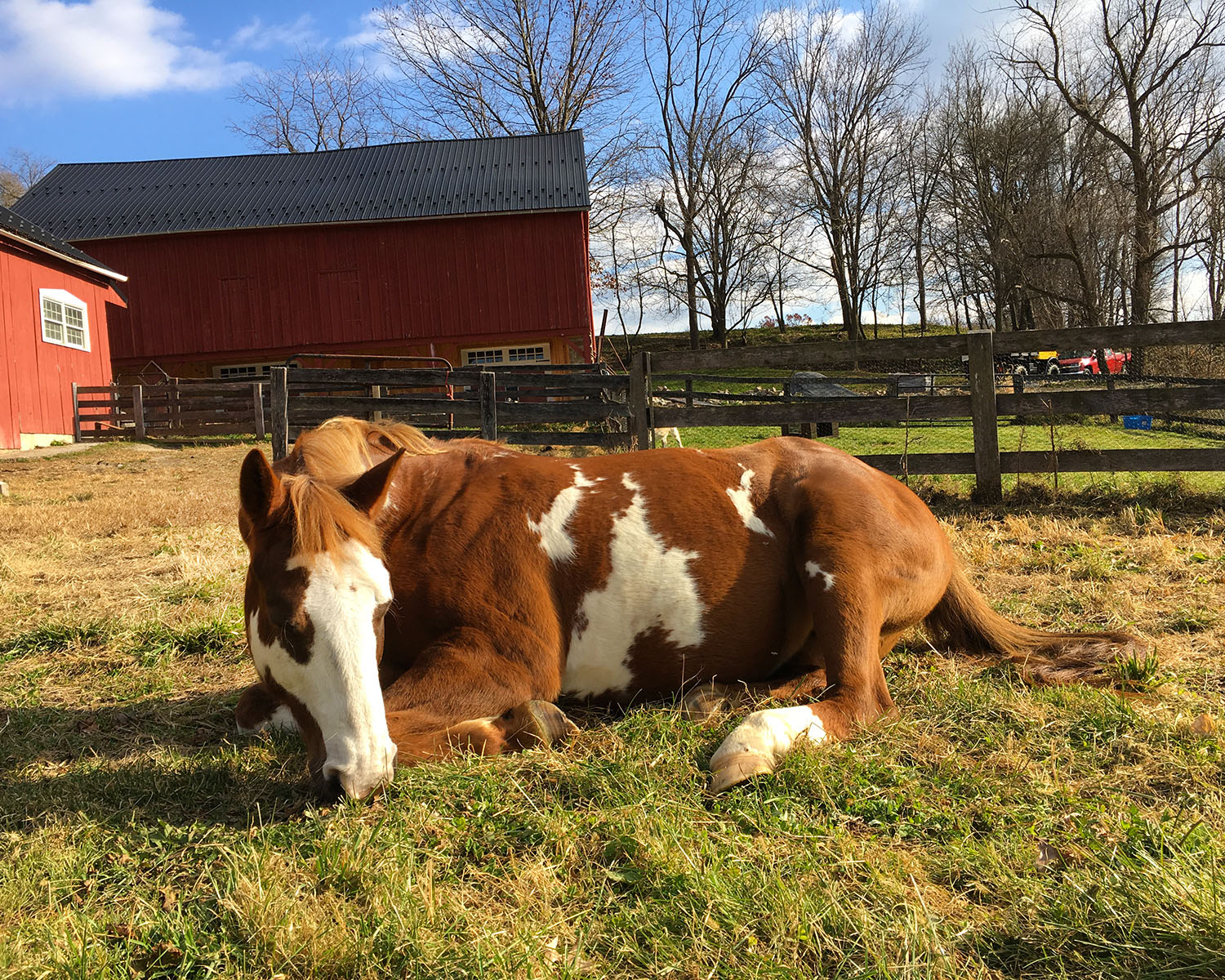
Taj soon decides to join us on the welcoming ground, both goats napping in the adjacent paddock now, and Zorro alternating between casually patrolling the perimeter and standing guard, half dozing. The simplicity of animals at peace with each other and their surroundings washes over me like a salve for the endless busyness that creeps into life in the guise of “things that need to be done.”

taj_6462_5x4

I’ll get to those. Eventually.

For now, now is much more necessary.

tajnapzorro_6455_6x4