
A Lesson in Magic
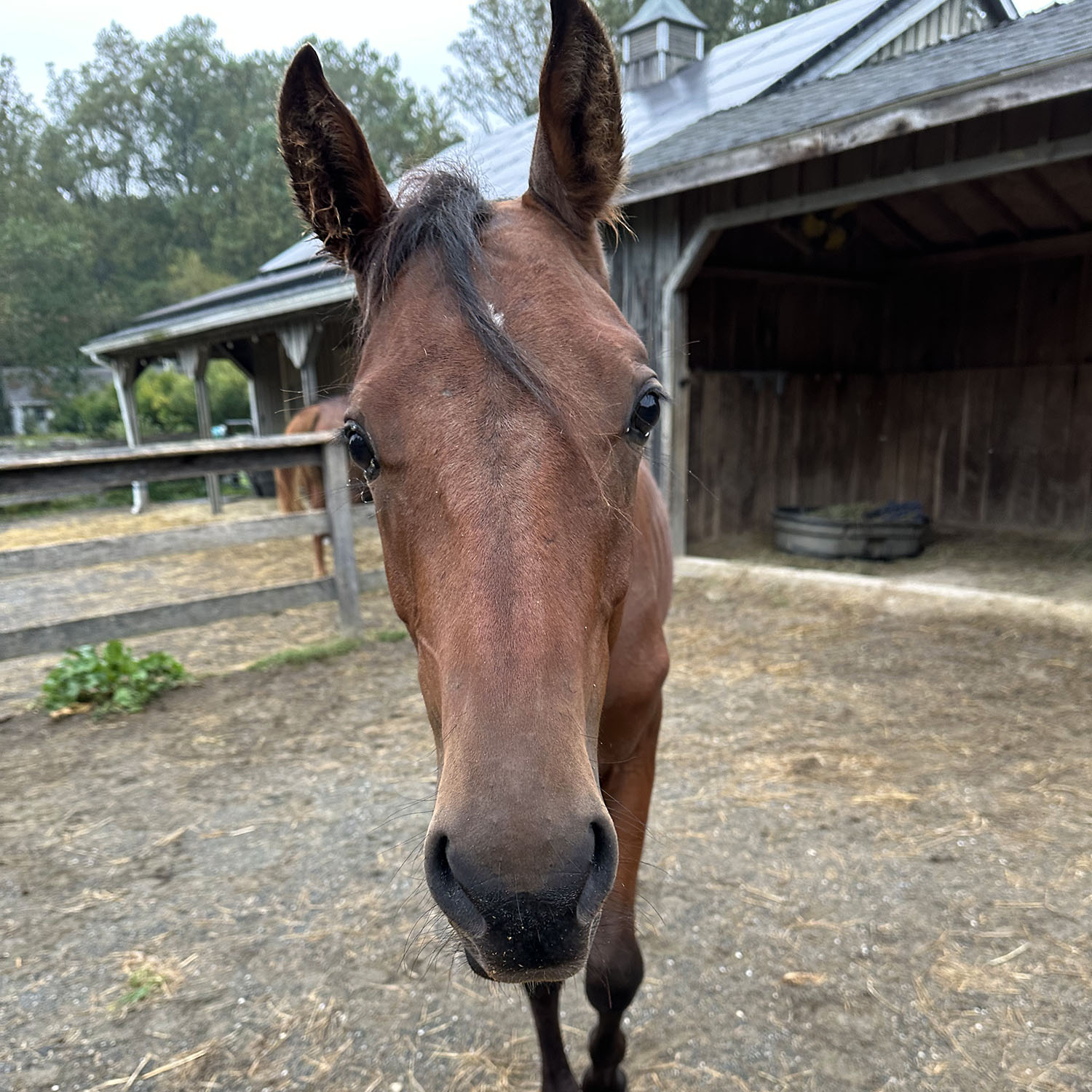
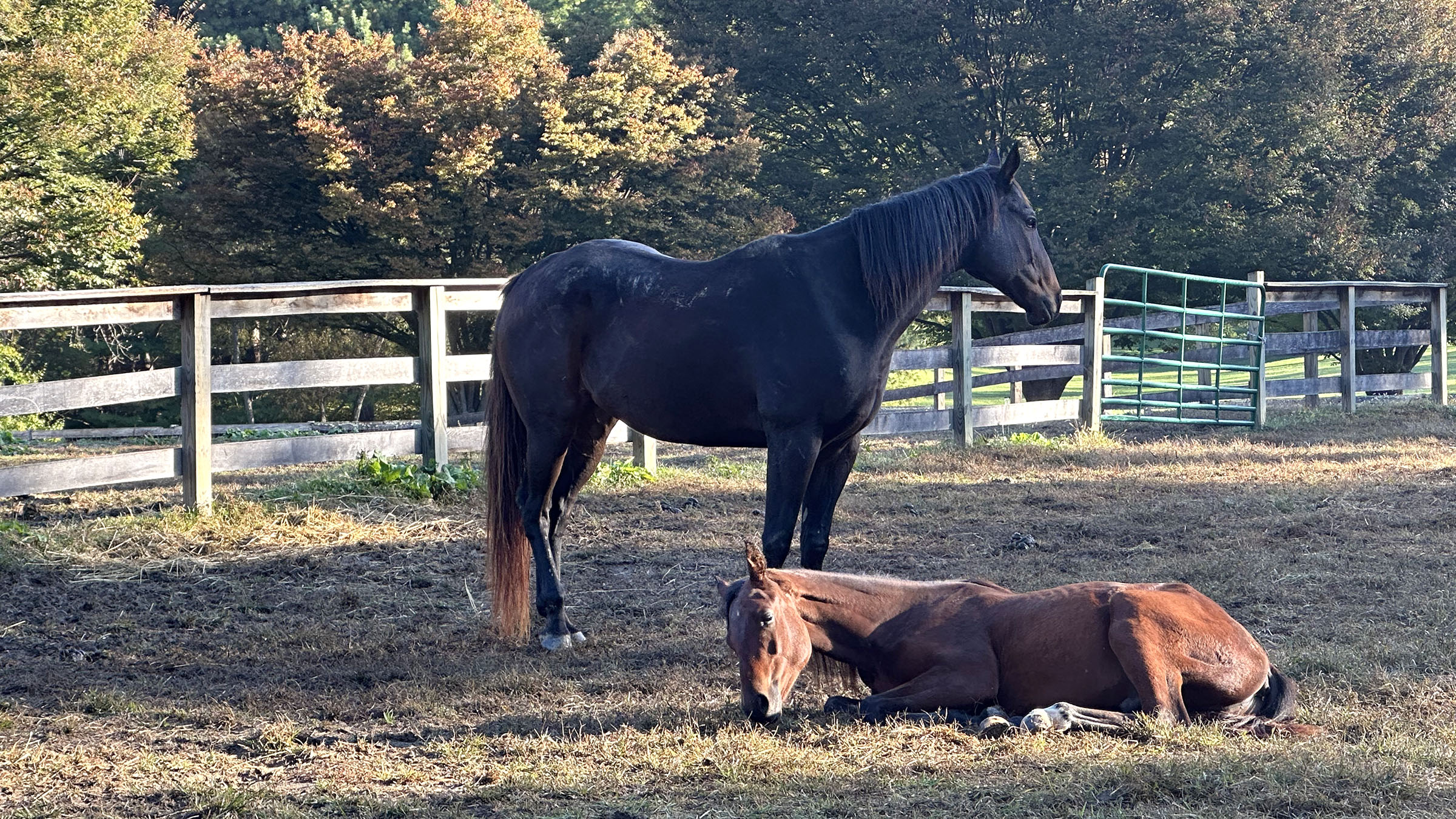
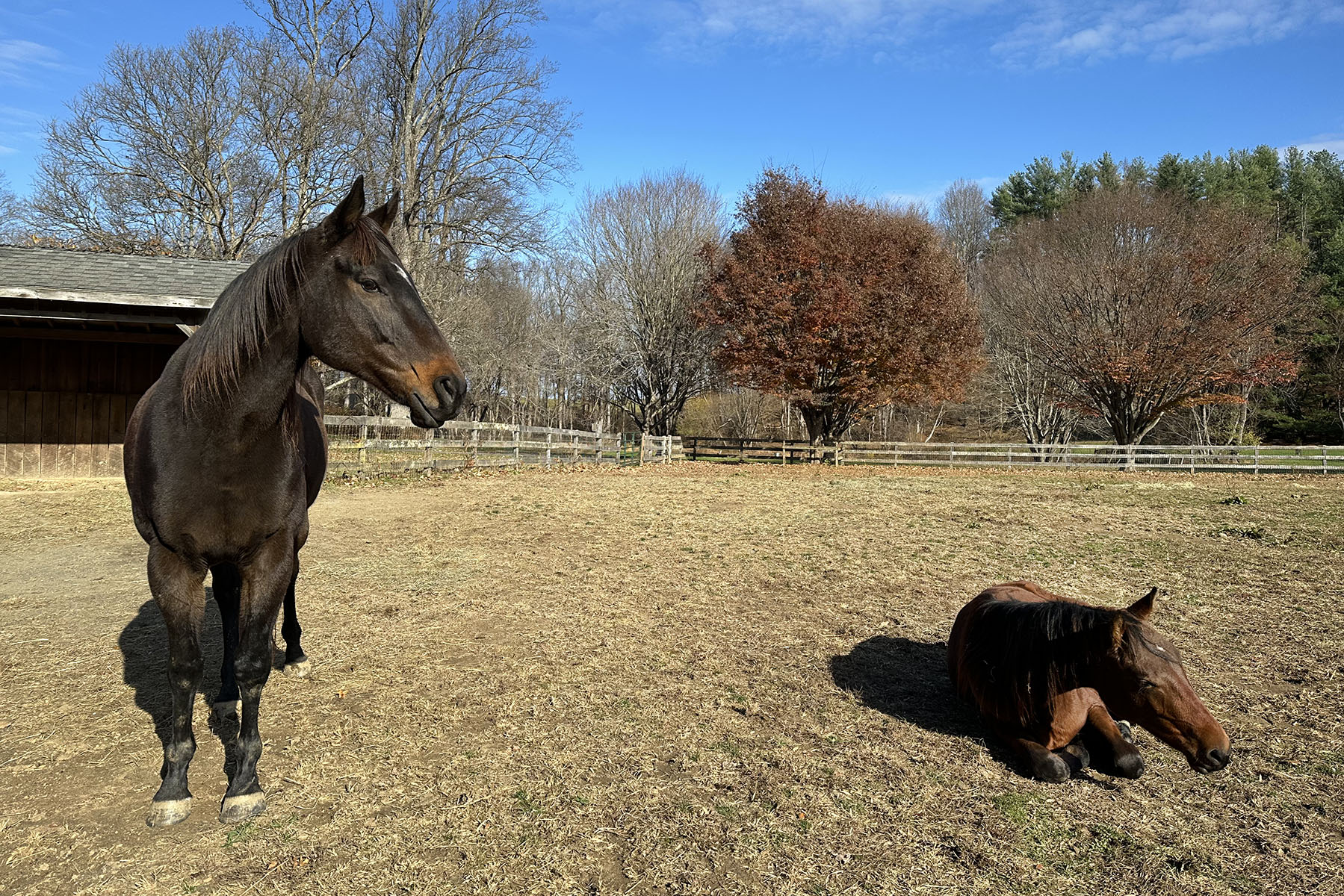
The gate squeaked open and I paused to take a conscious breath. No matter how many times a day I go through the gate into the horses’ pasture, it still feels like entering a secret garden of possibility, and I want to be ready to make the most of it. As I approached the barnyard, one of my favorite scenes unfolded: Little Magic, the yearling Morgan horse, was sprawled out, sound asleep, surrounded by the older horses, all happily dozing or munching absent-mindedly on hay. In the six months that he has been here, this youngster has proven to be brave, independent, athletic, eager and a champion sleeper.
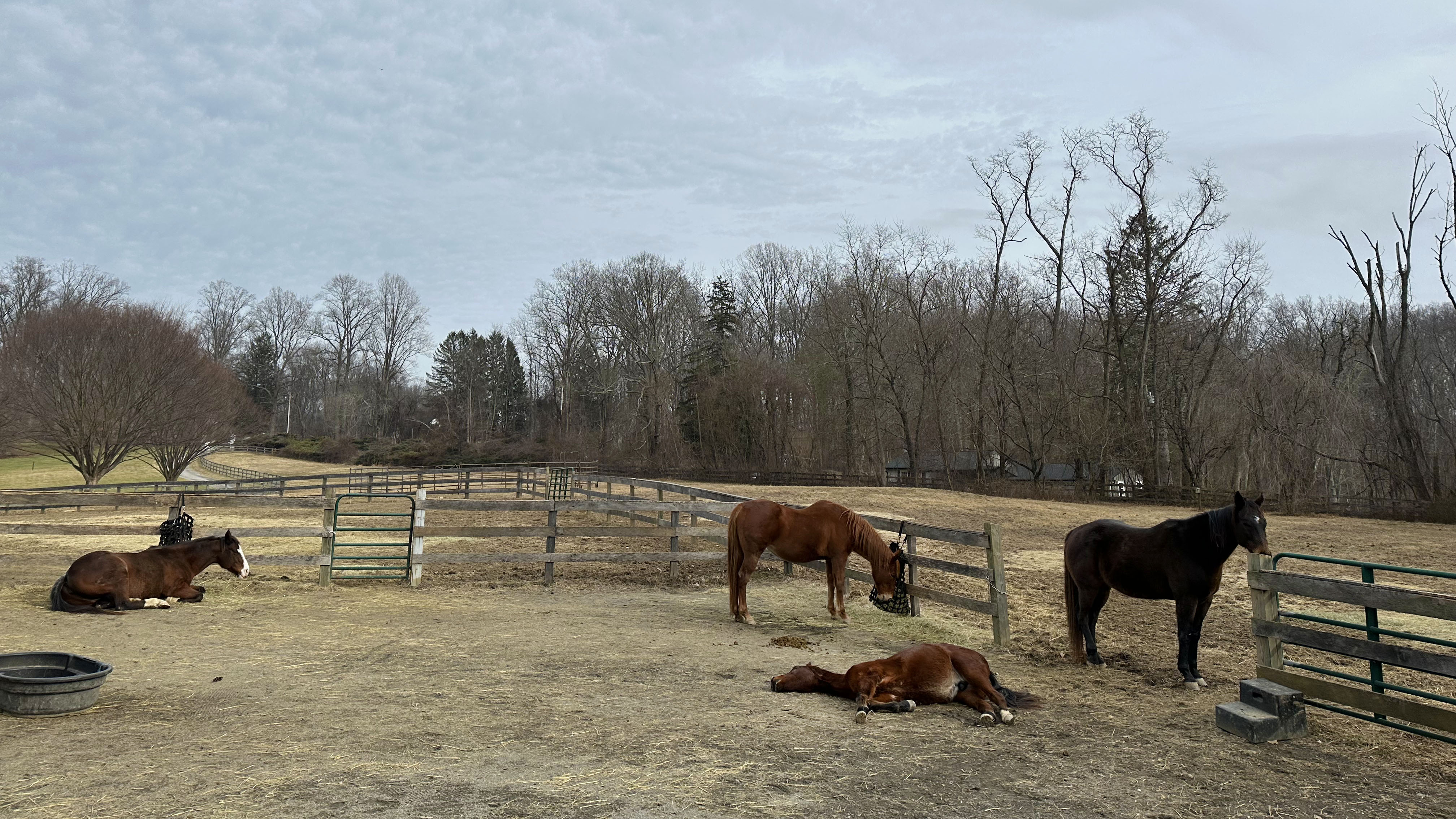
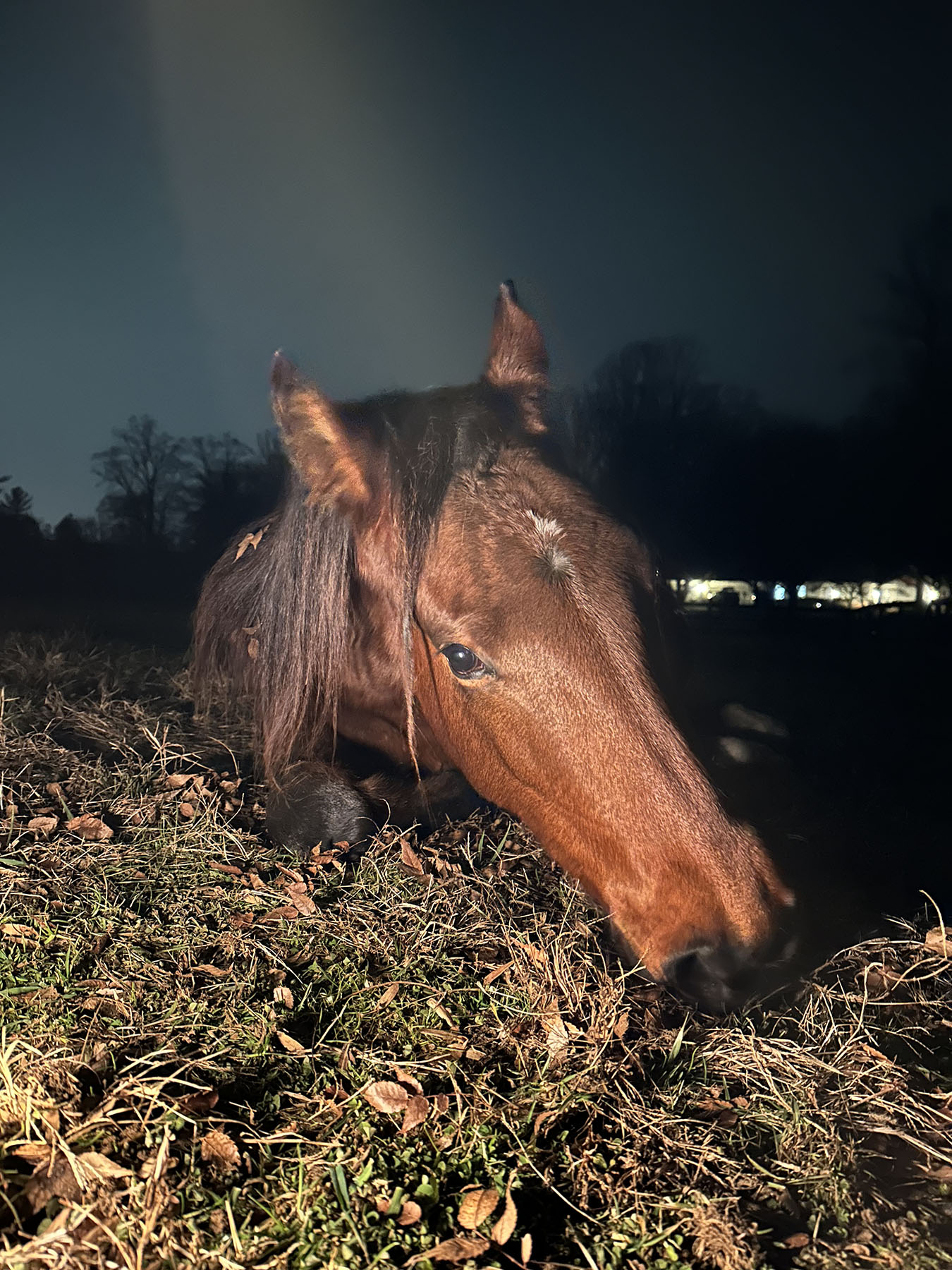
One night in December, a rare night this winter without snow on the ground, I went out around 9:00pm to check in with the horses. The older four were all around the barnyard eating hay, but I couldn’t see Magic. I raised my lantern and scoured every corner of the area near the barn, but he was not there. My breath was drawn short, chest tightening… trying not to panic. Out I went to search the big field. Since I did not see him anywhere close by, I headed for the fence line, wondering if perhaps he was trying to eat low hanging evergreen branches or get a better view of the neighbors’ miniature cows in the moonlight. I came up with all manner of creative story lines to distract myself from the unthinkable.
As I was heading back towards the barn along the last stretch of my perimeter search, the sound of my own gasp shook me. There was a dark heap on the ground, about eight feet in from the fence. I ran toward the all-too-still shape of the little horse, and I, myself, was not breathing at this point. And then his head rose up from the ground, at the end of the familiar wide arc of his neck… he had been sleeping.
I curled up next to him on the cold, damp earth, my breath back in full force, my heart back in my chest. I don’t know how long we lay there, but I was in awe of the beauty of the night and the comfort of a sleepy yearling.
“Don’t teach him anything you don’t want him to learn!” I’d been warned. I spent the first three months watching the other horses teach him things, sometimes wincing and wondering how much things like bucking and kicking back in protest at another horse might be something he would try with people. He also learned how to give the mares their space when they slept, how to play tug-of-war over a stick with Chip, his 10-year-old adoptive big brother, and how to get out of the elder gelding’s way when chased, but to come back and try again until it became a game. In this way, he earned some street cred with the self-appointed ringleader, Juno, and now I catch them touching their front teeth together in a contest to see who can hold position the longest.
The only things I set about teaching him in those first months were that grooming is fun and feels good, that humans picking up his feet is a regular part of engagement (and that we would always give them back to him), and that I would do my best to listen to him, to hear any concern and to move along at his pace. Which, as far as paces go, turns out to be rather fast. In these last three months, we started playing with some tools: a flag, a halter, a lead rope, a saddle pad. He proved to be curious and interested in everything. Instead of being afraid of the flag, he would try to catch it. All new things were like magnets, and so I let them be fun things he could nibble on and follow when they moved.
Initially, I planned to train him with no tools at all, and spent the first four months focused on working with Elsa Sinclair’s approach – Freedom Based Training. This foundation built trust and a consistent method of communication between us, as well as the start to ground work at liberty. However, I considered the world he lives in, and thought it best that he learned to be comfortable with all the tools, even if they were only “accessories” to be used while doing things together that we could do without them as well. Because he sustained a severe neck injury at an early age, I wanted to be sure he didn’t pull back or pull away when wearing a halter and lead – so it was especially important that Magic enjoyed a halter from the start.
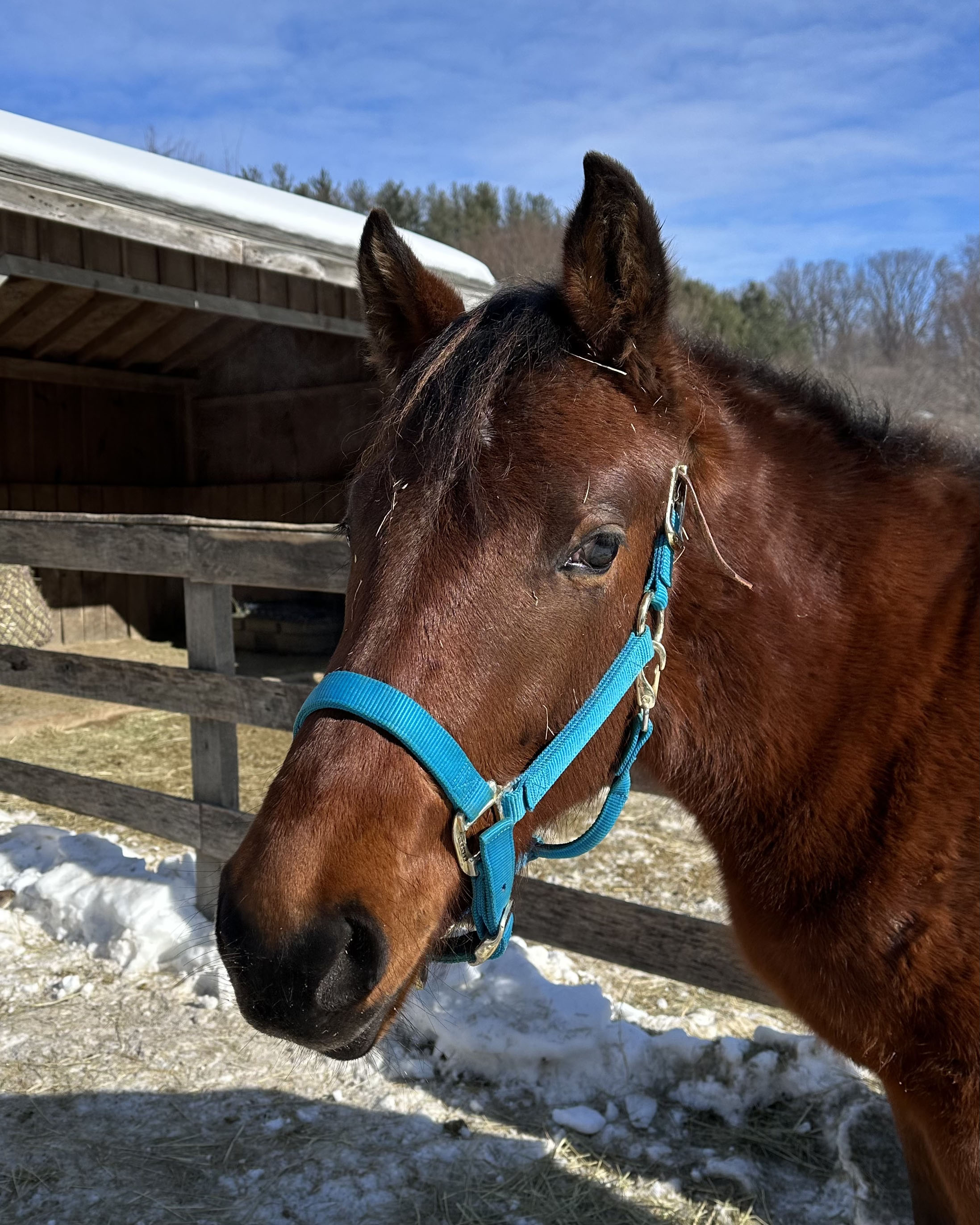
It was easy to get Magic to place his nose into the open halter, but when I first tried to bring the headstall of the halter up and around his head, he felt concern and started to back up. I slipped the halter off immediately, and walked forward. Naturally, Magic was intrigued and followed. For a couple of days, we played the halter-almost-on-and-off game, until he decided that was getting old, and just stood there for me to buckle it on and see how it felt. I’m pretty sure he was quite proud to be wearing his very first, very turquoise halter.
As I watched him grow and learn and develop his own character, I found it hard to put into words what was impacting me and what I was learning. Since no one knew exactly how his accident had changed his body and his development, there was some concern around how he would continue to grow and whether there would be extra challenges for him. Watching him get back up after a fall when being chased by another horse, and not just dust himself off, but pause, then head back towards the aggressor with continued curiosity showed me something about his strength – physical, mental, and emotional.
I worried less and experimented more. We started to take walks together to the far end of the orchard, even with no other horses nearby. Magic seemed at ease with new things in a way that was beyond my expectation. In recent years, the other horses in my crew all came from multiple rehoming experiences, and one from the slaughter pipeline. I was used to emotional and nervous system baggage, so this felt extraordinary. He felt safe and at peace enough to try anything that interested him… which has included trying to take my ponytail off my head, but thankfully, he is also pretty reasonable when asked to let go of something.
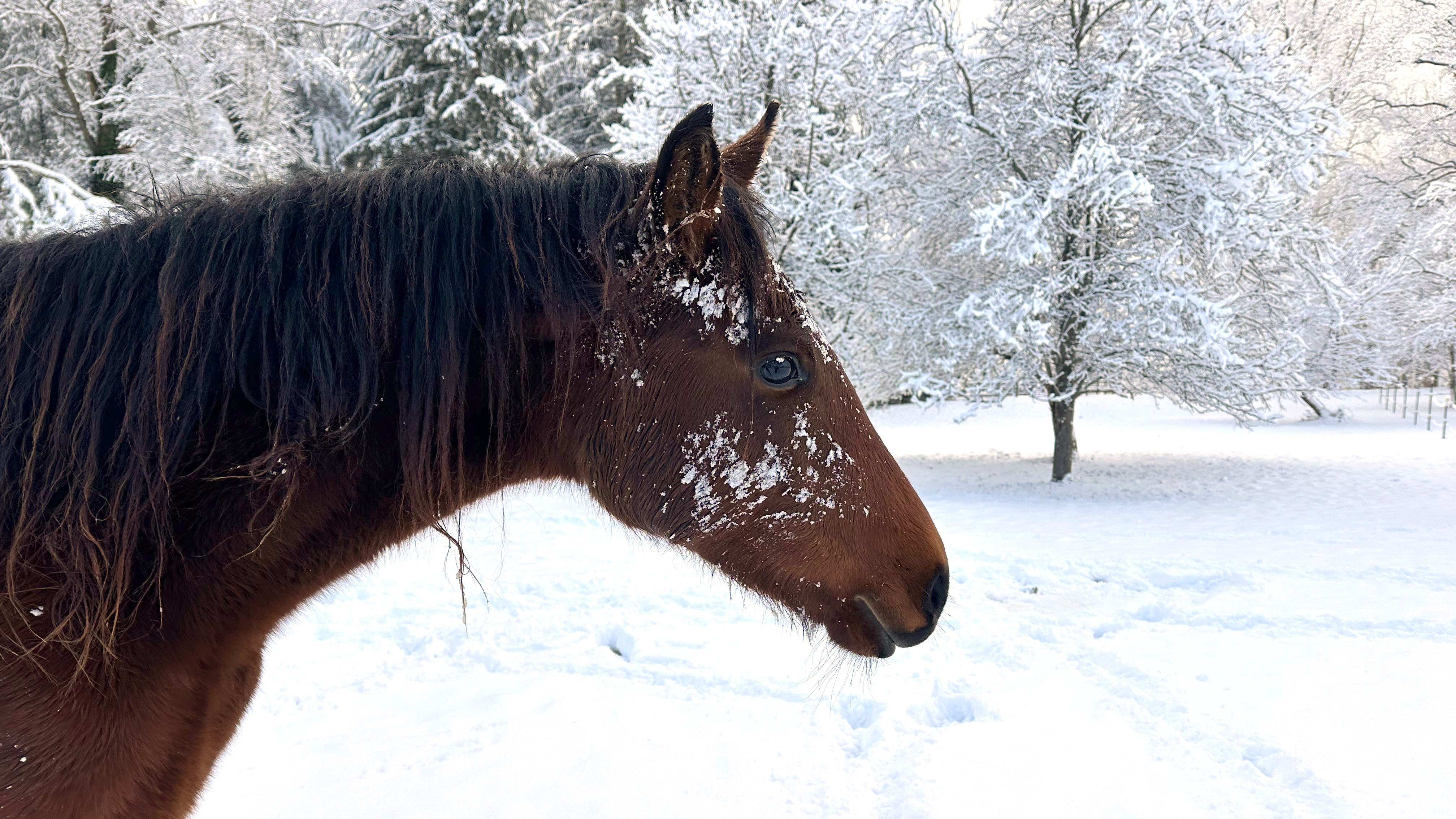
A prevailing feature of this season has been the copious amount and lasting presence of snow here in Maryland. Exploring, playing, rolling and, of course, sleeping in the snow have been activities we were able to do together. It’s been a time when I could follow his curiosity and interest with him, enjoying life together in the ways he chose.

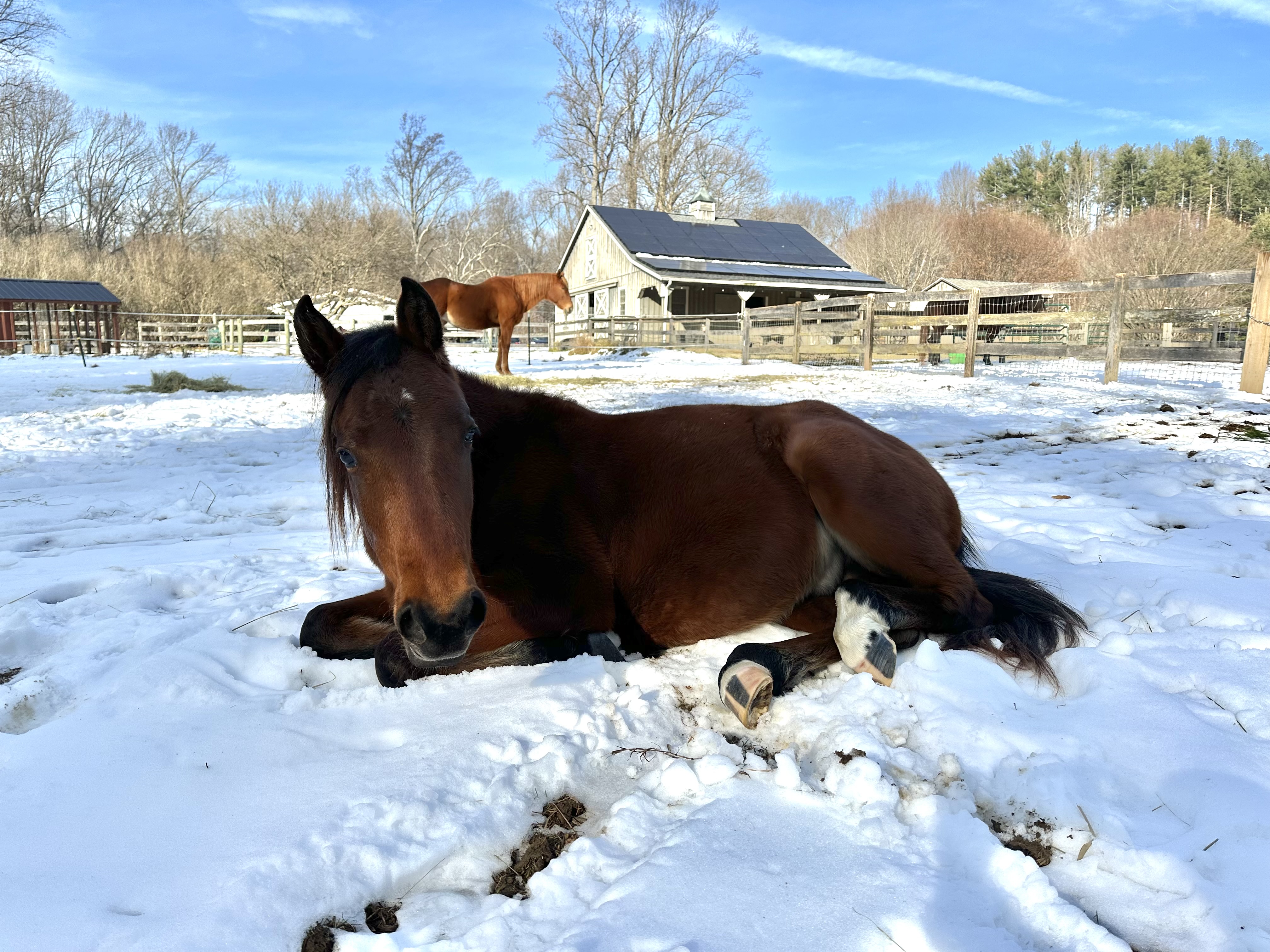
In January, we got nearly a foot of snow followed by freezing rain, which created a thick surface crust of ice. After a few steps, all the other horses turned back to the safety of the barnyard, where they had spent the night moving enough to keep the snow relatively soft and pliable. Little Magic chose to forge ahead. Despite the difficulty in walking – the delayed falling through the icy surface with every step – he toured the blanketed field on his own, investigating the new look and feel of what he had come to know as his home turf. The others watched us as we wandered and stumbled and continued on, and I was again amazed by this young horse’s eagerness to try new things out on his own, or with me, not needing to be with or near another horse.
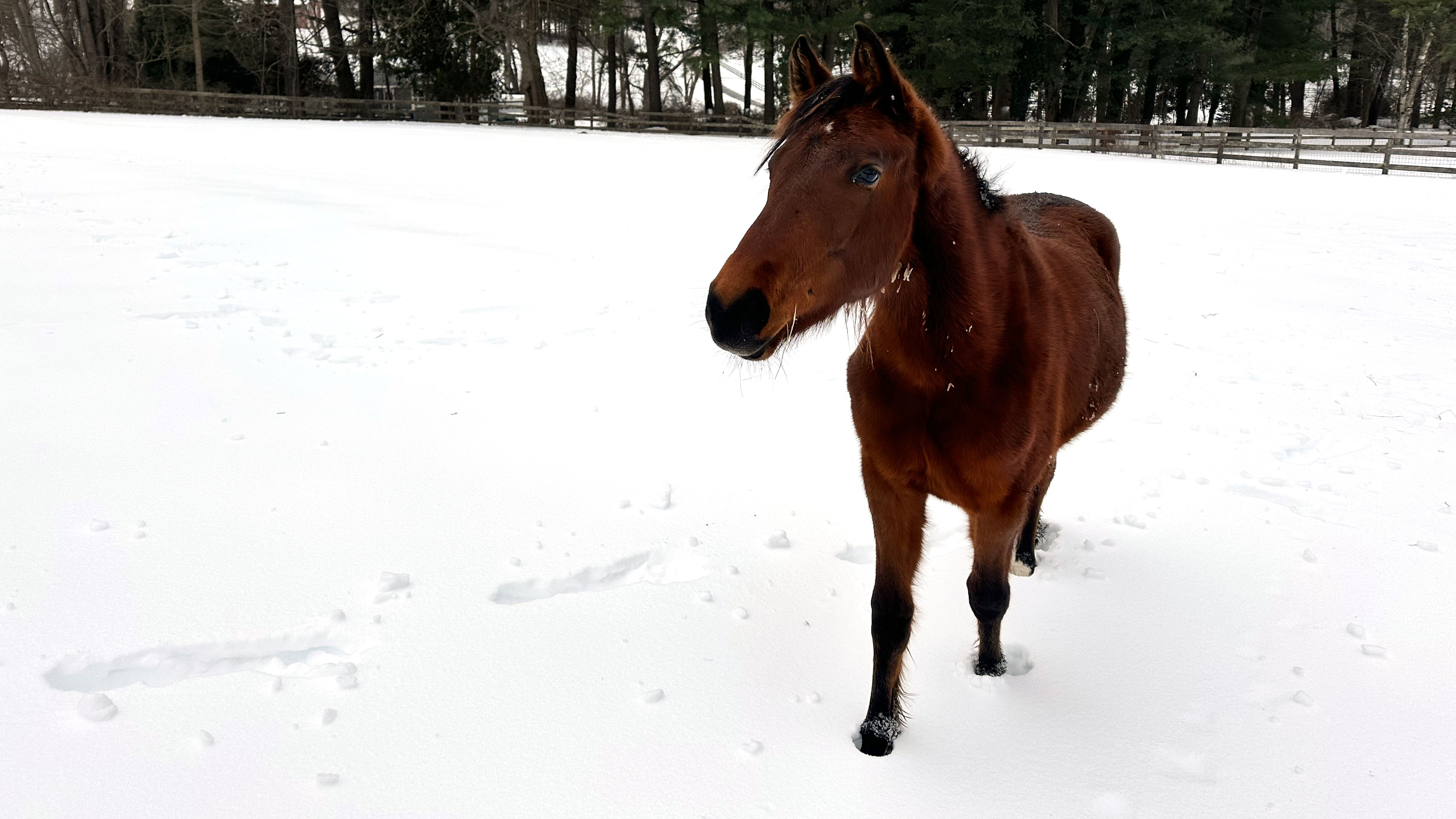
To be sure, he likes company and is always game for a playmate. If one of the horses chases him off, he often looks for Chip as his trusted friend, and stays close to him when the weather gets particularly harsh. Whether it’s wind or rain or snow or some combination, Magic does follow the cues of the older horses and finds safety and comfort with them, particularly with Chip. Remarkably, Chip used to be hyper-vigilant and constantly sought someone to help him co-regulate his emotional responses to the world around him; with Magic looking to him for support, Chip has gained a new level of self-assuredness and can provide both safe companionship and healthy pushback to the young horse.
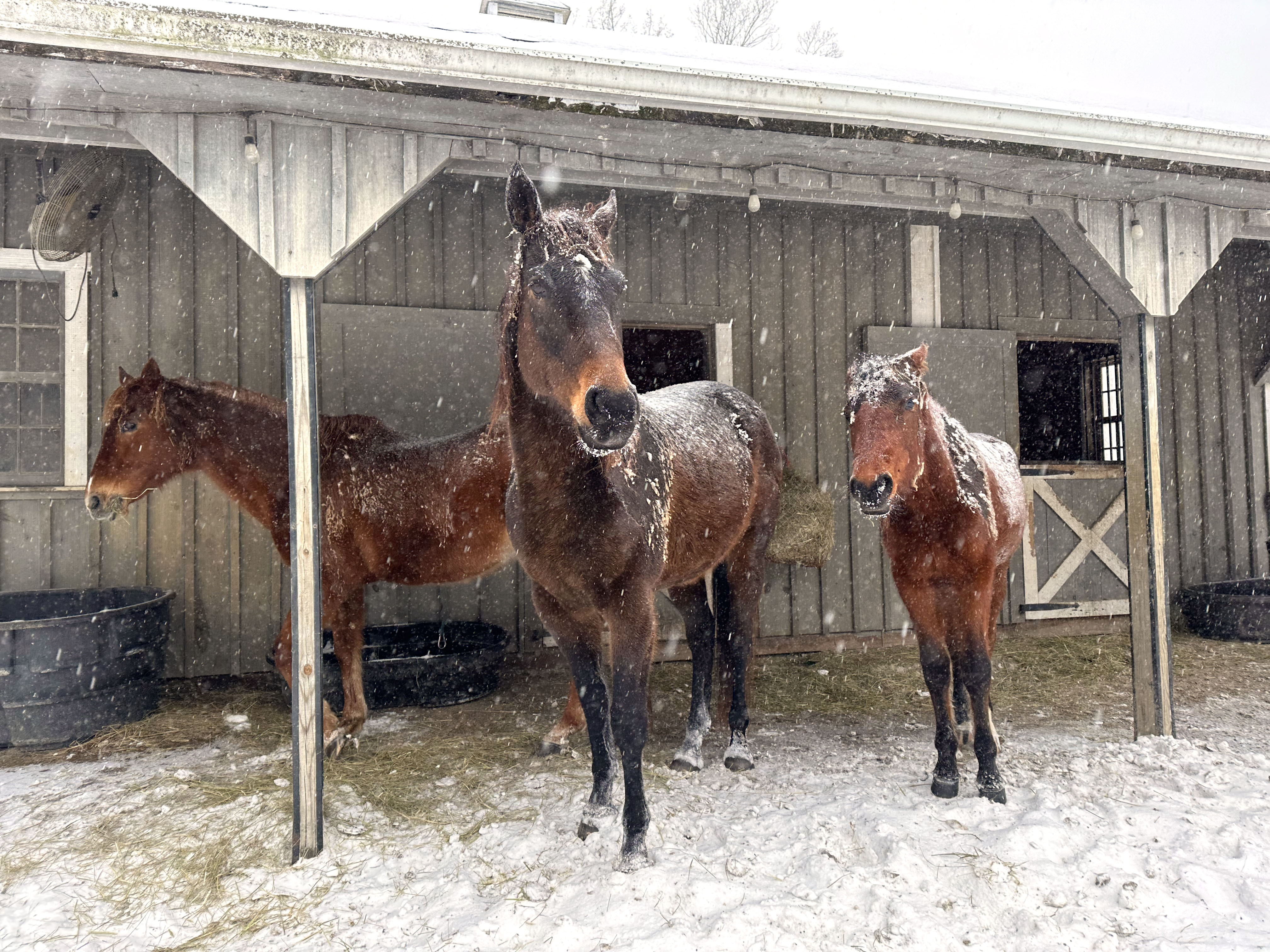
As it does every year, the winter weather takes its toll – on me, on the horses and on the land. Barn chores and horse care are at least twice as difficult and time consuming in winter. The horses are confined, even though they are not shut into stalls, because they avoid the discomfort and instability of ice and then mud. Oh, so much mud consumes the solid ground we all rely on when the snow and ice finally melt, and it leaves me wondering how any grass will grow back at all in the spring.
Despite the cabin fever, the stir craziness, and the reality of being a rapidly growing yearling, Magic has kept an even keel. There have been outbursts of fiesty, energetic romping and bucking around, moods where he just wants to challenge and nip at everything, but he has consistently come back to a place of regulated calm and openness quickly. And without fail, he finds a place to curl up or stretch out for a good sleep, several times a day.
Whenever I have happened upon him sleeping, I have stopped to soak in the feeling of his resting state. There is innocence, vulnerability, quiet peace and wonder. I marvel as to what he is sensing, feeling, and dreaming – and it is a reminder to take the time to wonder those things for myself. In the far reaches of my heart and soul, what am I sensing, feeling and dreaming?
Little Magic is in no rush. He is living every moment as it comes, and staying interested in the learning each moment brings. When I can be on that page from his book, I am able to truly feel the peace, the joy, the love, the wonder that makes life so delightfully interesting.
 Horses for the Soul