
A Little Magic
He stepped off the trailer after much encouragement and some grain in a bucket to lead the way. His eyes were wide, his head tipped to one side, his long legs trying to find a rhythm beneath him. One front hoof was a club foot – it looked like he was standing on a block instead of a hoof. The yearling was hesitant, awkward in his movements and trying hard to comprehend how his entire world and everything he had ever known had just shifted so radically. But even in the face of such dramatic change – leaving behind everything familiar and safe to him, riding in a trailer for the first time, landing somewhere foreign with horses he’d never seen before – this little horse was open, curious and steady in his thoughts.
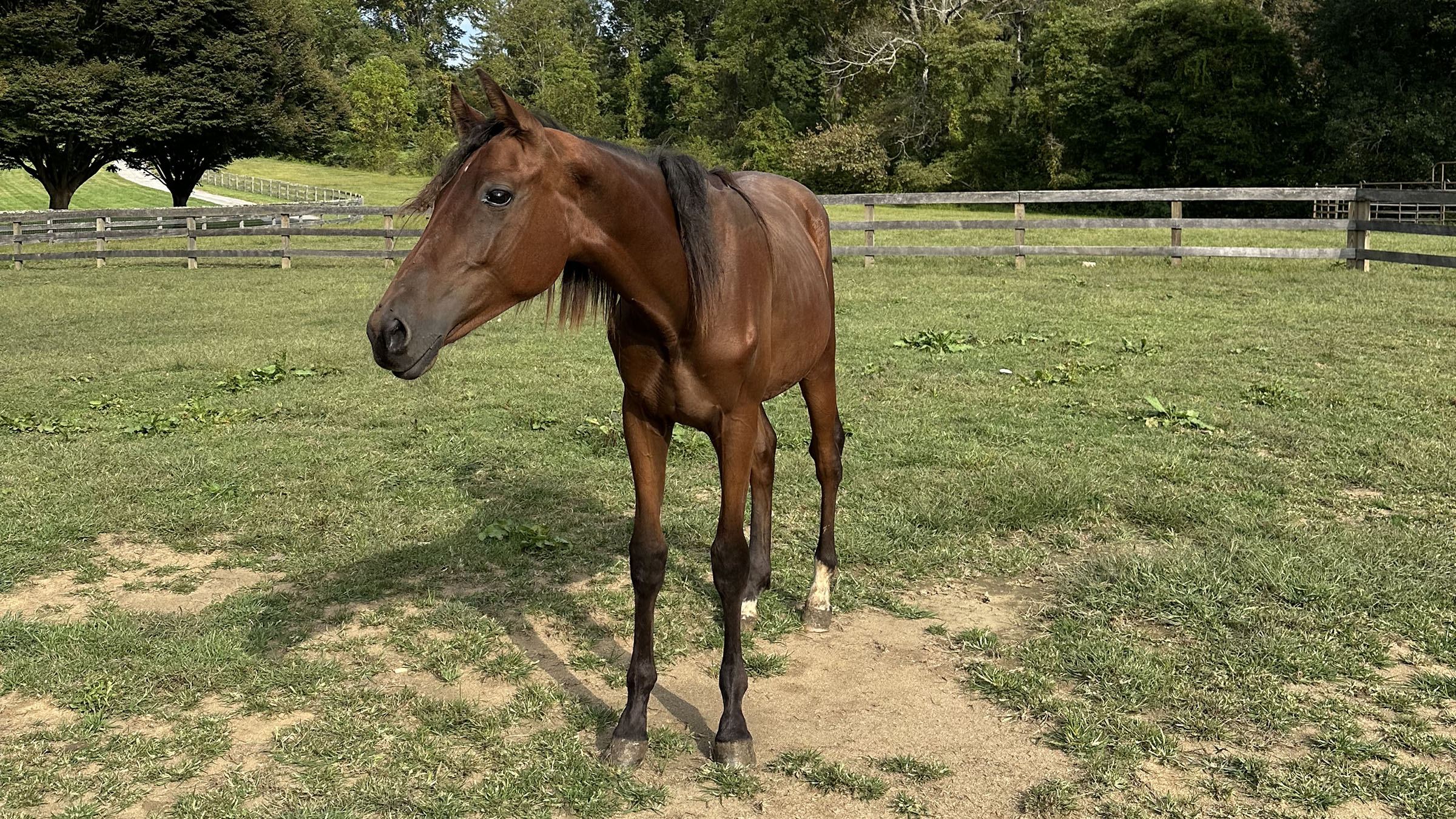
The only familiar hands and faces and voices were those of the two women who brought him here – two women who had visited him periodically over the past several months whose hands and faces and voices had been things that made him feel better, not worse.
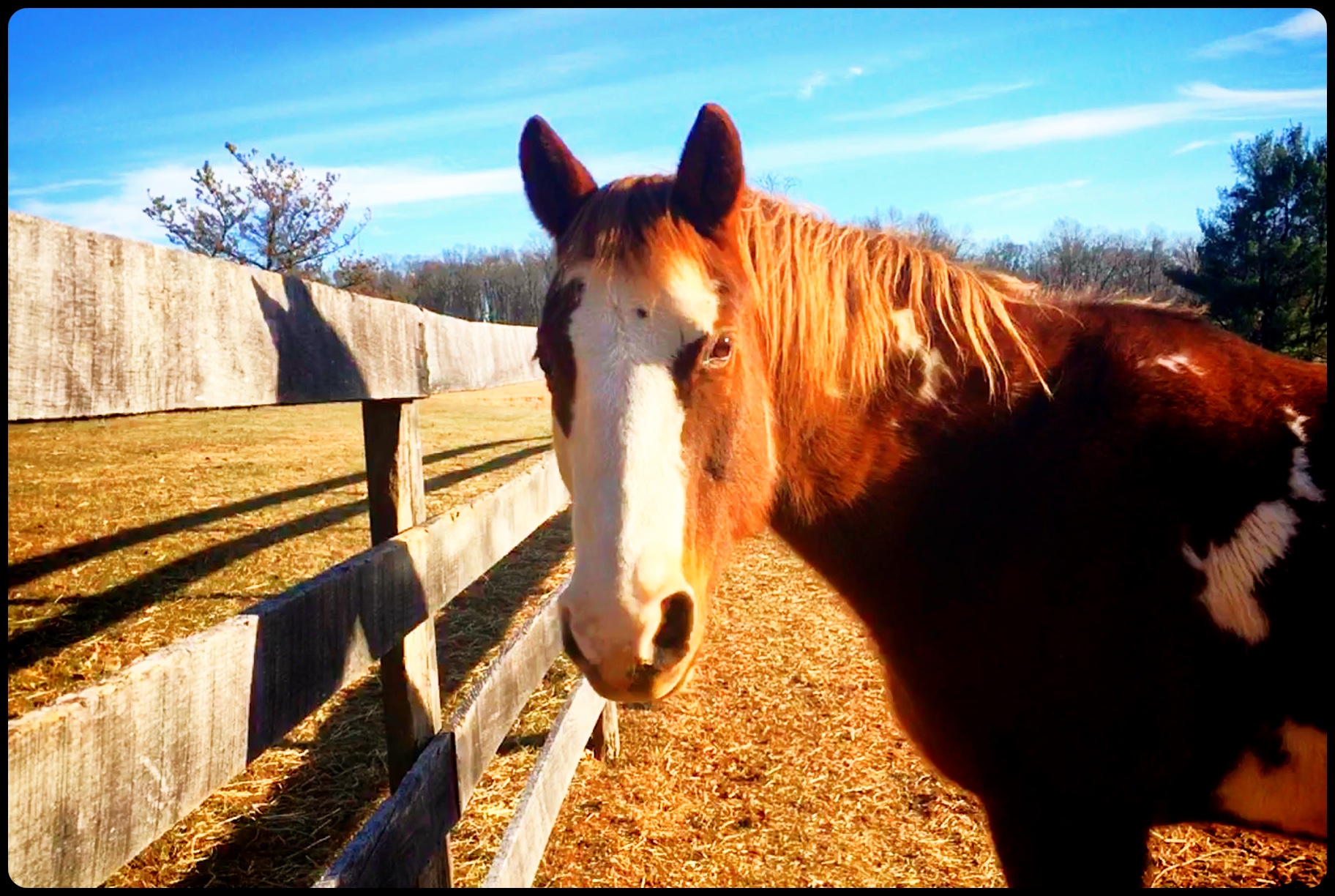
This Morgan colt had been born to be a working horse. Maybe pulling a cart, maybe a working ridden horse, but his breeding was intentional and he came from good, well-chosen stock. At four months of age, when it was time to give him his first deworming paste, he got scared. He panicked suddenly. And in an instant, the course of his life was altered. He flipped over and his head crashed into a barn aisle post, twisting and fracturing his first vertebra in multiple places.
It was a miracle he survived, much less survived without permanent neurological damage, given the extent of the injury. The farmer who owned him called vets, had multiple radiographs taken, held out hope that he might make a full recovery somehow – perhaps the amazing healing would continue and his head and neck would heal straight enough to allow him to become the promising work horse he was bred to be. The two women were able to help with some realignment; his jaw was adjusted so that he could chew properly, and he started to walk in more of a straight line instead of the bent-sideways position he had been stuck in.
But his head remained crooked on his neck, one eye slightly larger than the other, ears tipped off to the right, and unable to pivot his head at that first vertebra joint, the atlas. No one would purchase a colt in that condition, and no one would risk training him in tack since pulling back or sideways against pressure around his head might cause more damage. The farmer had done all he could do, winter was coming, options were few.
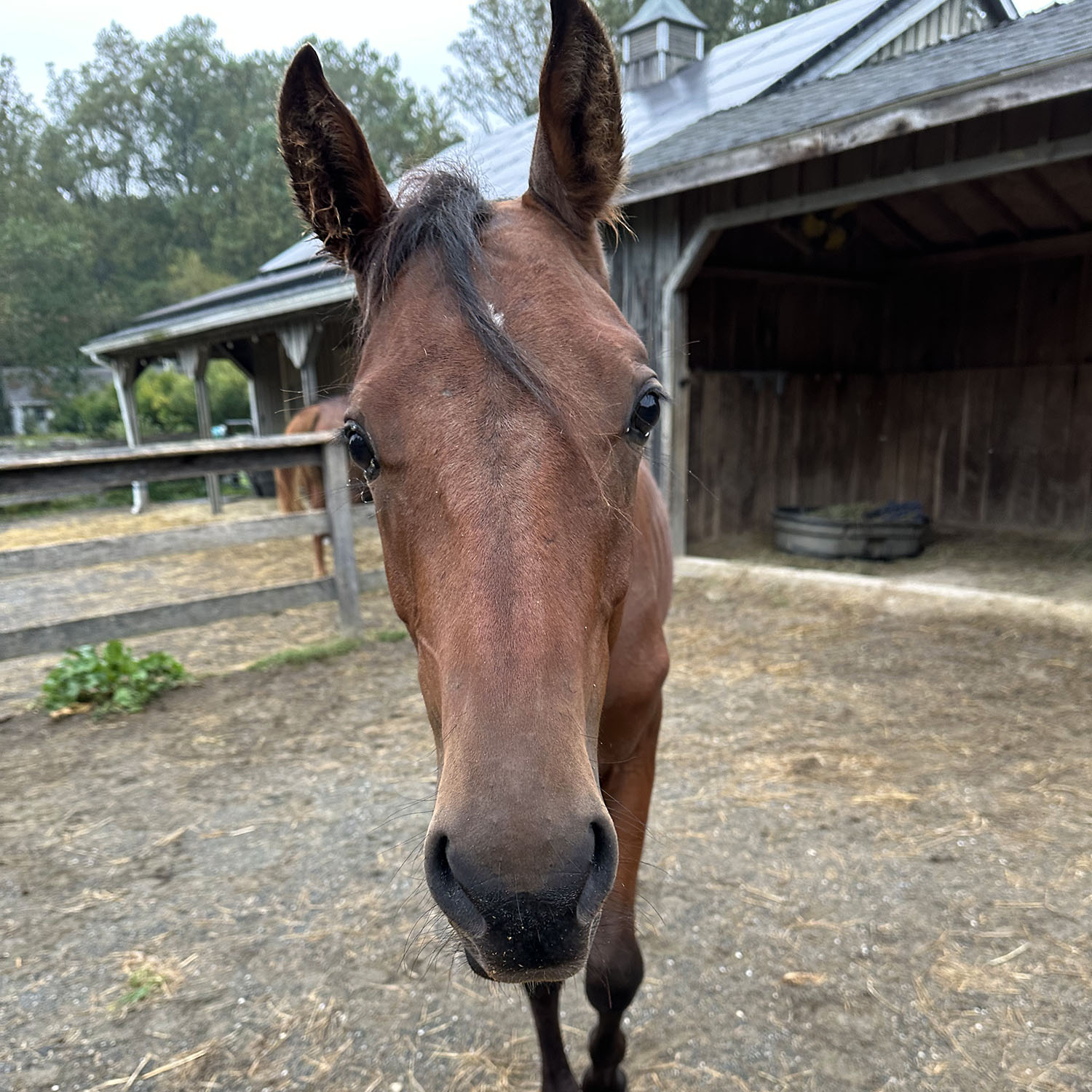
The women had introduced me to the youngster back in the spring, and I saw firsthand how an almost unhandled baby, with no halter or rope of any kind, allowed them to examine him and do bodywork adjustments. They were right when they described him as an “old soul” and wise beyond his years… or in this case, months. So, when he had nowhere to go, even though I technically did not have room for one more, he came to live with me and my existing herd of four. He would not need any tack to participate in equine guided coaching work, and I’d been studying Freedom Based Training with Elsa Sinclair, so I knew it was possible to train a horse without any equipment, even to ride.
He stepped off the trailer after I had agonized over all the reasons why I should say “no,” and there I was, pouring grain in a bucket to help lead the way.
That first day, he allowed me to touch him but he was not truly comfortable with it. Because the club foot was physically challenging, the farrier had to come right away to begin to reshape it. Likely the most difficult part of his transition, the yearling was fearful and resistant of his first farrier experience, but trusted one of the women who transported him enough to support him while he stood with the foot held up long enough for the trimming. Afterwards, she and a friend and I sat in chairs in the paddock, just being there with him until the sun went down, so he could be as close as he wanted, when he wanted. By the time the sun came up the next day, he seemed to know exactly who I was and that I was a friend.
The other four horses were, from the start, intensely curious about him. Always curious and wary of newcomers, the horses noticed right away that he was different, and they wanted to understand what that difference meant. In the wild, a horse who is sick or injured is likely a threat to the safety of the herd, so the yearling would need to prove that he could take care of himself and contribute value to the herd.
After several days on his own in the paddock next to the other horses, I began making one-on-one introductions. The horse who was always everyone’s friend, the one I expected to take him under her wing, wanted nothing to do with him… Daisy. Daisy has been with me since I started this work on my own; back in 2011 we began working with people together and developing Horses for the Soul. She has met so many different people and horses along the way, and is usually the first friend any newcomer has, but not this time. Bobbi, the matriarch of the herd, the only experienced mother among them, was nonplussed and uninterested in pursuing a further bond. Juno, the newest addition before the youngster, here for only 9 months upon his arrival, lunged at him fairly viciously, chasing him and testing his strength, speed and resilience. Chip, the youngest of the old group at ten years old, also tested him, often chasing him in what looked like an imitation of Juno, since Juno tended to chase him and lunge at him relentlessly as well. Concern for the little one welled up in me; what if he never passed their tests? What if he couldn’t integrate?
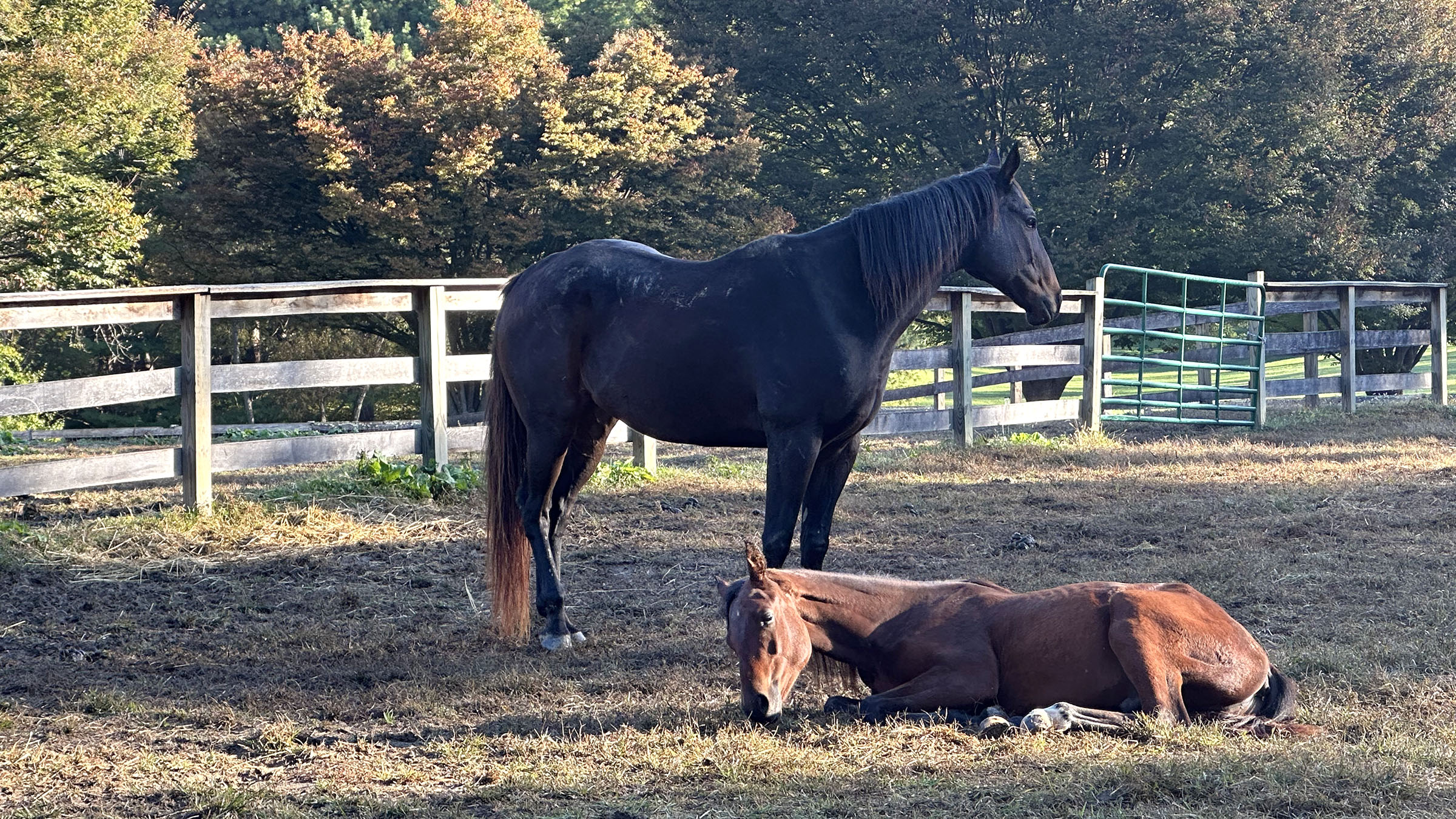
Then came the night when I went out to check on the youngster after dark. He was lying down in his paddock, about 5 yards from the fence. Chip was standing watch, right up against the fence, the moonlight shimmering along his back. Something in that moment showed me that Chip had found a sense of purpose.
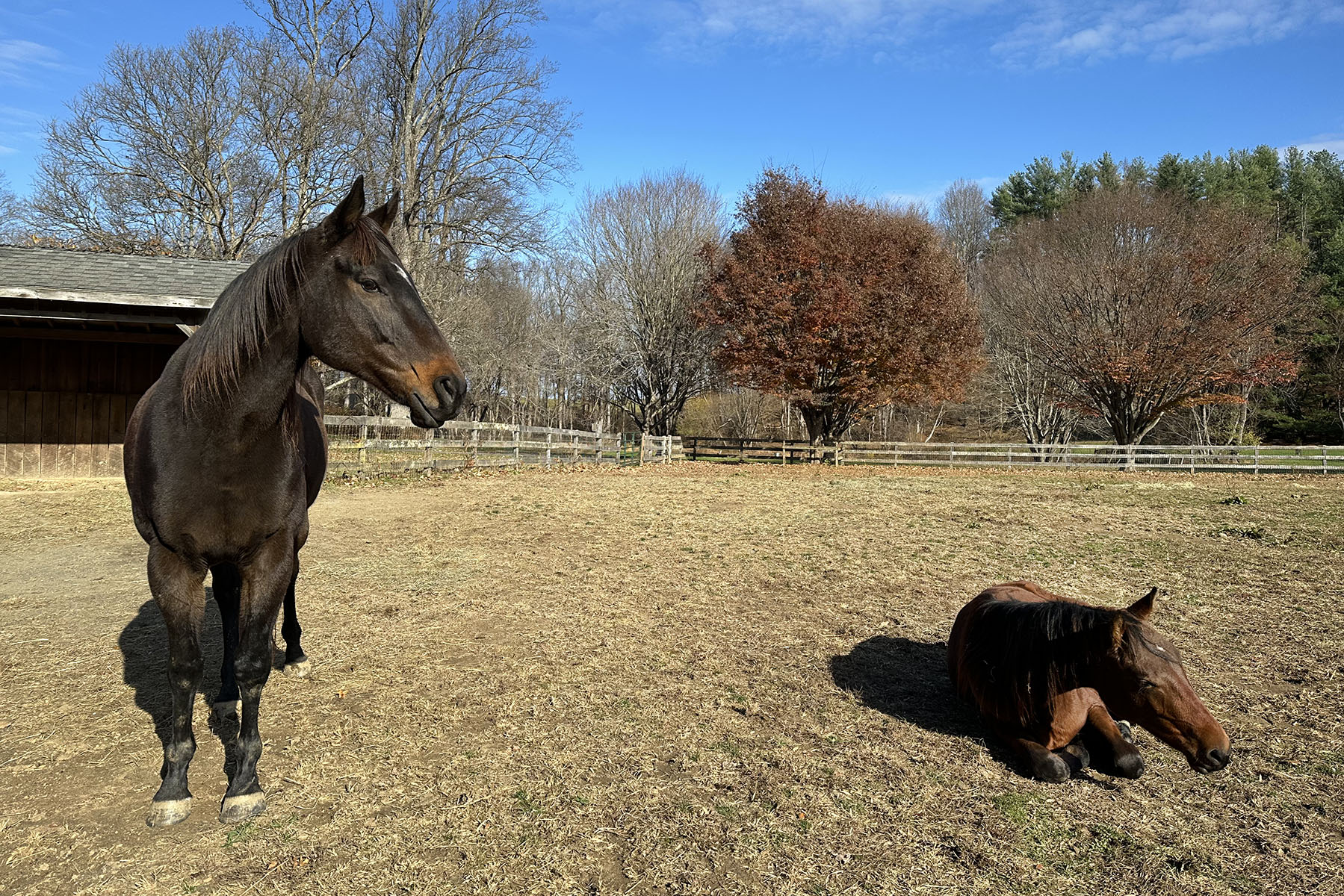
Every time since then, when the little guy is lying down, Chip stands watch over him. He has become like a big brother – still testing him, and pushing on him at times, but sharing hay, sharing space, watching over him when he’s resting. And the yearling runs after him, follows his lead, and finds security being near him. It is a symbiotic relationship, nourishing both of them.
By this time, everyone was asking, “What is his name?” and he didn’t have one. Believing that names help shape a being’s future, I wanted to find the right name for him. I’d been calling him Little Man, since he seemed to have a man’s wisdom in a boy’s form, but that didn’t feel quite right. There was something mystical about him, and unexplained about his survival of a severe traumatic injury, so I wondered if he needed the name of a mythical creature or a wizard.
Meanwhile, he was growing stronger every day. He began to run faster, and carry himself straighter all the time. We began working on basic tasks together, and in no time he loved being groomed, and could stand for all four hooves to be picked out. I remember reading somewhere that one should never try doing something with a horse tied that the horse can’t do untied, and have lived by that principle, often to the confusion and amazement of horses coming into my care. In this case, it was simply a natural progression for him of things we learned to do together in the paddock.
My fears about him not being able to join the herd began to fall away, as did my fears about having one too many horses. He was giving Chip confidence, and he was not so afraid of Juno that he wouldn’t keep coming back when chased away. Juno appreciated this fact; he wanted more of a sparring partner than a horse who stayed out of his way. The mares began to accept him more as well, and they seemed to relax into their elevated status of trusted royal sages.
A friend helped remind me that the thing horses make me feel when I close my eyes and conjure up their presence is… magic. There is something unexplained and precious about them and what they offer us, no matter how much science and study is able to illuminate. This little horse, defying odds and my best efforts to say no, is offering something unexplained and precious. No longer “Little Man,” he is named Little Magic, as it has taken a little magic to get this far, and each day a little magic happens.
 Horses for the Soul